
What if your persistent facial flushing is not an unpredictable occurrence, but a measurable breach of your skin's neurovascular threshold? For the 5% of adults worldwide currently affected by this condition, the search for specific rosacea triggers often feels like a cycle of trial and error that doesn't provide clinical clarity. It's common to feel overwhelmed by the burning sensations and the social anxiety that accompanies visible vascular reactivity.
Managing erythema requires moving beyond simple avoidance toward a phenotype-based strategy that builds systemic skin resilience. This guide provides a comprehensive checklist to identify your inflammatory catalysts and introduces clinical protocols to stabilize reactivity in 2026. You'll gain a technical understanding of the biological mechanisms behind your flares and a structured skincare sequence, from anti-inflammatory cleansing to high UVA protection, designed to restore your cutaneous barrier and maintain long-term vascular stability.
Key Takeaways
- Understand the biological mechanisms of abnormal vasodilation and the role of the innate immune system in skin inflammation.
- Utilize a clinical checklist to identify personal rosacea triggers, focusing on high-impact factors like UV radiation and thermal stress.
- Identify and eliminate common chemical irritants, such as essential oils and denatured alcohols, that disrupt the lipid barrier.
- Apply the Cumulative Trigger Threshold Theory to manage the compounding effects of environmental, dietary, and lifestyle stressors.
- Establish a professional management protocol using anti-inflammatory cleansing and desensitizing serums to build long-term vascular resilience.
The Science of Reactivity: Why Rosacea Triggers Occur
In clinical dermatology a rosacea trigger is defined as any internal or external stimulus that induces abnormal vasodilation. Unlike healthy skin, where blood vessels constrict once a stimulus is removed, the rosacea phenotype exhibits a prolonged inflammatory response. This reactivity is driven by the innate immune system, specifically the overproduction of antimicrobial peptides known as cathelicidins. When these peptides are processed into an active form, they trigger a cascade of leukocyte infiltration and vascular expansion. This process isn't just a surface-level cosmetic issue; it's a systemic failure of the skin's defense mechanisms that leads to chronic redness.
The Neurovascular Connection
The skin's nervous system plays a critical role in rosacea triggers by communicating directly with the dermal vasculature. In response to thermal stress or emotional pressure, the nervous system releases neuropeptides that signal blood vessels to expand. In individuals with Rosacea, this neurovascular hyper-reactivity means the "flush" persists much longer than normal. Chronic, repeated vasodilation eventually leads to telangiectasia, which is the permanent damage and visibility of small capillaries near the skin surface. Clinical research in 2026 emphasizes the necessity of "calming the nerve response" through targeted topicals to prevent this structural damage before it becomes irreversible. This approach focuses on desensitizing the cutaneous nerves to prevent the initial signal for dilation.
The Inflammatory Cascade
Triggers don't just affect blood flow; they activate inflammatory cytokines that degrade the skin's structural integrity. Biological factors, such as an overabundance of Demodex mites, often serve as a persistent stimulus for this cascade. These mites carry bacteria that the immune system perceives as a threat, leading to localized papules and pustules. To manage these biological rosacea triggers, a methodical reset of the skin surface is required. Utilizing an anti-inflammatory foaming cleanser provides a clinical foundation for removing environmental pollutants and microbial buildup without compromising the lipid barrier. By reducing the microbial load, you can significantly lower the baseline inflammation levels.
Barrier dysfunction remains a primary driver of sensitivity. When the stratum corneum is compromised, it allows environmental irritants to penetrate deeper into the dermis, where they interact with sensitive nerve endings. This creates a feedback loop of inflammation and reactivity. Maintaining a robust barrier is essential for raising the threshold of tolerance against daily environmental stressors. A healthy barrier acts as the first line of defense, ensuring that external stimuli don't reach the deeper, more reactive layers of the skin.
Environmental and Lifestyle Trigger Checklist
Identifying rosacea triggers requires a methodical analysis of daily environmental exposures. Clinical data indicates that external stimuli are responsible for the majority of acute flares, with UV radiation consistently cited as the primary catalyst. Managing these exposures isn't merely about avoidance; it involves implementing protective barriers that mitigate the skin's physiological response and prevent the cumulative damage of chronic vasodilation.
UVA vs. UVB: The Hidden Vascular Threat
Standard SPF 50 formulations often provide a false sense of security by prioritizing UVB protection to prevent surface burns. For those managing Rosacea triggers, the deeper threat is UVA radiation. UVA rays possess longer wavelengths that penetrate deep into the dermis, where they directly interact with the vascular structure and induce significant oxidative stress. This deep penetration destabilizes blood vessels and activates inflammatory cytokines. Daily application of High Extended UVA Protection sunscreens is a mandatory component of a clinical management protocol to ensure the dermal layer remains shielded from these invisible stressors.
Temperature and Weather Extremes
Thermal stress remains a significant factor in neurovascular reactivity. Rapid transitions between cold outdoor air and heated indoor environments during winter months can cause sudden, intense vasodilation as the body attempts to regulate surface temperature. Humidity levels further complicate this by altering skin barrier permeability. High humidity may increase the absorption of ambient irritants, while low humidity accelerates trans-epidermal water loss, leaving the nerves more exposed to external stimuli.
- Thermal Stress: Exposure to hot baths, saunas, or steam rooms induces systemic vasodilation, often resulting in persistent facial flushing that can last for hours.
- Dietary Catalysts: Histamine-rich foods like aged cheeses, spicy ingredients containing capsaicin, and thermally hot beverages trigger the release of neuropeptides that expand blood vessels.
- Physical Exertion: High-intensity exercise increases core body temperature and cardiac output. Patients should consider low-impact activities or utilise active cooling techniques, such as cold compresses, during workouts.
Maintaining vascular stability requires a proactive approach to these environmental challenges. By understanding the hierarchy of impact, you can prioritize interventions that offer the highest level of protection against daily stressors. For a complete range of clinical solutions tailored to these needs you may explore our specialized treatment collections.
The Skincare Trap: Identifying Chemical Triggers
Many topical products marketed for "soothing" or "natural" care contain hidden rosacea triggers that exacerbate neurovascular reactivity. The "natural" label lacks clinical regulation and frequently masks volatile organic compounds, such as essential oils, which can act as potent irritants. These substances can induce immediate vasodilation and heat sensations in reactive skin types. In 2026, dermatological consensus emphasizes that botanical origin doesn't guarantee biocompatibility for a compromised cutaneous barrier.
Astringents and denatured alcohols represent a significant threat to skin stability. These ingredients strip the essential lipid barrier, leading to immediate stinging and chronic trans-epidermal water loss. Fragrance remains the leading cause of contact dermatitis and persistent irritation, while irregular physical exfoliants like walnut scrubs are strictly contraindicated. These mechanical irritants create micro-tears that activate the inflammatory cytokines and cathelicidins discussed in previous sections making the skin more susceptible to common rosacea triggers found in the environment.
Ingredients to Audit Immediately
Dermatological protocols require a methodical audit of all current skincare ingredients. Witch hazel and menthol are often included in toners for their perceived cooling effect, yet they frequently trigger rebound vasodilation. Harsh surfactants like Sodium Lauryl Sulfate (SLS) are known to destabilize the acid mantle, allowing irritants to reach deeper dermal layers. Additionally, certain sunscreens filters can convert UV radiation into heat within the skin causing "heat-trapping" flares that mimic a standard inflammatory response.
The Clinical Alternative
Transitioning to non-prescription, research-based formulations is the primary step in restoring skin resilience. Clinical management focuses on preserving the acid mantle and reducing the microbial load without inducing trauma. Utilizing a Hydrating De-Sensitizing Cleansing Emulsion ensures that the skin is cleansed of pollutants while maintaining its protective lipid structure. This foundational step prevents the "stinging" cycle often associated with standard cleansers.
Beyond cleansing, the application of specialized serums for reactive skin is essential for long-term barrier restoration. These concentrated formulas are designed to dampen neurovascular signaling and provide the necessary building blocks for a healthy stratum corneum. By systematically replacing irritating products with clinical-grade alternatives, you raise your skin's threshold for rosacea triggers, moving from a state of constant reactivity to one of controlled stability.
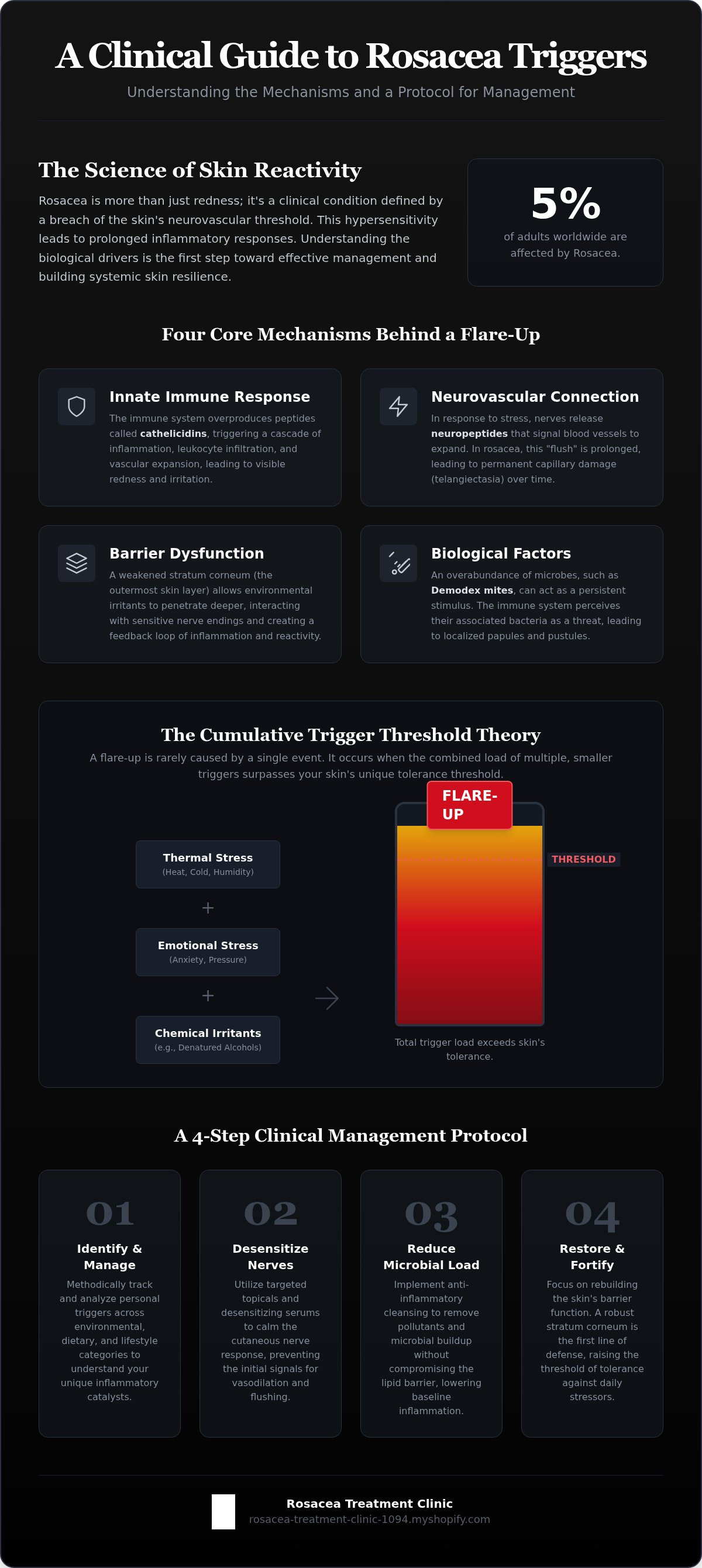
The Cumulative Trigger Threshold Theory
A common clinical observation is the inconsistency of rosacea triggers. You might tolerate a specific stimulus, such as a thermally hot beverage or a brief period of emotional stress, on one day without incident, yet experience a severe flare-up the next. This phenomenon is explained by the Cumulative Trigger Threshold Theory. Rather than a single catalyst causing a reaction, it's often the compounding effect of multiple stressors that breaches the skin's physiological limits. When environmental UV exposure, dietary histamines, and psychological stress occur simultaneously, they create a synergistic inflammatory load that the neurovascular system can no longer suppress.
A compromised skin barrier significantly lowers this threshold. When the stratum corneum is depleted of essential lipids, the underlying nerves and blood vessels are more exposed to every external stimulus. This state of vulnerability means that even minor rosacea triggers that would normally be ignored by healthy skin can initiate a vascular response. Identifying these patterns requires a systematic approach. Utilizing the "Rule of Three" in a daily skin diary helps isolate these connections; if a flare occurs, look back at the three most significant exposures in the preceding 24 hours to identify the cluster responsible for the breach.
The Trigger Threshold is the point where cumulative stressors exceed the skin’s ability to remain stable.
Raising Your Tolerance Level
Clinical management in 2026 focuses on raising this threshold rather than merely avoiding every potential catalyst. By strengthening the cutaneous defense system, you increase the amount of stress the skin can handle before a flare-up is triggered. Implementing specialized barrier repair treatment creams is essential for thickening the stratum corneum and restoring the lipid matrix. This physical reinforcement acts as a buffer against environmental and chemical irritants. Consistent nighttime restoration with Intense Night Nurturing Complex provides the skin with the necessary lipids to repair daily damage, ensuring the barrier remains resilient against the next day's exposures.
Tracking Your Personal Patterns
Conducting a "skincare elimination" is a method to identify hidden product triggers. This involves reverting to a foundational routine and reintroducing products one at a time to monitor neurovascular response. It's equally important to track internal factors, such as hormonal shifts and emotional stress levels, which can sensitize the skin from within. By quantifying these variables, you move from reactive avoidance to proactive management. To begin your clinical journey toward skin stability, you can explore our complete range of dermatological protocols.
Protective Strategies: A Clinical Management Protocol
Mitigating the impact of daily rosacea triggers requires a structured management protocol. Step 1 involves an anti-inflammatory cleansing routine to remove particulate matter and environmental pollutants that destabilize the barrier. Step 2 requires the application of a desensitizing serum to dampen neurovascular reactivity and neutralize inflammatory signaling. Step 3 mandates the deployment of High Extended UVA protection, which remains necessary regardless of seasonal UV indices. In the evening Step 3 supports nocturnal recovery through specialized Evening Repair that reinforces the stratum corneum during the skin's peak regenerative cycle.
Immediate Post-Flare Management
During an acute reactive event rapid intervention is critical to prevent permanent vascular damage. Utilizing Reprieve Serum helps to rapidly calm erythema by modulating the skin's neuro-inflammatory pathways. The "Cooling Protocol" should be initiated simultaneously, using non-invasive methods like cold compresses or thermal water mists to lower skin surface temperature and induce vasoconstriction. If a flare is severe, simplify the routine to "Basic Protection," focusing only on gentle cleansing and high-level UVA shielding until the threshold for rosacea triggers has been restored. For further information on usage during flare ups refer The Skincare Programme.
Long-Term Barrier Fortification
Maintaining a stable phenotype depends on the clinical role of Hydrating Serum, which preserves intercellular moisture and prevents the micro-fissures that allow irritants to penetrate the dermis. Consistency with Rosacea Treatment Clinic protocols facilitates a cumulative strengthening effect, leading to a measurable reduction in flare frequency over time. By prioritizing structural repair, you move beyond temporary symptom relief toward a state of lasting cutaneous resistance.
A lifestyle checklist for 2026 includes several key clinical habits:
- Strict adherence to UVA protection protocols even on overcast days or during indoor exposure.
- Elimination of high-heat environments, such as saunas, and a reduction in thermally hot beverages.
- Methodical tracking of cumulative stressors using the pattern-recognition techniques established in previous sections.
- Prioritizing lipid-rich night complexes to ensure ongoing barrier resilience against future environmental stressors.
This methodical approach ensures that the skin remains in a controlled environment, where every intervention serves to reinforce the natural defense systems. By following a professional treatment sequence, you can navigate daily life with the confidence that your skin is protected by a well-considered, clinical system.
Achieving Sustained Neurovascular Stability
Managing rosacea triggers isn't a matter of passive avoidance; it's a methodical clinical practice. You've identified the biological mechanisms of vasodilation and the compounding effects of the Cumulative Trigger Threshold. By transitioning from reactive responses to a phenotype-based management protocol, you can systematically raise your skin's resistance to environmental and chemical catalysts.
Since 1996, our specialized clinical protocols have been developed using foundational research from Spectrum Analytical Laboratory. These systems prioritize high extended UVA protection for vascular stability and lipid-rich restoration for barrier integrity. Implementing these research-based interventions allows you to regain control over your skin's reactivity and prevent the progression of permanent capillary damage.
Explore Clinical Rosacea Management Protocols to begin your structured treatment sequence. With consistent application and professional-grade protection, achieving a calm, stable complexion in 2026 is a measurable and sustainable reality.
Frequently Asked Questions
Can stress alone trigger a rosacea flare-up?
Yes, emotional stress is a powerful internal catalyst for neurovascular reactivity. When the body perceives stress, it releases neuropeptides and adrenaline that signal blood vessels to expand rapidly. This physiological response can breach your cutaneous threshold even in the absence of external stimuli. Managing psychological pressure is a critical component of a comprehensive management plan to maintain vascular stability and prevent chronic flushing episodes.
Why does my rosacea flare up even when I avoid my known triggers?
This phenomenon is often explained by the Cumulative Trigger Threshold Theory. Even if you avoid major catalysts, multiple minor stressors like ambient indoor heat or subtle dietary histamines can combine to cause a flare. If your skin barrier is compromised, your tolerance level is significantly lower. In this state, the skin becomes hyper-reactive to background environmental factors that would normally be well-tolerated by a healthy stratum corneum.
Are there specific foods that act as universal rosacea triggers?
While no single food affects every patient, dietary histamines and capsaicin are the most frequent biological catalysts. Ingredients such as aged cheeses, chocolate, and spicy peppers induce systemic vasodilation through the release of inflammatory mediators. Alcohol also acts as a potent vasodilator by relaxing the smooth muscles of the blood vessels. Utilizing a diary can help isolate which specific food categories impact your unique phenotype and vascular response.
How long does a rosacea flare-up typically last after exposure to a trigger?
The duration of a flare depends on the intensity of the exposure and your baseline skin resilience. A minor vascular flush might resolve within thirty minutes once the stimulus is removed. However, a severe breach of the inflammatory threshold can lead to persistent erythema or papules that last for several days. Implementing a professional recovery protocol with desensitizing serums can help accelerate the transition back to a stable, non-reactive state.
Does coffee trigger rosacea because of the caffeine or the heat?
Thermal heat is the primary stimulus rather than the caffeine content itself. Clinical studies indicate that beverages served at temperatures exceeding 60 degrees Celsius induce facial flushing through the activation of heat-sensitive receptors in the oral cavity. Many individuals find that iced coffee doesn't produce the same reactive response. Adjusting the temperature of your beverages is a simple but effective method to manage this common thermal trigger.
Can makeup products be a hidden trigger for facial redness?
Yes, many cosmetic formulations contain volatile alcohols, synthetic fragrances, or bismuth oxychloride which act as chemical rosacea triggers. These substances can cause immediate contact irritation or trap heat against the skin, leading to a localized inflammatory response. It's essential to audit your makeup for harsh surfactants and preservatives. Transitioning to clinical-grade products is often necessary to avoid the cycle of chronic irritation and vascular expansion.
How can I tell the difference between a rosacea trigger and an allergic reaction?
Rosacea flares typically manifest as a warm, burning vascular flush or inflammatory papules localized to the central face. In contrast, an allergic reaction often involves intense pruritus, hives, or localized swelling that may extend beyond the facial area. While both involve the immune system, the neurovascular nature of rosacea is distinct from the histamine-driven response of a true allergy. A professional dermatological assessment can help differentiate between these two types of cutaneous sensitivity.
Is sun exposure a trigger even if I am wearing a standard SPF 50 sunscreen?
Yes, because standard SPF 50 formulations often prioritize UVB protection while allowing significant UVA penetration. UVA radiation reaches the deeper dermal layers where it directly destabilizes the blood vessels and activates rosacea triggers related to oxidative stress. To maintain vascular stability, you must utilize specialized high extended UVA protection. This ensures that the deeper structures of the skin are shielded from the wavelengths most responsible for long-term vascular damage.