
The most effective clinical tool for stabilizing a dysfunctional skin barrier in rosacea patients is a precisely engineered Hydrating Serum rather than a traditional heavy occlusive. Many individuals suffer from persistent facial stinging during product application and chronic dryness that persists despite the use of dense creams. It's common to feel a deep-seated apprehension toward new ingredients that often worsen visible redness and irritation.
This professional analysis details how specialized hydrating serums restore the compromised epidermal barrier to reduce transepidermal water loss without triggering inflammatory cascades. We examine the 2026 transition toward phenotype-based management and the essential role of barrier-repairing agents in modern dermatological protocols . The following sections provide a methodical guide to achieving a calm, non-reactive complexion through evidence-based application and systematic skin protection. You will learn the specific criteria for selecting formulations that provide defense and restoration for hypersensitive skin types.
Key Takeaways
- Distinguish between epidermal water enrichment and lipid-based occlusion to effectively address the underlying causes of vascular reactivity.
- Evaluate the clinical necessity of a Hydrating Serum that excludes inflammatory triggers such as denatured alcohol and essential oils.
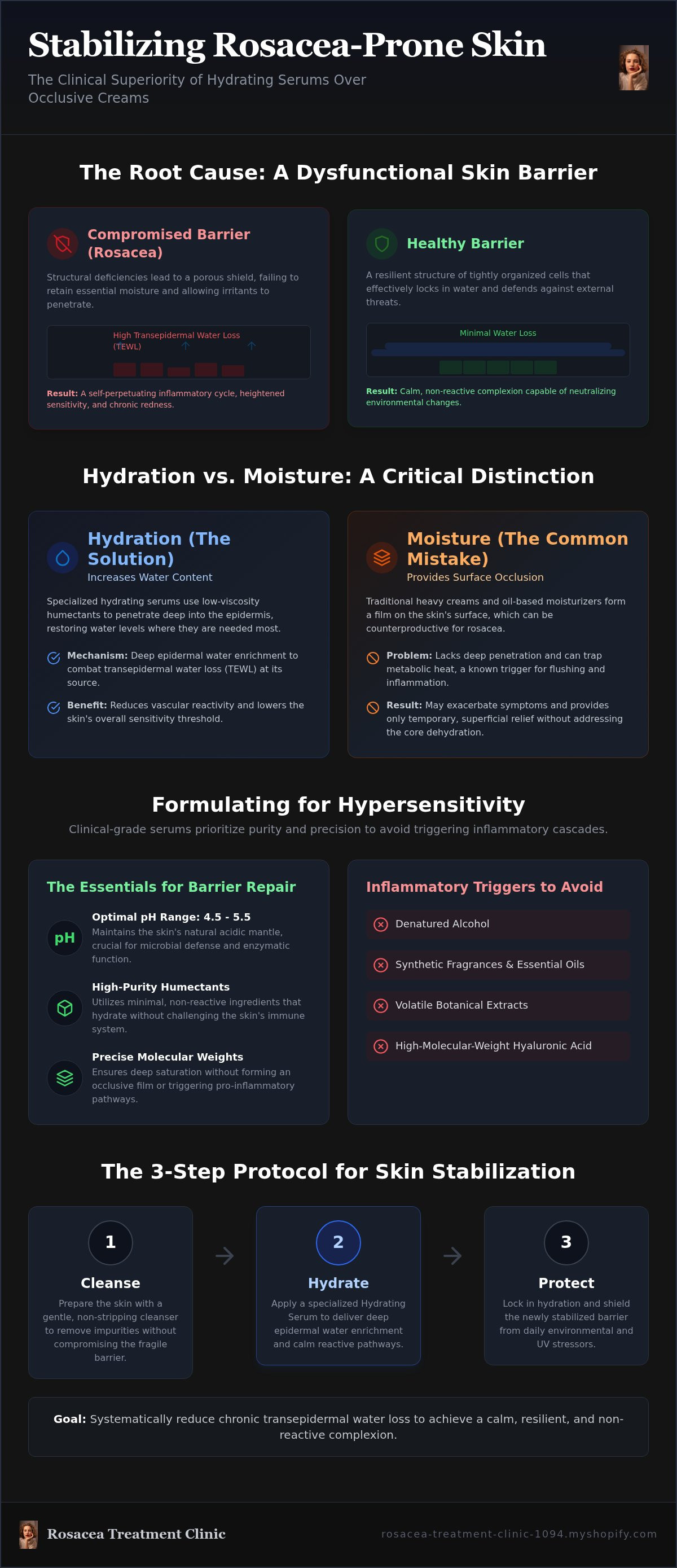
- Implement the "Cleanse, Hydrate, Protect" protocol to stabilize the skin barrier and reduce chronic transepidermal water loss through methodical application.
- Assess the technical superiority of pH-balanced formulations maintained within the 4.5-5.5 range for optimal barrier restoration and microbial defense.
- Discover how research-based protocols derived from Spectrum Analytical Laboratory findings integrate into the Original Repair treatment system for long-term skin stabilization.
Understanding Hydration vs. Moisture in Rosacea-Prone Skin
Effective management of Rosacea requires a clear distinction between hydration and moisture. While consumer marketing often conflates these terms, clinical dermatology recognizes them as separate physiological needs. Hydrating serums are formulated to increase the water content of the epidermis, whereas oil-based moisturizers focus on lipid replacement and surface occlusion. For patients with reactive skin, this distinction is critical. Dehydration directly correlates with increased vascular reactivity; when the skin lacks water, its defensive capabilities diminish, leading to heightened sensitivity and more frequent flushing.
Rosacea patients typically present with a fundamentally compromised stratum corneum. This structural deficiency results in significantly higher rates of transepidermal water loss compared to healthy skin. When hydration levels drop, the skin cannot maintain its enzymatic functions, which are necessary for barrier repair.
Consequently, the skin remains in a state of constant alarm, reacting to minor environmental changes that a well-hydrated barrier would easily neutralize.
The Mechanism of Transepidermal Water Loss (TEWL)
A compromised skin barrier acts like a porous shield, failing to retain essential moisture. This failure leads to a self-perpetuating inflammatory cycle. As water evaporates, the resulting dryness triggers the release of pro-inflammatory cytokines, which contribute to visible redness and further barrier degradation. Transepidermal water loss represents the primary physiological obstacle in the long-term clinical management of rosacea. Without addressing this constant evaporation, topical treatments for redness often yield only temporary results.
Hydration as a Clinical Necessity
Standard heavy creams frequently fail to provide relief because they lack the penetrative capability to reach the deeper epidermal layers. These occlusive products may even exacerbate symptoms by trapping metabolic heat against the skin surface. A professional Hydrating Serum provides a superior alternative through a low-viscosity delivery system. This allows active humectants to bypass the surface tension of the skin and provide deep-seated hydration where it is most needed. Utilizing a targeted Hydrating Serum is a foundational concept in stabilizing the skin and lowering the overall sensitivity threshold. This methodical intervention ensures the skin remains calm and non-reactive during daily environmental exposure.
Formulating for Hypersensitivity: Beyond Hyaluronic Acid
Clinical formulation for hypersensitive skin requires a rigorous exclusion of common cosmetic additives. While the beauty industry promotes botanical extracts and complex ingredient lists, these often contain volatile compounds that trigger mast cell degranulation in rosacea patients. Purity is a technical requirement, not a marketing preference. In a compromised barrier, even trace impurities can lead to contact dermatitis or localized inflammatory responses. A professional Hydrating Serum must bypass these risks by utilizing high-purity humectants that do not challenge the skin's immune system.
Hyaluronic acid is frequently misapplied in consumer-grade products. High-molecular-weight variants can form an occlusive film that traps metabolic heat, a known trigger for flushing. Conversely, very low-molecular-weight fragments may be perceived by the skin as signs of tissue damage, potentially stimulating pro-inflammatory pathways. Effective management involves selecting precise molecular weights that provide deep epidermal saturation without inducing vascular stress. Clinical guidelines, such as those found in Rosacea: Diagnosis and Treatment, emphasize the avoidance of such irritants to maintain long-term barrier integrity.
Identifying Potential Irritants in Commercial Hydrators
Commercial hydrators often rely on "natural" scents or denatured alcohol to improve the user experience. These ingredients are catastrophic for reactive skin. Many patients mistake a "cooling" or "tingling" sensation for efficacy. In reality, these sensations are often indicators of nerve ending exposure or chemical irritation. The FDA's 2026 focus on fragrance allergen labeling highlights the systemic risk these additives pose to sensitive populations.
Essential Components for Vascular Support
A specialized serum should prioritize components that mimic the skin's Natural Moisturizing Factor (NMF). These include specific amino acids and electrolytes that support cellular osmotic balance. Unlike generic drug-store alternatives, clinical formulations integrate desensitizing agents that actively lower the skin's neuro-inflammatory response. This systematic approach ensures the skin remains calm under environmental pressure. For those requiring a stabilized formula the Hydrating Serum utilizes high-purity humectants designed specifically for reactive phenotypes. This methodical selection of actives supports the restoration of the epidermal barrier without the beauty industry "active ingredients" which complicate recovery.
Clinical Protocols: Integrating Hydration into Treatment
Stabilizing a reactive complexion requires a structured framework that moves beyond arbitrary product selection. The "Cleanse, Hydrate, Protect" protocol serves as the clinical standard for daily rosacea management. This methodical sequence ensures that each intervention builds upon the previous step to reinforce the skin's defensive capabilities. Precision in application timing is as important as the formulation itself. When executed correctly, this systematic approach reduces the risk of product-induced irritation while maximizing the efficacy of active humectants.
The Sequential Application Methodology
Adherence to a specific application order prevents common issues such as pilling and localized stinging. The protocol begins with proper preparation. It's essential to prep the skin with a non-alkaline agent like the Anti-Inflammatory Foaming Cleanser. This ensures the removal of surface debris without disrupting skin pH. Maintaining a slightly acidic environment is a prerequisite for the subsequent steps.
Immediate application of the Hydrating Serum is the next critical phase. Humectants require a source of water to bind to the epidermis; applying them to dry skin can inadvertently draw moisture from the deeper layers, exacerbating dehydration. Once the serum has achieved epidermal saturation, it must be sealed to prevent evaporation. Utilizing the Original Repair Treatment Fluid or Night Repair Cream provides the necessary lipid barrier to lock in the hydration and support long-term restoration. This layered approach creates a controlled environment where the skin can begin its repair processes without environmental interference.
Interaction with UVA Protection
There is a strong synergistic relationship between epidermal hydration and sun protection. Dehydrated skin is significantly more susceptible to UV-induced oxidative stress, as the lack of water compromises the skin's natural antioxidant defenses. Furthermore, a dry, cracked barrier often leads to the common complaint of stinging upon sunscreen application. When the skin is properly hydrated, the risk of this chemical sensitivity decreases, allowing for more consistent use of photoprotection.
Applying High Extended UVA Protection Sunscreens over the Hydrating Serum ensures the skin is shielded from the vascular triggers associated with light exposure. This final step in the protocol is non-negotiable for rosacea patients. Without the defensive layer of a high-performance sunscreen, the restorative work of the hydration phase is quickly undone by thermal and UV stress. This integrated system provides a comprehensive defense against the primary drivers of rosacea progression.
Comparative Analysis: Clinical Grade vs. Consumer Grade Serums
High-performance dermatological care relies on the precise ratio of functional actives to inert fillers. Consumer-grade serums often prioritize sensory appeal, utilizing high concentrations of silicones or thickeners to create a temporary smoothing effect. In contrast, a clinical Hydrating Serum prioritizes epidermal saturation through high-purity humectants. These professional formulations are designed to integrate with the skin's natural architecture rather than merely sitting on the surface. This distinction is vital for those managing chronic sensitivity, where every ingredient must serve a restorative purpose.
The acid mantle requires a specific environment to maintain barrier function and microbial balance. Formulations outside the 4.5-5.5 pH range can disrupt the skin's microflora, leading to increased susceptibility to inflammatory triggers. Clinical-grade protocols, established through research dating back to 1996, emphasize this physiological compatibility over marketing-led "miracle" claims.
Stability testing in a clinical context involves rigorous stress-testing of active components to ensure they remain functional throughout the product's lifespan.
This contrast is stark when compared to consumer products that may lose efficacy shortly after opening due to oxidation or poor formulation stability.
Molecular Weight and Epidermal Penetration
Depth of penetration determines the efficacy of a hydration treatment. Large-molecule humectants remain on the surface, potentially creating a thermal trap that exacerbates facial flushing in rosacea-prone skin. Professional-grade humectants utilize a multi-weight molecular distribution, typically ranging from 50 to 1,000 kilodaltons, to ensure deep-layer restoration without inducing vascular stress. This precision ensures that hydration reaches the lower layers of the stratum corneum rather than merely providing a superficial film. By targeting multiple depths, the serum provides a more comprehensive stabilization of the skin's water content.
Absence of Volatile Organic Compounds
Volatile organic compounds and denatured alcohols are common in mass-market "quick-dry" formulas. While these ingredients provide an immediate matte finish, they strip essential lipids and accelerate transepidermal water loss. Long-term clinical strategies focus on sustainable barrier restoration rather than immediate cosmetic gratification. This methodical approach prevents the "rebound" dryness often associated with lower-grade products. Systematic removal of these volatile agents is a hallmark of professional care, ensuring the skin's lipid matrix remains intact and functional. For a formulation grounded in scientific rigor rather than industry trends, evaluate the Hydrating Serum developed through Spectrum Analytical Laboratory research.
The Rosacea Treatment Clinic Hydrating Serum Protocol
The Rosacea Treatment Clinic operates on a foundation of rigorous scientific inquiry rather than aesthetic trends. Our approach to barrier management prioritizes physiological stability as the primary metric of success. Unlike mass-market alternatives that focus on a "temporary glow," the Clinic’s Hydrating Serum is engineered to provide long-term structural support for the epidermis. This focus on functional restoration ensures that reactive skin remains calm and resilient against environmental stressors. We provide a specialized framework that allows patients to manage their condition through evidence-based, non-prescription interventions.
Formulation Heritage and Efficacy
Our dermatological protocols are derived from extensive research conducted at Spectrum Analytical Laboratory. This research foundation, established in the late 1980s, identifies the specific humectant ratios required to desensitize the skin without causing vascular dilation. By focusing on high-purity, non-prescription anti-inflammatory solutions, we provide a sustainable path for maintenance that does not rely on prescription medications for long-term care. This methodical approach addresses the underlying dysfunction of the skin barrier, allowing for a gradual reduction in reactivity through systematic hydration. Every formulation undergoes strict evaluation to ensure it meets the requirements for hypersensitive phenotypes.
Implementing Your Specialized Care Plan
Successful integration of the Hydrating Serum requires alignment with the broader Original Repair treatment system . This system is designed to provide a sequential restoration of the lipid matrix and epidermal water content. Patients must select support products based on their specific symptoms and current barrier status. For example, individuals experiencing acute stinging or intense heat may require the Reprieve Serum Pure 30 mL to stabilize the skin before transitioning to Hydrating Serum. This modular approach allows for a customized treatment path that evolves with the skin's needs.
Our online clinical platform offers comprehensive resources to assist in this selection process. These resources provide the technical guidance necessary to navigate a specialized care plan with the precision of a clinical consultation. By following a structured protocol, users can achieve a non-reactive complexion that maintains its integrity over time. To begin your systematic barrier restoration, Explore the professional Hydrating Serum protocol. This clinical intervention represents the final step in transitioning from reactive management to proactive skin stabilization.
Advancing Toward Long-Term Skin Stabilization
Achieving a calm, non-reactive complexion requires a deliberate transition from trend-based cosmetics to research-driven dermatological protocols. This analysis has detailed how a precisely engineered Hydrating Serum serves as a critical intervention for restoring the compromised stratum corneum. By prioritizing pH-balanced formulations and optimal molecular weights, patients can effectively reduce transepidermal water loss without inducing vascular stress. It is essential to move beyond the beauty industry and focus on functional, evidence-based restoration that prioritizes barrier integrity over temporary aesthetic effects.
The Rosacea Treatment Clinic has provided specialized, non-prescription solutions since 1996. These protocols are derived from Spectrum Analytical Laboratory research to ensure maximum compatibility with hypersensitive phenotypes. Implementing a methodical "Cleanse, Hydrate, Protect" sequence allows for sustainable barrier repair and defense against daily inflammatory triggers. This structured approach ensures your skin remains protected from oxidative stress and thermal fluctuations through every stage of recovery.
Secure your clinical Hydrating Serum protocol today and begin the systematic process of barrier fortification. Reliable skin health is attainable through clinical precision and a commitment to methodical, professional care.
Frequently Asked Questions
Can I use a hydrating serum if I have oily rosacea?
Yes, a Hydrating Serum is essential for oily rosacea phenotypes. Oily skin frequently compensates for internal dehydration by overproducing sebum. Utilizing a water-based delivery system provides the necessary epidermal saturation without adding heavy lipids or clogging pores. This methodical approach stabilizes the skin's water-to-oil ratio, often reducing the reactive oiliness associated with a compromised barrier.
When should I apply the hydrating serum in my daily routine?
Application should occur immediately after cleansing and before any lipid-based products. Following a non-alkaline cleanse, apply the serum to maximize humectant binding. This sequence ensures that water is trapped within the epidermis before you apply a sealing layer, such as the Original Repair Treatment Fluid. Consistent timing is critical for maintaining the skin's defensive capabilities throughout the day.
Does hyaluronic acid irritate rosacea-prone skin?
Hyaluronic acid only causes irritation when the molecular weight or purity is inappropriate for reactive skin. Large molecules may form an occlusive film that traps metabolic heat, while certain low-weight fragments can trigger inflammatory pathways. Clinical formulations utilize specific molecular weights that provide deep saturation without inducing vascular stress. Purity levels are also vital to prevent the contact dermatitis often seen with consumer-grade alternatives.
How long does it take to see results from a hydrating serum?
Immediate symptomatic relief from stinging often occurs upon the first application. However, structural restoration of the epidermal barrier and a reduction in transepidermal water loss typically require four to eight weeks of consistent use. This timeframe aligns with the natural turnover cycle of the stratum corneum. Long-term stability is achieved through methodical adherence to the treatment protocol rather than intermittent application.
Can I use a hydrating serum instead of a moisturizer?
A Hydrating Serum cannot replace a lipid-based moisturizer in a rosacea management plan. While the serum increases water content, a moisturizer or repair fluid provides essential deficient lipids. Without an occlusive layer, the added hydration is prone to evaporation, potentially worsening dehydration. A dual-phase approach is necessary to address both the water and lipid deficiencies common in compromised barriers.
What ingredients should I avoid in a hydrating serum for rosacea?
Avoid denatured alcohols, synthetic fragrances, and volatile essential oils. These substances act as primary irritants that can trigger mast cell degranulation and localized flushing. Additionally, steer clear of "cooling" agents like menthol or camphor, which suggest chemical irritation rather than clinical efficacy.
Is it safe to layer a hydrating serum under prescription treatments?
Layering a hydrating serum under prescription treatments is generally safe and often recommended to reduce localized irritation. The serum acts as a physiological buffer, providing a hydrated environment that can mitigate the drying effects of certain medical topicals. However, you should always consult your clinician to ensure that the serum's humectants don't interfere with the absorption of specific active medications.
How much serum should I apply for optimal barrier repair?
For optimal barrier repair, apply two to three drops or a pea-sized amount to the entire facial area. Excessive application does not increase efficacy and may lead to product pilling or the formation of an unnecessary surface film. The goal is to achieve full epidermal saturation with a thin, even layer. This methodical application ensures the active humectants integrate with the skin's architecture without causing surface buildup.