
A rosacea flare up is not merely a temporary cosmetic inconvenience; it is a progressive neurovascular event that requires immediate intervention to prevent permanent vascular dilation and skin thickening. You likely recognize the sudden, intense heat and visible erythema that make standard skincare feel like a secondary irritant. This unpredictable flushing brings significant social anxiety and physical discomfort, especially when common products cause stinging or burning. We understand that reactive skin requires a specialized, non-irritating approach rather than generic beauty solutions.
This clinical guide provides a methodical framework to stop the inflammatory cycle and identify the physiological mechanisms behind your symptoms. You will learn to implement a dermatological protocol designed to reduce redness rapidly and prevent long-term tissue damage. We will preview a structured treatment sequence, moving from foundational steps like an Anti-Inflammatory Foaming Cleanser to the restorative use of Hydrating Serums. This 2026 update adopts a phenotype-based model to help you identify personal triggers and establish a stable, protective daily routine that prioritizes barrier restoration and vascular defense.
Key Takeaways
- Analysis of the neurovascular mechanisms underlying an acute rosacea flare up to manage sudden vasodilation effectively.
- Implementation of systematic tracking to categorize environmental and biological triggers for precise avoidance and management.
- Identification of vascular memory risks to prevent the pathological transition from transient flushing to permanent vessel dilation.
- Application of immediate clinical protocols, including controlled cooling and irritant removal , to suppress active erythema.
- Integration of research-based daily routines and high extended UVA protection to support long-term skin stability and remission.
Understanding the Physiology of a Rosacea Flare-Up
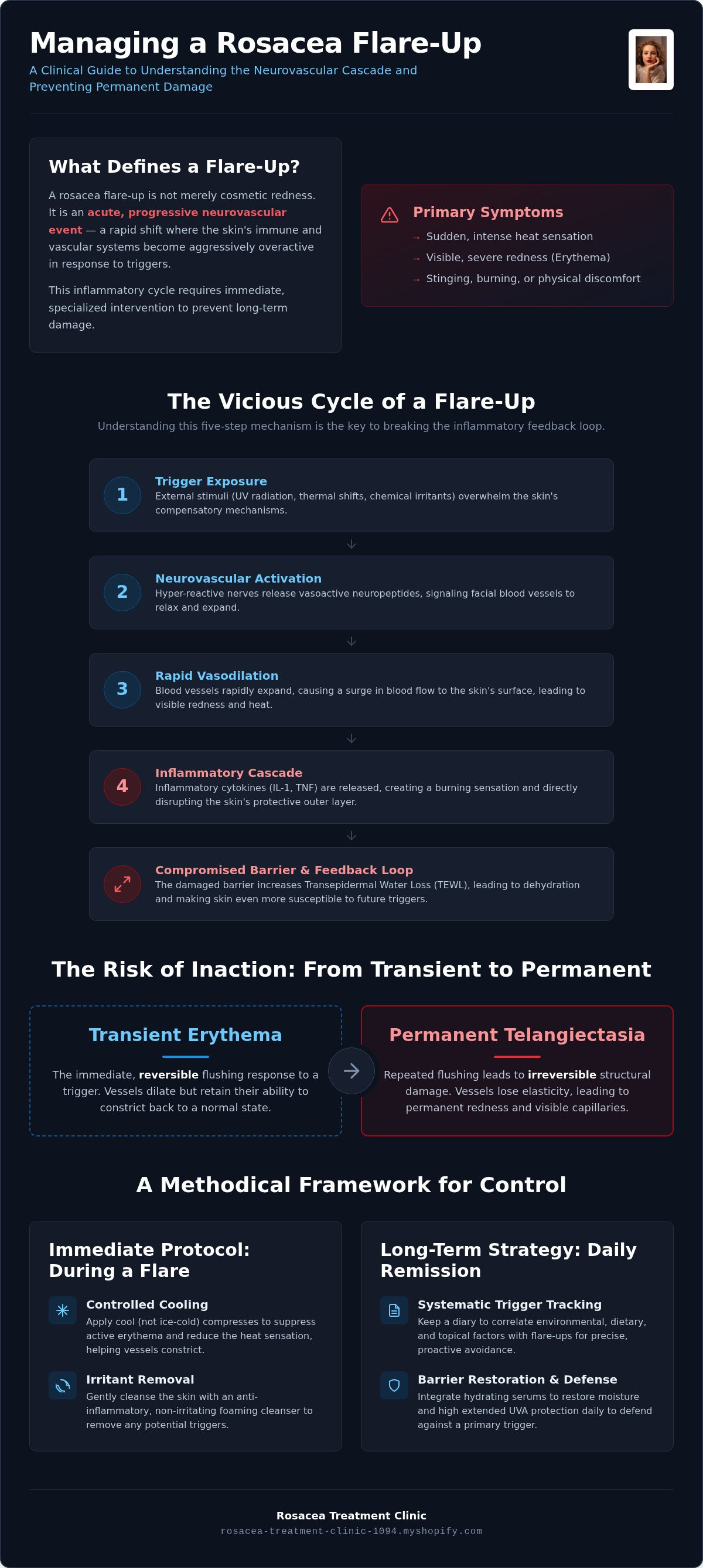
A rosacea flare up is a discrete, acute inflammatory episode characterized by an intensification of symptoms beyond a patient's baseline. Unlike persistent erythema, which remains relatively static, a flare involves a rapid shift in the skin's homeostasis. This state is often triggered by specific environmental or biological factors that overwhelm the skin's compensatory mechanisms. Clinicians view these episodes as periods of heightened immune activity where the skin's defense systems become counterproductively aggressive.
The primary driver of these episodes is the neurovascular system. In individuals with rosacea the nerves and blood vessels in the facial tissue exist in a state of heightened sensitivity. When Understanding Rosacea through a clinical lens it is clear that the condition involves a complex interplay between the innate immune system and dysregulated vascular responses. This dysregulation leads to the visible signs of distress that patients experience during a reactive phase.
Clinicians distinguish between transient erythema, commonly known as flushing, and persistent redness. Transient erythema is the immediate, reversible response to a trigger, while persistent redness indicates structural damage to the capillary beds.
Repeated episodes of a rosacea flare up can transition transient flushing into permanent telangiectasia, making early management of the inflammatory cascade vital.
Without intervention, the blood vessels lose their ability to constrict, leading to a permanent state of facial redness.
The Mechanism of Vasodilation
External stimuli such as UV radiation, thermal shifts, or chemical irritants trigger the release of vasoactive neuropeptides. These signaling molecules cause the smooth muscles surrounding facial blood vessels to relax, leading to rapid expansion and increased blood volume. Neurovascular hyper-reactivity in the context of rosacea is a pathological state where cutaneous nerves trigger excessive vascular dilation and inflammatory responses to otherwise sub-threshold stimuli. This surge in blood flow raises local skin temperature and activates nociceptors, resulting in the characteristic stinging and heat sensations that define a flare.
Inflammation and the Skin Barrier
During an active flare, the recruitment of inflammatory cytokines like interleukin-1 (IL-1) and tumor necrosis factor (TNF) creates a localized burning sensation. This inflammatory cascade directly disrupts the stratum corneum, the skin's outermost protective layer. Chronic inflammation leads to increased Transepidermal Water Loss (TEWL), which dehydrates the tissue and degrades the lipid matrix. A compromised barrier function creates a feedback loop; as the skin loses its ability to exclude external irritants, it becomes increasingly susceptible to subsequent triggers. Utilizing a Hydrating Serum during these phases is essential to restore moisture balance and support barrier integrity.
Systematic Identification of Environmental and Biological Triggers
Managing a rosacea flare up requires a methodical transition from reactive care to proactive avoidance. Identifying specific triggers is a highly individualized process because the neurovascular system's threshold for irritation varies significantly between patients. These triggers are not static; biological sensitivities often shift over time due to age, hormonal fluctuations, or cumulative environmental damage. Establishing a systematic diary is the most effective clinical tool for correlating environmental exposure with acute erythema episodes. By documenting dietary intake, weather conditions, and topical applications, you can move toward a predictive management model rather than a reactive one.
Clinicians categorize these stimuli into four primary groups: thermal, dietary, chemical, and emotional. Understanding the symptoms of rosacea helps in recognizing which trigger category is most active during a specific episode. When testing suspected triggers, introduce only one variable at a time over a 72 hour period. This controlled approach prevents confounding data and allows for the precise identification of biological stressors. For those seeking structured support, exploring specialized dermatological collections can provide a stable foundation for testing new protocols safely.
Thermal and Environmental Stressors
UV radiation remains the most prevalent trigger for vascular dilation. High extended UVA protection is mandatory, as even sub-erythemal doses of radiation can stimulate the inflammatory cascade. Rapid temperature fluctuations, such as moving from extreme winter cold into a heavily heated indoor environment, induce sudden vasodilation. Mechanical irritants like low humidity and high wind speeds further compromise the epidermal barrier, leading to increased sensitivity. Consistent environmental monitoring allows for the preemptive application of protective barriers before exposure occurs.
Chemical and Topical Irritants
Standard skincare formulations frequently contain ingredients that trigger neurovascular responses in reactive skin. Denatured alcohol and synthetic fragrances are primary offenders that can cause immediate stinging and heat. It is a common misconception that "natural" or "organic" labels imply safety; many botanical extracts are potent vasodilators or allergens. Essential oils like menthol, peppermint, and eucalyptus often exacerbate redness by stimulating sensory nerves. A clinical protocol prioritizes medically-proven ingredients that support barrier restoration without provoking a vascular response.
The Pathological Progression of Repeated Vascular Flushing
Every rosacea flare up functions as a physiological stress test that gradually compromises the structural integrity of the facial vasculature. Repeated episodes of acute vasodilation lead to a phenomenon known as vascular memory. In this state the smooth muscles surrounding the capillaries lose their elasticity and their ability to fully constrict after a stimulus. This results in the permanent dilation of vessels, clinically presenting as telangiectasia. Understanding the long-term consequences of untreated inflammation is vital for maintaining dermatological health and preventing the transition into more severe phenotypes.
The progression from erythematotelangiectatic rosacea to the papulopustular stage is often driven by chronic, low-grade inflammation that persists between acute episodes. When the inflammatory cascade remains active it recruits neutrophils and other immune cells into the dermal matrix. This recruitment leads to the development of inflammatory lesions, such as papules and pustules, which further damage the surrounding tissue.
Implementing a methodical dermatological protocol early in the disease course is essential to interrupt this cycle and preserve the skin's structural baseline.
From Transient to Persistent Erythema
Transient erythema is the initial hallmark of a reactive skin state where redness eventually subsides after the trigger is removed. However, with each subsequent rosacea flare up, the recovery period extends. The physiological reason for this delay is the sustained extravasation of fluid and inflammatory mediators into the dermis, which keeps the vessels in a dilated state for longer durations. For a deeper analysis of these stages, refer to our Clinical Rosacea Treatment: 2026 FAQ & Management Guide.
Research regarding Rosacea treatment options emphasizes that controlling these vascular surges is the primary defense against permanent vessel damage.
Phymatous Changes and Tissue Thickening
The most advanced pathological progression involves phymatous changes characterized by tissue fibrosis and sebaceous gland hyperplasia. Chronic edema, or the accumulation of fluid in the dermal layers, acts as a stimulus for fibroblast activation. This results in the overproduction of connective tissue, leading to skin thickening and irregular surface contours. The nose and chin are particularly susceptible to these structural changes due to their high density of sebaceous glands and specific vascular architecture. Preventative strategies must focus on consistent anti-inflammatory maintenance and the immediate suppression of edema during reactive phases to mitigate the risk of permanent tissue remodeling.
Clinical Protocols for Calming Active Erythema
Immediate intervention during an active rosacea flare up must prioritize the induction of vasoconstriction to mitigate thermal energy and dermal edema. Applying cool (not freezing) compresses to the affected areas for 10 to 15 minutes effectively lowers skin temperature and suppresses the acute vascular surge. During this reactive phase, we implement a "Less is More" philosophy. This clinical approach mandates the immediate cessation of all potentially irritating agents, such as mechanical exfoliants, concentrated retinoids, and volatile alcohols. By removing these active stressors, you provide the skin's innate repair mechanisms the opportunity to stabilize without further neurovascular provocation.
The Cleansing Protocol for Reactive Skin
Standard foaming agents often utilize aggressive surfactants that strip the epidermal lipid barrier, exacerbating the stinging sensations associated with a rosacea flare up. These detergents destabilize the skin's pH and dissolve essential ceramides, leading to a state of heightened reactivity and increased sensitivity. Transitioning to a specialized Anti-Inflammatory Foaming Cleanser allows for the methodical removal of environmental pollutants without compromising the acid mantle. Application techniques are equally critical; use only lukewarm or cool water and avoid any strong mechanical friction. Gently pat the skin dry with a clean, soft fabric to prevent triggering a secondary vascular response through physical irritation or heat generation.
Barrier Restoration and Hydration
Following cleansing, the priority shifts to neutralizing inflammatory markers and reversing Transepidermal Water Loss (TEWL). Utilizing a specialized Hydrating Serum provides essential moisture without the heavy occlusion that can trap heat and worsen erythema.
Reprieve Serum Pure and Night Serum Pure formulations deliver bio-available antioxidants that support the skin's defense systems and calm the neurovascular response.
Integrating Night Repair further seals the barrier and restores the lipid matrix.
Topical antioxidants found across products also play a vital role by neutralizing free radicals and pro-inflammatory cytokines generated during the inflammatory cascade.
To implement a complete clinical routine designed for your specific phenotype you can explore our specialized dermatological collections.
This structured approach ensures that each step of your protocol serves a protective and restorative function.
Methodical Skincare Strategies for Long-term Remission
Establishing a stable baseline is the primary objective of long-term rosacea management. Once the acute phase of a rosacea flare up has been suppressed the focus shifts to maintaining the integrity of the neurovascular system. This requires a transition from rescue-based interventions to a consistent, research-based daily routine.
Clinical protocols developed since 1996 emphasize the use of specialized topicals that reinforce the epidermal barrier without inducing secondary inflammation.
By adhering to a systematic application of protective agents, you can extend periods of remission and minimize the frequency of reactive episodes.
Monitoring skin reactivity remains a continuous requirement. Environmental shifts, such as the transition from humid summer conditions to dry, heated indoor air in winter, necessitate subtle adjustments to your protocol.
Increasing the application frequency of a Hydrating Serum can provide the additional defense needed during these seasonal transitions. This proactive approach ensures that the skin's threshold for irritation remains high, even when external conditions become more challenging.
Clinical UV Protection
UV radiation is a constant catalyst for neurovascular distress, even when visible sunlight is absent. Standard SPF 50 ratings often focus primarily on UVB protection, but for reactive skin, high extended UVA protection is equally critical. UVA rays penetrate deeper into the dermis, where they directly stimulate the dilation of weakened capillary walls and degrade connective tissue. Utilizing specialized barrier fluids provides a physical and chemical defense against these sub-erythemal doses of radiation. For detailed selection criteria, refer to our High UVA Protection Sunscreens Rosacea Guide. Consistent use of these formulations prevents the cumulative damage that eventually lowers the threshold for a future rosacea flare up.
Nightly Restoration Protocols
The nocturnal phase is the period of peak cellular repair and barrier reconstruction. Generic moisturizers often lack the sophisticated delivery systems required to support a compromised lipid matrix or provide genuine vascular support. In contrast, an Intense Night Nurturing Complex provides targeted intervention while the skin's metabolic activity is at its highest. These research-based formulations utilize inert, high-purity ingredients to soothe the dermal layer without the risk of occlusion or heat retention. Integrating a Night Repair Cream or an Original Repair Treatment Cream into your nightly protocol ensures that the skin receives the necessary lipids to seal the acid mantle. This consistent application of specialized topicals fosters long-term skin stability, building the structural resilience needed to withstand environmental triggers and maintain a clear, non-reactive complexion.
Achieving Long-Term Neurovascular Stability
Effectively managing a rosacea flare up requires a transition from reactive concealment to a methodical, research-based protocol. We have established how repeated vascular flushing leads to permanent structural damage and why identifying individualized environmental triggers is essential for prevention. By implementing immediate cooling techniques and transitioning to specialized cleansers you can suppress active erythema and protect the epidermal barrier from further degradation.
A structured approach ensures that every step of your daily routine serves a specific, protective function.
Our clinical protocols have provided specialized dermatological support since 1996. These formulations are established from foundational Spectrum Analytical Laboratory research, prioritizing efficacy and skin restoration through scientific rigor.
A stable, non-irritating routine remains the most reliable defense against the progression of vascular dilation and tissue thickening.
By prioritizing barrier integrity and environmental defense, you can move toward a state of predictable skin health.
Explore our research-based Rosacea Treatment Protocols to establish a professional management plan tailored to your skin's specific needs. You have the clinical tools necessary to regain control and maintain a calm, resilient complexion.
Frequently Asked Questions
How long does a typical rosacea flare-up last?
A typical rosacea flare up can persist from several hours to several days depending on the intensity of the trigger and the speed of intervention. While transient flushing might subside within an hour, an acute inflammatory episode involving edema and stinging often requires 72 hours of clinical management to stabilize.
Without a methodical protocol to induce vasoconstriction and restore the barrier, symptoms can linger for weeks, potentially transitioning into persistent erythema.
Can a rosacea flare-up cause permanent damage to my skin?
Chronic episodes of acute vasodilation can lead to permanent structural damage over time.
Repeated flares result in "vascular memory," where capillary walls lose elasticity and remain dilated eventually appearing as permanent telangiectasia.
Additionally, chronic inflammation stimulates fibroblast activity, which can lead to tissue fibrosis and skin thickening, particularly on the nose.
Early intervention with specialized repair treatments is essential to mitigate these long-term pathological changes and preserve dermal integrity.
What is the fastest way to calm a rosacea flare-up at home?
The most efficient clinical intervention involves immediate thermal reduction and the removal of all chemical stressors. Apply cool, non-freezing compresses for 15 minutes to induce vasoconstriction and lower the skin's surface temperature.
Simultaneously, discontinue the use of any products containing volatile alcohols, fragrances, or active acids.
Utilizing a specialized Anti-Inflammatory Foaming Cleanser followed by a Hydrating Serum provides a non-occlusive layer of protection that facilitates rapid barrier stabilization and comfort.
Should I stop using all skincare products during an active flare?
Total cessation of skincare is often counterproductive because the skin requires active barrier support to prevent transepidermal water loss. Instead, adopt a "Less is More" protocol by removing only the potential irritants. A minimalist approach ensures the skin remains protected from environmental stressors while the neurovascular system recovers from the inflammatory surge without unnecessary chemical provocation.
Is it possible to have a rosacea flare-up without visible bumps?
It is entirely possible to experience a flare characterized solely by neurovascular symptoms without any lesions. This phenotype, often categorised as erythematotelangiectatic rosacea, involves intense flushing, heat, and stinging without the presence of papules or pustules. These episodes are driven by sudden vasodilation rather than the follicular inflammation seen in other stages. Even without visible lesions these flares require clinical management to prevent the eventual development of permanent redness and visible capillary damage.
Why does my rosacea flare up more in the evening or at night?
Evening exacerbation is frequently linked to circadian fluctuations in skin temperature and barrier permeability. As the body prepares for sleep cutaneous blood flow increases to dissipate internal heat which can trigger vasodilation in reactive skin. Additionally, the body's natural anti-inflammatory cortisol levels drop in the evening, while histamine release often peaks during this period. Utilizing the Intense Night Nurturing Complex during this phase provides the necessary vascular support to counteract these biological shifts.
Can stress alone cause a significant rosacea flare-up?
Emotional stress is a potent biological trigger that activates the neurovascular system through the release of neuropeptides. These signaling molecules cause immediate vasodilation and stimulate inflammatory cytokines, leading to a visible rosacea flare up. This neurogenic inflammation creates a physical response that is indistinguishable from thermal or chemical triggers. Managing these episodes requires a combination of systemic stress reduction and topical anti-inflammatory protocols to soothe the over-reactive sensory nerves in the facial tissue.
How do I know if my sunscreen is triggering my rosacea?
Sunscreen sensitivity usually manifests as an immediate stinging or burning sensation upon application. If your erythema intensifies shortly after applying a product, or if you notice localized heat that persists, the formulation is likely contraindicated. To verify a trigger perform a patch test on a small area of the jawline for 48 hours. Transitioning to high extended UVA protection sunscreens typically reduces this risk while maintaining essential defense .