
The Critical Distinction Between SPF and High Extended UVA Protection
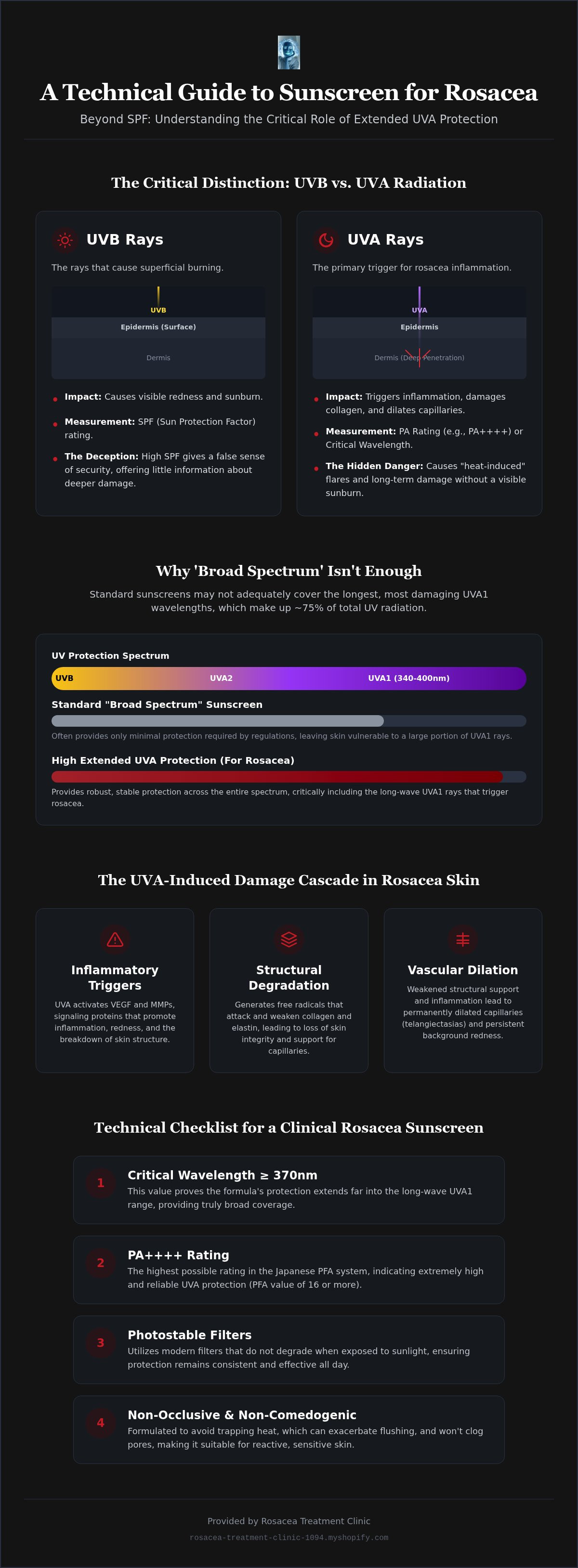
For individuals managing rosacea, the term 'sun protection' is often misunderstood. The familiar Sun Protection Factor (SPF) rating on a product is a crucial metric, but it primarily measures protection against UVB radiation. These are the shorter ultraviolet rays responsible for superficial reddening and sunburn. However, the pathogenesis of rosacea is more deeply linked to UVA radiation, which penetrates into the dermis and triggers a cascade of inflammatory and structural changes.
- The SPF Deception: A high SPF value (e.g., SPF 50) provides a false sense of security. It indicates robust protection against UVB-induced burns but offers no equivalent guarantee of protection against the deeper-penetrating UVA rays.
- UVA's Dermal Impact: UVA radiation activates vascular endothelial growth factor (VEGF), a key signaling protein that promotes the formation of new blood vessels. In rosacea-prone skin, this contributes to the persistent erythema and visible telangiectasias (dilated capillaries) that define the condition.
- Defining 'Extended' Protection: Standard 'Broad Spectrum' sunscreens may not adequately cover the full UVA spectrum. High Extended UVA Protection specifically refers to robust defense against the longest wavelengths, known as UVA1 (340-420nm), which are profoundly implicated in dermal damage.
- The 'Heat-Induced' Flare Enigma: Many patients report flushing or flares even when wearing high-SPF sunscreen. This is often because their product lacks sufficient UVA1 filtering. The deep, inflammatory heat generated by UVA1 exposure occurs even without a visible UVB sunburn, leading to the frustrating sensation of a flare "out of nowhere."
UVB vs. UVA: The Dermal Remodeling Process
Understanding the distinct roles of UVB and UVA radiation is fundamental to selecting a clinically appropriate sunscreen for rosacea. While UVB rays cause the immediate, visible damage of a sunburn on the skin's surface, UVA rays initiate a more insidious, long-term process of dermal remodeling. This involves the degradation of the skin's structural matrix, leading to premature aging and the exacerbation of rosacea symptoms.
- Free Radical Damage: UVA exposure generates a significant amount of reactive oxygen species (free radicals) within the dermis. These unstable molecules attack and degrade essential structural proteins like collagen and elastin, weakening the skin's supportive framework and compromising its integrity.
- Capillary Dilation: The loss of structural support around facial capillaries, combined with UVA-induced inflammation, contributes to their permanent dilation. This process makes the vascular network more visible, intensifying the background redness characteristic of erythematotelangiectatic rosacea.
- 'Broad Spectrum' Is Not Enough: In many regulatory frameworks, a 'Broad Spectrum' claim only requires a sunscreen to offer UVA protection that is proportional to its UVB protection. It is a minimum standard, not a clinical gold standard for conditions like rosacea, which demand exceptionally high and stable protection across the entire UVA1 spectrum. For a more detailed analysis, see the guide on UV protection for rosacea.
The Role of Long-Wave UVA1 in Rosacea Pathogenesis
The longest portion of the ultraviolet spectrum, UVA1, is a primary environmental trigger for rosacea that is frequently overlooked. It is less energy-intense than UVB but penetrates far more deeply into the skin, reaching the dermis where it can directly influence vascular and cellular function. Its constant, year-round presence makes it a persistent threat to reactive skin.
- A Dominant Wavelength: UVA1 radiation constitutes approximately 75% of the total UV energy reaching the Earth's surface. It passes through clouds and glass, meaning exposure occurs even on overcast days and while indoors near windows.
- Inflammatory Cytokine Activation: Deep-penetrating UVA1 radiation has been shown to trigger the release of specific inflammatory mediators, such as interleukin-6 and matrix metalloproteinases (MMPs). These substances not only promote inflammation but also actively break down the dermal matrix, perpetuating a cycle of damage and sensitivity.
- The Necessity of Photostable Filters: To be effective, a sunscreen filter must remain stable when exposed to UV light. Many older chemical filters degrade upon exposure, losing their protective capacity during the hours of peak sun intensity. A clinical sunscreen for rosacea must employ modern, photostable filters that provide consistent, reliable protection throughout the day.
Technical Criteria for Selecting a Clinical Rosacea Sunscreen
Moving beyond marketing claims requires an understanding of the technical benchmarks that define a true high-protection sunscreen. For rosacea patients, selecting a formula based on these clinical criteria is essential for preventing the inflammatory cascade triggered by long-wave UVA. Simple reliance on SPF or generic 'sensitive skin' labels is insufficient.
- Critical Wavelength ≥ 370nm: This metric indicates the breadth of UVA protection. The Critical Wavelength is the point at which the sunscreen has absorbed 90% of the total UV light between 290-400nm. A value of 370nm or higher signifies that the protection extends well into the UVA1 range.
- The PA++++ Rating: Originating from the Japanese rating system, the 'Protection Grade of UVA' (PFA) is measured and assigned a PA rating. The highest possible rating, PA++++, indicates an extremely high PFA value (16 or more), offering the most robust UVA defense currently available.
- Filter Photostability: The stability of the UV filters is paramount. Older chemical filters like Avobenzone are notoriously unstable unless paired with specific stabilizing molecules. Unstable filters can degrade in as little as an hour, leaving the skin vulnerable and potentially creating irritating byproducts.
- Avoiding Heat-Trapping Occlusives: Rosacea-prone skin is often reactive to heat. Heavy, occlusive ingredients like petrolatum or certain silicones can form an insulating layer on the skin, trapping heat and exacerbating flushing and erythema. Formulations should be non-occlusive to allow for normal thermal regulation.
Evaluating Filter Types: Physical vs. Advanced Chemical
The long-held belief that mineral-only sunscreens are superior for sensitive skin is a clinical oversimplification. While mineral filters (zinc oxide, titanium dioxide) do not typically cause initially obvious allergic reactions, their ability to provide high, cosmetically elegant UVA1 protection is severely limited. Modern dermatological science now favors advanced organic filters and hybrid formulations for true high-extended UVA defense.
- The Limitation of Mineral Filters: To provide adequate protection against long-wave UVA1, zinc oxide and titanium dioxide must be applied in a thick, opaque layer. When these minerals are milled into smaller, transparent 'micronized' or 'nano' particles to improve cosmetic feel, their UVA1 protective capacity drops significantly. Therefore, a cosmetically acceptable mineral sunscreen cannot offer true high-extended UVA protection.
- Why Mineral-Only Formulas Fail: Many popular mineral sunscreens fail to meet the critical wavelength (≥370nm) or PA++++ benchmarks necessary for effective rosacea management. They provide UVB and shorter-wave UVA2 protection but leave the skin vulnerable to the deep-penetrating UVA1 rays that drive dermal inflammation.
- The Clinical Role of Modern Organic Filters: Advanced organic filters have been engineered for superior photostability and broad-spectrum coverage, excelling in the UVA1 range. These large-molecule filters are non-irritating, minimally absorbed, and form the backbone of clinically effective, high-PFA formulations suitable for even the most reactive skin types.
Identifying Potential Irritants in Standard Formulations
Beyond the UV filters themselves, the base formulation of a sunscreen can either support or disrupt the compromised barrier of rosacea-prone skin. Identifying and avoiding common triggers is a critical step in selecting a product that will protect without provoking a flare-up.
- The 'Sting Factor': Older-generation chemical filters like octinoxate and oxybenzone are well-documented potential irritants. They are small molecules that may be absorbed by the skin, often leading to stinging, burning, and allergic contact dermatitis, particularly around the sensitive ocular area .
- Fragrance and Denatured Alcohol: These are two of the most common triggers for barrier disruption and contact irritation in rosacea. Fragrance (parfum) can be a complex mixture of sensitizing chemicals, while denatured alcohol may provide a quick-drying texture at the cost of stripping the skin's essential lipids and moisture.
- Preservative Systems: While necessary for product safety, certain preservatives can be problematic for reactive skin. Formulas with high dermatological tolerance often use alternative preservative systems, such as caprylyl glycol or specific packaging (like airless pumps), to minimize the risk of irritation.
Comparing Photoprotection Frameworks: A Buying Guide
The sunscreen market is vast, with products categorized by their intended use—from drugstore basics to luxury cosmetic formulas and specialized clinical protocols. For the rosacea patient, understanding the limitations of each category is key to making an informed choice that prioritizes long-term skin health over marketing appeal.
- Standard Drugstore SPF: These products are formulated for the mass market, prioritizing high SPF values and low cost. They often use older, potentially irritating filters and lack the high-extended UVA1 protection required to prevent rosacea flares.
- Cosmetic 'Beauty' Sunscreens: These formulas prioritize texture and finish, often delivering a lightweight, elegant feel. However, this elegance may be achieved with high concentrations of volatile alcohols or fragrance, and their UVA protection may not meet stringent clinical standards.
- Clinical Protocols: Developed with a dermatological focus, these sunscreens are engineered for specific skin conditions. They prioritize high-extended UVA defense, filter stability, and barrier support, using advanced, non-irritating filters in non-occlusive bases.
- The Importance of 'Cosmetic Elegance': A clinically effective sunscreen is only useful if the patient applies it consistently and in sufficient quantity. Therefore, even in clinical protocols, cosmetic elegance—a lightweight, non-greasy, and invisible finish—is crucial for ensuring patient compliance.
The Limitations of Mineral-Only Formulations for Rosacea
The debate between mineral and chemical sunscreens has evolved. While mineral filters were once the default recommendation for sensitive skin, their significant drawbacks in UVA1 protection and cosmetic application have shifted the clinical preference towards advanced hybrid and full-organic formulations for conditions like rosacea.
- The Inevitable White Cast: The primary drawback of 100% mineral formulas is their texture and finish. To achieve even moderate UVA protection, they often feel heavy and leave a noticeable white or purplish cast on the skin, which is particularly visible on deeper skin tones and unacceptable for daily use.
- Superior UVA-PF Ratings in Hybrid Formulas: Hybrid sunscreens combine the benefits of different filter types. They may use a base of mineral filters for UVB protection and then incorporate advanced, large-molecule organic filters specifically to achieve a high UVA Protection Factor (UVA-PF) and a critical wavelength over 370nm, all without causing irritation.
- Visible Light Protection: An important consideration for erythematotelangiectatic rosacea is protection from visible light, which can also induce erythema. The inclusion of tinted iron oxides in a sunscreen formulation provides effective, broad-spectrum protection against visible light, helping to manage persistent redness.
Texture and Finish: Managing the 'Mask' Effect
The physical sensation of a sunscreen on the skin can directly impact rosacea symptoms. Heavy, greasy formulas can feel suffocating, trap heat, and contribute to the discomfort and flushing they are meant to prevent.
The delivery system of a sunscreen is as important as its active filters.
- Heat Trapping and Flushing: Heavy creams and balms create an occlusive film that inhibits the skin's natural ability to dissipate heat. For rosacea patients prone to flushing, this trapped cutaneous heat can be a powerful flare trigger.
- Preference for Fluid Emulsions: Clinical settings favor lightweight fluids, lotions, or emulsion-style sunscreens. These formulations spread easily with minimal friction, absorb quickly without a greasy residue, and allow the skin to breathe, reducing the risk of heat-induced erythema.
- Assessing Finishes for Rosacea Subtypes: The ideal finish can vary. A 'dry-touch' or matte finish is often preferred by those with oily or papulopustular rosacea to control shine. Conversely, a 'dewy' or satin finish may be more comfortable for individuals with dry, barrier-compromised skin, as it can impart a healthier appearance without feeling heavy.
Clinical Application Protocol for Reactive Skin
Proper application of a high-protection sunscreen is a non-negotiable component of rosacea management. However, the process involves more than simply spreading product on the face. A clinical protocol includes barrier preparation before application and thorough, non-stripping removal at the end of the day to maintain skin stability.
- Step 1: Foundational Cleansing: Begin with a gentle, non-stripping cleanser to remove overnight sebum, metabolic byproducts, and any residual nighttime products. This creates a clean, calm surface for subsequent steps.
- Step 2: Application of a Desensitizing Serum : Apply a hydrating, barrier-supporting serum to calm the skin and stabilize the vascular response. This provides a buffer and helps prevent the sunscreen from causing any stinging sensation.
- Step 3: Sequential Application of High Extended UVA Protection: Dispense the recommended amount of sunscreen (typically 1/4 to 1/2 teaspoon for the face and neck) and apply it in gentle strokes. Avoid vigorous rubbing, which can stimulate flushing. Allow it to set for several minutes before applying any makeup.
- Step 4: Strategic Reapplication: Reapply every two hours during prolonged sun exposure. For typical indoor days, reapplication may not be necessary unless sitting directly by a window. If reapplication is needed over makeup, consider a spray or fluid formula that can be gently patted on.
Pre-Application Barrier Preparation
Applying sunscreen to a compromised or inflamed skin barrier is a common cause of stinging and irritation. Preparing the skin beforehand ensures the sunscreen can perform its protective function without causing adverse reactions. This preparatory step is crucial for patient compliance and overall success.
- Reduce Surface Heat: Using a specialized cleanser designed to mitigate inflammation is the ideal first step. The clinical efficacy of an anti-inflammatory foaming cleanser lies in part in its ability to reduce surface heat and calm the skin, creating a stable canvas for sunscreen application.
- Prevent Stinging on a Compromised Barrier: When the skin's lipid barrier is disrupted, ingredients can penetrate more deeply and trigger sensory nerve endings, leading to a stinging or burning sensation. Proper cleansing and hydration help to fortify this barrier.
- Create a Moisture Reservoir: Applying a dedicated serum before sunscreen creates a hydrated layer between the skin and the UV filters. As explored in our guide to the clinical role of hydrating serum this not only improves skin health but can also enhance the evenness of the sunscreen application.
Removal Protocols to Prevent Flare-ups
High-adhesion, water-resistant sunscreens require diligent removal at the end of the day. Incomplete removal can lead to clogged pores, irritation, and a buildup of product that can interfere with nighttime repair processes and trigger inflammatory responses.
- The Necessity of Thorough Removal: Modern sunscreens are designed to adhere strongly to the skin. A single pass with a standard cleanser is often insufficient to break down the resilient film, especially around the hairline and jaw.
- Gentle Double Cleansing: The concept of 'double cleansing' is effective but must be adapted for rosacea. The first step should be an oil-based solution which dissolves the sunscreen without stripping the skin. The second step is a gentle, water-based cleanser to wash everything away.
- Recommended Removal Product: A product like the Hydrating De-Sensitizing Cleansing Emulsion is ideal for the second step of removal. Its gentle, effective formula breaks down stubborn sunscreen and makeup without compromising the delicate skin barrier, preventing post-cleansing tightness and irritation.
The Rosacea Treatment Clinic Specialized Photoprotection
Based on decades of research originating from Spectrum Analytical Laboratory the Rosacea Treatment Clinic has developed photo-protection protocols that specifically address the unique challenges of rosacea-prone skin.
Our formulations are engineered to provide the highest level of extended UVA defense while actively supporting and desensitizing the skin barrier, moving beyond the limited scope of mass-market products.
- Engineered for High-Extended UVA Defense: Our sunscreens, including the Attend SPF 50 , are formulated to meet the most stringent clinical benchmarks for UVA1 protection, ensuring defense against the deep-penetrating rays that trigger dermal inflammation.
- Integrating Repair with Protection: The De-Sensitizing Barrier Fluid SPF 50 exemplifies our philosophy. It is not merely a sunscreen but a treatment that integrates potent barrier-repairing and anti-inflammatory ingredients with high-performance UV filters.
- Research-Based Formulations: Our protocols prioritize proven efficacy over trends. We utilize advanced, photostable filter systems chosen for their superior protective capacity and high tolerance on even the most sensitive and reactive skin.
- Addressing Ocular Rosacea Needs: We recognize the challenges of ocular rosacea and formulate our sunscreens to be non-migrating, significantly reducing the risk of eye sting and irritation that plagues many patients.
Attend SPF 50: Specialized UVA Defense
The Attend SPF 50 is a cornerstone of our photoprotection strategy. It is designed from the ground up to provide a solution for patients who have found other sunscreens to be irritating, ineffective at preventing flares, or cosmetically unacceptable for daily use.
- Fluid Delivery System: The lightweight fluid texture ensures minimal friction during application, preventing the mechanical stimulation of flushing. It absorbs rapidly, leaving an invisible, non-occlusive finish that is comfortable for all-day wear.
- Antioxidant Fortification: The formula is enriched with a synergistic blend of antioxidants. These molecules work to neutralize the UVA-induced free radicals that UV filters cannot block, providing a second line of defense against oxidative stress and dermal damage.
- Protocol Integration: This sunscreen integrates seamlessly into our comprehensive treatment systems, such as the New Tone Harmonizing Protocol, working in concert with other products to reduce redness, calm inflammation, and restore skin health.
Integrated Care for Ocular and Facial Sensitivity
Our commitment to patient well-being extends to the often-neglected area of ocular sensitivity. The skin around the eyes is exceptionally thin and delicate, and many rosacea patients suffer from ocular symptoms. Our protocols are designed as a holistic system to protect and soothe both facial and ocular areas.
- Non-Migrating Formulas: Our sunscreens are specifically formulated to stay in place after application. This prevents the product from running or 'migrating' into the eyes when sweating or throughout the day, a primary cause of stinging and irritation.
- Post-Exposure Recovery: For comprehensive care, the complementary use of our Cooling Stress Lotion after sun exposure can help to soothe the skin, replenish lipids, and mitigate any inflammatory response that may have been initiated.
- Commitment to Clinical Support: The Rosacea Treatment Clinic provides specialized, non-prescription dermatological support rooted in scientific research. Our goal is to empower patients with effective, reliable protocols that deliver consistent results and restore confidence in their skin.
Frequently Asked Questions (FAQs)
Navigating sunscreen choices for rosacea can be complex. Here are answers to some of the most common questions our clinicians encounter.
- Why does sunscreen sting my eyes if I have rosacea? Eye stinging is a frequent complaint, often caused by two factors. First, older-generation chemical filters (like oxybenzone) are small molecules that can be absorbed and cause direct irritation. Second, many formulas are not stable and can 'migrate' or run into the eyes as you perspire or as face oils break down the product. Look for sunscreens specifically labeled 'non-migrating' and formulated with modern, large-molecule filters that are not associated with irritation.
- Is mineral or chemical sunscreen better for rosacea management? This is a common point of confusion. While mineral sunscreens (zinc oxide, titanium dioxide) are less likely to cause an immediate allergic reaction they are clinically inferior for rosacea management because they cannot provide high levels of UVA1 protection without being opaque and pasty. For true defense against the inflammation-triggering UVA1 rays, advanced, modern organic filters or hybrid formulas are superior. These filters are photostable, non-irritating, and can achieve a PA++++ rating in a cosmetically elegant, lightweight fluid. Smaller particle zinc and titanium are also associated with dermatitis.
- What does 'Extended UVA Protection' actually mean for my skin? Standard 'Broad Spectrum' protection can be misleading. 'Extended UVA Protection' is a clinical term referring to strong, stable protection that covers the entire UVA spectrum, including the longest, most damaging UVA1 wavelengths (340-400nm). For rosacea skin, this is critical. It means preventing the deep inflammation, collagen degradation, and blood vessel dilation that UVA1 causes, which high-SPF, low-UVA products fail to do.
- Can I wear makeup over a high-protection clinical sunscreen? Yes. A well-formulated clinical sunscreen should act as an excellent primer for makeup. After applying the sunscreen, wait 5-10 minutes for it to set completely. This creates a smooth, protective film. Apply makeup with gentle patting or stippling motions rather than aggressive rubbing to avoid disturbing the sunscreen layer.
- How often should I reapply sunscreen if I am mostly indoors? If you are indoors away from windows, a single, thorough morning application is generally sufficient. However, UVA rays penetrate glass. If your workspace or home environment involves sitting directly next to a window for prolonged periods, you should reapply to exposed areas every 2-3 hours, just as you would outdoors.
- Will a high-protection sunscreen leave a white cast on my face? A sunscreen that relies solely on mineral filters for high protection will inevitably leave a significant white cast. This is because the physical opacity is required for the filter to work effectively against UVA. In contrast, modern clinical sunscreens that use advanced organic filters are specifically designed to be transparent, providing extremely high (PA++++) protection with an invisible, cosmetically elegant finish suitable for all skin tones.
- Does the Rosacea Treatment Clinic offer sunscreens for ocular rosacea? Yes. All of our sunscreens are formulated with the high sensitivity of rosacea patients in mind, including those with ocular involvement. We prioritize non-migrating bases and use advanced, non-irritating filters to minimize the risk of eye sting. This makes them suitable for application on the entire face, including the delicate skin around the eyes.
- What should I do if my skin flares up even with sunscreen? If you experience a flare-up, first assess the sunscreen itself. Is it a high-extended UVA formula (e.g., PA++++)? Does it contain known irritants? Second, review your application. Are you applying enough product? Are you preparing your skin barrier beforehand? If the product is clinically sound, the flare may be from another trigger (heat, stress, diet). Immediately calm the skin with a gentle cleansing and a desensitizing, barrier-repairing serum or fluid.
- For further information concerning these FAQs see Broad Spectrum Sunscreen: UV Protection for Rosacea.