
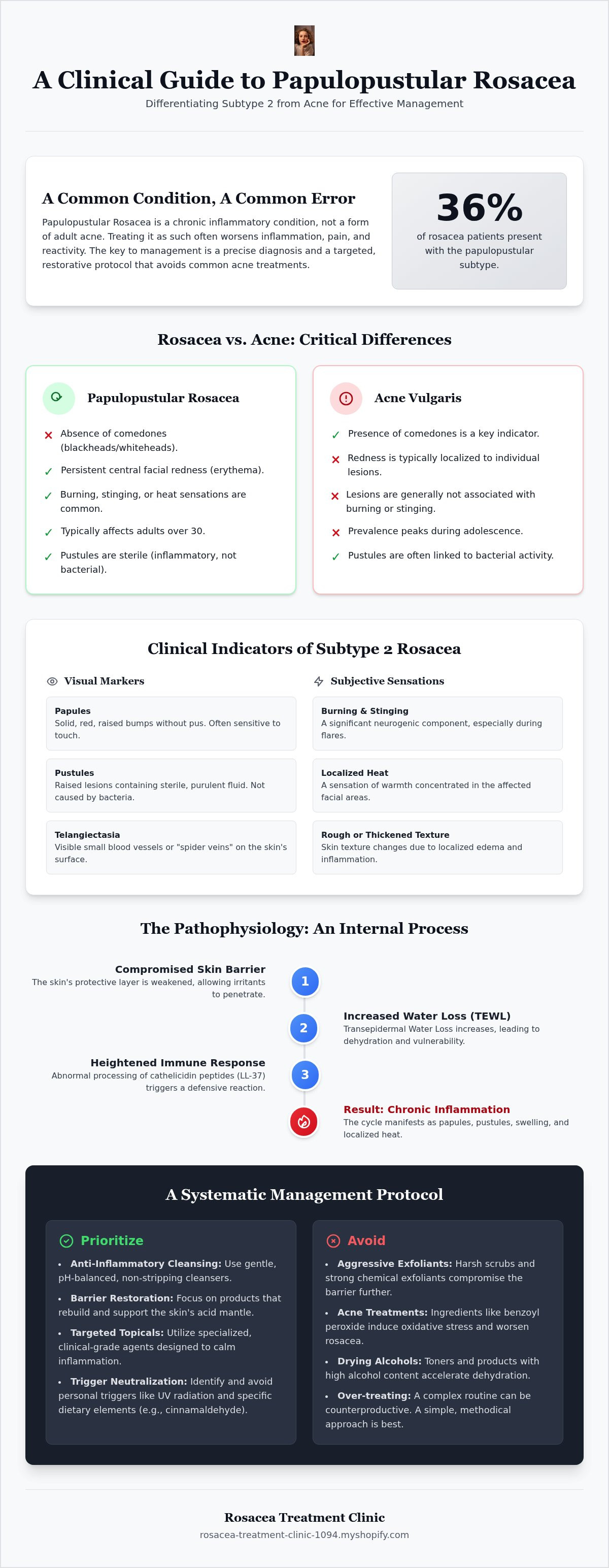
Trattare la rosacea papulo-pustolosa come una variante dell'acne adulta è un errore clinico che spesso esacerba la condizione. I pazienti sperimentano frequentemente la frustrazione di applicare trattamenti tradizionali per le imperfezioni, solo per scoprire che la pelle diventa più reattiva, dolente e infiammata. Questa confusione è comune; le lesioni infiammatorie della rosacea di sottotipo 2 imitano da vicino le comuni eruzioni cutanee, richiedendo tuttavia una strategia di gestione diametralmente opposta. La ricerca indica che il 36% dei pazienti con diagnosi di rosacea presenta il sottotipo papulo-pustoloso, eppure molti mancano di un percorso diagnostico preciso.
Questa guida fornisce un quadro clinico professionale per identificare questi specifici marcatori infiammatori e implementare un protocollo di gestione sistematico. Offre le conoscenze specialistiche necessarie per stabilizzare una barriera cutanea compromessa e ridurre la frequenza delle lesioni dolorose. Esamineremo il passaggio del 2026 verso il trattamento basato sul fenotipo, il ruolo dei topici antinfiammatori mirati e una sequenza metodica di cura della pelle progettata per produrre una cute più calma e meno reattiva. Passando da trattamenti aggressivi a un protocollo di ripristino strutturato, è possibile ottenere una stabilità dermatologica prevedibile e a lungo termine.
Punti Chiave
- Distinguere tra papule e pustole infiammatorie per evitare il comune errore clinico di trattare la rosacea di sottotipo 2 come una comune acne.
- Comprendere come l'iperattività del sistema immunitario innato e la disfunzione della barriera guidino l'infiammazione persistente caratteristica della rosacea papulo-pustolosa.
- Identificare e neutralizzare specifici fattori scatenanti ambientali e dietetici, come le radiazioni UV e gli alimenti contenenti cinnamaldeide, per prevenire riacutizzazioni infiammatorie.
- Adottare una strategia di gestione clinica che dia priorità alla detersione antinfiammatoria e al ripristino del mantello acido per stabilizzare la pelle reattiva.
- Utilizzare un protocollo metodico basato sulla ricerca per armonizzare il tono della pelle e ottenere una stabilità dermatologica a lungo termine.
Cos'è la rosacea papulo-pustolosa? Definizione del sottotipo 2
La rosacea papulo-pustolosa è una dermatosi infiammatoria cronica caratterizzata da eritema facciale centrale persistente ed eruzione di lesioni infiammatorie. Sebbene nel 2026 la comunità clinica sia passata verso un approccio alla diagnosi basato sul fenotipo, questa presentazione era storicamente classificata come Rosacea Papulo-pustolosa di Sottotipo 2. La condizione colpisce principalmente le superfici convesse del viso, nello specifico guance, mento e fronte. L'osservazione clinica rivela due distinti tipi di lesioni che definiscono tale presentazione:
- Papule: Elevazioni solide ed eritematose della pelle prive di materiale purulento. Sono spesso sensibili al tatto e appaiono a grappolo.
- Pustole: Lesioni sollevate contenenti fluido purulento. A differenza dell'acne batterica, queste pustole sono prevalentemente sterili e derivano da una cascata infiammatoria all'interno del sistema immunitario innato.
Questa presentazione infiammatoria è guidata da una complessa interazione tra disregolazione neurovascolare e una risposta immunitaria intensificata. Non è il risultato di scarsa igiene o infezione batterica; si tratta piuttosto di una sensibilità sistemica a stimoli interni ed esterni. Comprendere questi fondamenti è il primo passo nello sviluppo di un protocollo professionale per la stabilizzazione cutanea a lungo termine.
Rosacea vs. Acne: Identificare le differenze critiche
Differenziare tra rosacea papulo-pustolosa e acne volgare è essenziale per prevenire l'applicazione di agenti topici controindicati. Il segno patognomonico della rosacea è l'assoluta assenza di comedoni, come punti neri e punti bianchi. Mentre l'acne è una patologia dell'unità pilosebacea che coinvolge una sovrapproduzione di sebo, la rosacea è una crisi vascolare e infiammatoria. I pazienti presentano solitamente un eritema di fondo persistente che non si risolve tra le riacutizzazioni. Demograficamente, la rosacea colpisce più frequentemente adulti sopra i 30 anni, mentre la prevalenza dell'acne raggiunge il picco nell'adolescenza. Riconoscere queste realtà cliniche garantisce che la barriera cutanea non venga ulteriormente compromessa da esfolianti aggressivi specifici per l'acne o alcoli essiccanti.
Indicatori visivi e sensazioni soggettive
Oltre ai marcatori visivi, questa condizione è definita da specifiche sensazioni soggettive. I pazienti spesso avvertono un bruciore significativo, pizzicore o calore localizzato durante una riacutizzazione infiammatoria. Questa componente neurogena distingue la condizione dalle lesioni relativamente indolori della comune acne. Anche i cambiamenti nella texture della pelle sono evidenti; la pelle può risultare ruvida, secca o ispessita durante un episodio attivo a causa dell'edema localizzato. I medici osservano spesso teleangectasie, o capillari visibili, che si intrecciano attraverso le aree di infiammazione. Questi indicatori vascolari suggeriscono un elevato livello di sensibilità cutanea e un mantello acido compromesso. Una gestione efficace richiede un approccio sistematico al ripristino, utilizzando topici a pH bilanciato di grado clinico per ridurre la reattività e mitigare la sensazione di calore.
La fisiopatologia delle protuberanze infiammatorie
Una gestione efficace della rosacea papulo-pustolosa richiede la comprensione dei meccanismi biologici che trasformano un semplice rossore in una dolorosa lesione infiammatoria. Sebbene molti pazienti si concentrino sui fattori scatenanti esterni, la causa principale risiede in un fallimento sistemico dei sistemi protettivi della pelle. Non si tratta solo di una sensibilità superficiale, ma di una crisi strutturale e immunologica. Il Comitato di Esperti della National Rosacea Society osserva che la fisiopatologia coinvolge una complessa interazione tra il sistema immunitario innato e la disregolazione neurovascolare. Quando la barriera cutanea è compromessa, la perdita di acqua transepidermica (TEWL) aumenta, lasciando il derma vulnerabile agli irritanti ambientali che verrebbero altrimenti neutralizzati. Questa disidratazione persistente scatena una risposta difensiva che si manifesta con gonfiore, calore localizzato e la formazione finale di papule.
La cascata infiammatoria
Il passaggio dal rossore transitorio alle protuberanze infiammatorie persistenti è guidato da una sovrabbondanza di catelicidine, nello specifico il peptide LL-37. Nella pelle sana, questi peptidi assistono nella difesa antimicrobica, ma nella rosacea papulo-pustolosa vengono processati in modo anomalo, portando a un'infiammazione cronica e alla crescita di nuovi vasi sanguigni fragili. Questo spiega perché ingredienti standard anti-acne come il perossido di benzoile siano spesso catastrofici per i pazienti affetti da rosacea. Questi agenti inducono stress ossidativo e degradano ulteriormente il mantello acido, accelerando il ciclo di infiammazione invece di risolverlo. Nel tempo, episodi ripetuti di rossore portano all'accumulo di cellule infiammatorie nel derma, dove alla fine si uniscono nelle protuberanze rosse solide caratteristiche della condizione. Stabilizzare questa cascata richiede una transizione verso protocolli clinici di riparazione della barriera che privilegino la lenizione della risposta immunitaria rispetto all'esfoliazione aggressiva.
Acari Demodex e l'ambiente microbico
Il microbioma cutaneo gioca un ruolo decisivo nella frequenza e nella gravità delle eruzioni pustolose. La ricerca mostra costantemente che i pazienti con rosacea papulo-pustolosa esibiscono una densità significativamente più elevata di acari Demodex folliculorum rispetto a coloro che hanno una pelle sana. Questi acari abitano i follicoli piliferi e le ghiandole sebacee, dove la loro presenza e la loro morte rilasciano materiali infiammatori direttamente nel tessuto cutaneo. Le proteine prodotte dal batterio Bacillus oleronius, associato agli acari Demodex, agiscono come potenti antigeni che stimolano una risposta infiammatoria nel tessuto circostante. Poiché l'ambiente microbico cambia, le difese naturali della pelle vengono sopraffatte, portando alle lesioni piene di pus che molti scambiano per acne batterica. Gestire questo carico microbico è essenziale per ridurre la frequenza delle lesioni e ripristinare un ambiente cutaneo sano e meno reattivo.
Identificare e neutralizzare i fattori scatenanti comuni
Neutralizzare i fattori scatenanti è fondamentale per la gestione clinica. Questi fattori non sono solo irritanti, ma stressori biologici che provocano il sistema immunitario innato. Gestire la rosacea papulo-pustolosa richiede un audit metodico delle esposizioni ambientali, dietetiche e chimiche per prevenire il passaggio da un rossore transitorio a un episodio infiammatorio sostenuto. Le Strategie di Gestione Clinica per la Pelle Reattiva sottolineano che identificare questi catalizzatori è importante quanto l'intervento topico.
Temperature estreme e vento inducono una rapida vasodilatazione, mentre lo stress psicologico attiva vie neurogene che peggiorano il gonfiore. Gli stimolanti dietetici vanno oltre la capsaicina piccante. Gli alimenti contenenti cinnamaldeide, inclusi pomodori, agrumi e cioccolato, sono fattori scatenanti documentati che spesso sfuggono alla consapevolezza del paziente. L'alcol rimane un potente vasodilatatore, aumentando significativamente il flusso sanguigno verso la regione facciale centrale e alimentando la cascata infiammatoria.
Radiazioni UV e foto-infiammazione
L'esposizione ai raggi UV è il fattore scatenante più diffuso per le riacutizzazioni della rosacea. Mentre i raggi UVB causano bruciature superficiali, i raggi UVA penetrano più in profondità nel derma, danneggiando il collagene e stimolando il rilascio di citochine infiammatorie. Per i pazienti con rosacea papulo-pustolosa, questa foto-infiammazione è direttamente correlata a un aumento della frequenza delle papule. La protezione standard a largo spettro è spesso insufficiente; un protocollo professionale richiede un'elevata protezione UVA estesa per schermare la pelle dalle radiazioni a onda lunga responsabili del danno strutturale. Consultare una guida sulle Protezioni Solari ad Elevata Protezione UVA è essenziale per selezionare formulazioni che forniscano una difesa di grado clinico senza indurre ulteriore reattività.
Ingredienti per la cura della pelle da evitare
Gli irritanti chimici nei prodotti cosmetici standard si mascherano spesso da soluzioni anti-età o naturali. Alcol denaturato, amamelide e combinazioni di mentolo possono essere particolarmente distruttivi per una barriera lipidica compromessa, poiché inducono un'infiammazione immediata e intaccano il mantello acido. È vitale distinguere tra marketing "senza profumo" e formulazioni di grado clinico. Molti prodotti senza profumo contengono ancora essenze mascheranti o estratti botanici che agiscono come allergeni nascosti. I pazienti devono anche identificare esfolianti nascosti, come gli acidi glicolico o salicilico, che vengono spesso aggiunti alle creme idratanti quotidiane. A meno che non vengano utilizzati sotto guida clinica, questi ingredienti tendono a causare interruzioni nella barriera cutanea, facilitando l'ingresso di irritanti esterni e sostenendo il ciclo dell'infiammazione reattiva.
Strategie di gestione clinica per la pelle reattiva
Passare da uno stato reattivo a uno stabilizzato richiede un allontanamento dalle metodologie aggressive incentrate sull'acne. Per i pazienti con rosacea papulo-pustolosa, l'obiettivo è regolare verso il basso la risposta del sistema immunitario innato rinforzando al contempo la barriera fisica. La gestione clinica non è una questione di "pulire" la pelle con la forza; è un processo metodico di desensibilizzazione dello strato epidermico e di ripristino del mantello acido. Un ambiente a pH bilanciato è essenziale per la salute enzimatica e la prevenzione della crescita microbica eccessiva. Utilizzando topici specializzati, possiamo mitigare la segnalazione infiammatoria che porta alla formazione di papule e ridurre il calore associato al rossore cronico.
La detersione fondamentale
La fase di detersione è l'intervento più critico in un protocollo per rosacea. I tensioattivi standard spesso intaccano la barriera lipidica, il che innesca una reazione eccessiva del sistema immunitario. Un detergente di grado clinico deve essere non aggressivo e dare priorità all'azione antinfiammatoria per calmare la pelle prima dell'applicazione di qualsiasi trattamento successivo. L'utilizzo di un Detergente Schiumogeno Antinfiammatorio garantisce che i detriti superficiali e i sottoprodotti microbici vengano rimossi senza compromettere il mantello acido. La tecnica è importante quanto la formulazione. I pazienti dovrebbero impiegare un metodo di detersione con "acqua fresca" per ridurre al minimo la vasodilatazione. Il calore eccessivo durante il lavaggio favorisce l'afflusso di sangue verso la superficie, il che può esacerbare il pizzicore e il gonfiore associati alle lesioni infiammatorie attive.
Siero vs. Crema nelle fasi infiammatorie
Scegliere il veicolo corretto per gli ingredienti attivi dipende dallo stato attuale dell'infiammazione. Durante una riacutizzazione attiva, sono spesso preferiti fluidi leggeri e sieri idratanti rispetto a pesanti creme occlusive. Questo perché le formulazioni ricche di lipidi possono talvolta intrappolare il calore nel tessuto reattivo, prolungando potenzialmente un episodio di rossore. Sieri specializzati lavorano per desensibilizzare la pelle e fornire un'idratazione profonda per mitigare la perdita di acqua transepidermica. Man mano che la pelle si stabilizza, vengono introdotti fluidi di riparazione della barriera più corposi e complessi nutrienti per sigillare e riparare profondamente la barriera e fornire uno scudo difensivo più robusto contro i fattori scatenanti ambientali. Comprendere i Criteri di Selezione Clinica per Siero vs Crema nella Rosacea consente un'applicazione più mirata che rispetta gli attuali livelli di tolleranza della pelle.
Ripristinare una stabilità a lungo termine richiede un impegno verso questi interventi metodici. Puoi esplorare la nostra gamma completa di protocolli professionali per la gestione della rosacea per trovare la sequenza specifica che corrisponde al fenotipo attuale della tua pelle.
Il protocollo della Rosacea Treatment Clinic
Dal 1996, la Rosacea Treatment Clinic si concentra su protocolli dermatologici non soggetti a prescrizione basati sulla ricerca per gestire le complessità della pelle infiammata. Il nostro approccio alla rosacea papulo-pustolosa dà priorità alla riduzione sistematica dell'infiammazione attraverso topici che riparano la barriera e una difesa antiossidante specializzata. Il Nuovo Protocollo di Armonizzazione del Tono è una componente centrale di questa metodologia, progettata specificamente per affrontare il rossore persistente e le debolezze strutturali che permettono la formazione di papule. Seguendo un'applicazione strutturata e sequenziale di formulazioni di grado clinico, i pazienti possono raggiungere un livello di stabilità dermatologica che i prodotti cosmetici standard non possono fornire.
I protocolli della clinica si basano sulle scoperte dello Spectrum Analytical Laboratory, garantendo che ogni intervento serva a uno scopo funzionale. Andiamo oltre la raccomandazione del "detergente delicato" per fornire una difesa mirata contro i fattori scatenanti immunologici discussi nelle sezioni precedenti. Questo sistema metodico assicura che la pelle rimanga in uno stato perpetuo di ripristino, piuttosto che in un ciclo di reazione e riparazione.
Una routine mattutina metodica
Gli interventi mattutini devono concentrarsi sulla stabilizzazione e sulla difesa ambientale. Il primo passo consiste nel preparare la pelle a resistere ai fattori scatenanti quotidiani come le radiazioni UV e le fluttuazioni di temperatura. L'applicazione del Reprieve Serum Pure fornisce un necessario strato di protezione contro lo stress ossidativo, noto motore della cascata infiammatoria nella rosacea papulo-pustolosa. Questo è seguito dal Siero Idratante per rinforzare lo strato lipidico e ridurre la perdita di acqua transepidermica durante il giorno.
La protezione viene finalizzata con protezioni solari ad alto spettro UVA esteso. Come stabilito, i raggi UVA sono i principali catalizzatori delle riacutizzazioni infiammatorie. L'utilizzo di uno schermo di grado clinico garantisce che la pelle sia protetta dalle radiazioni a onda lunga senza l'irritazione spesso causata dalle creme solari commerciali.
Recupero e riparazione serali
La fase notturna è la finestra principale per il ripristino cellulare della pelle. La gestione serale inizia con la rimozione degli inquinanti ambientali e dei sottoprodotti microbici senza alterare il delicato mantello acido. Utilizziamo il Reprieve Night Serum Pure per veicolare agenti calmanti concentrati direttamente sul tessuto reattivo. Questo siero agisce durante la notte per regolare la risposta immunitaria e preparare la pelle a trattamenti riparatori più profondi.
Per finalizzare la routine serale, si applica una formulazione riparatrice serale per sigillare l'idratazione e supportare i naturali processi rigenerativi della pelle. Per coloro che soffrono di una crisi significativa della barriera cutanea, la Night Repair Cream offre un profilo lipidico più robusto per facilitare un rapido recupero. Questo ripristino notturno metodico assicura che i sistemi di difesa della pelle siano completamente rigenerati prima dell'inizio delle esposizioni ambientali del giorno successivo.
Ottenere la stabilità dermatologica a lungo termine
Il successo nella gestione della rosacea papulo-pustolosa richiede un passaggio da una mentalità aggressiva, incentrata sull'acne, a un ripristino metodico della barriera cutanea. La stabilità clinica si ottiene riconoscendo specifici marcatori infiammatori e neutralizzando i trigger biologici che provocano il sistema immunitario innato. Dando priorità alla detersione antinfiammatoria e a una protezione solare UVA ad alto spettro esteso, è possibile regolare le vie reattive e ridurre al minimo la frequenza di lesioni dolorose. Questo approccio sistematico assicura che la pelle non venga semplicemente trattata, ma attivamente difesa contro gli stress ambientali.
Dal 1996, la Rosacea Treatment Clinic fornisce protocolli di cura della pelle specializzati basati sulla ricerca clinica e sui risultati di laboratorio. Le nostre formulazioni senza prescrizione medica sono specificamente progettate per pelli altamente sensibili e reattive, fornendo un'alternativa professionale ai comuni prodotti cosmetici. Ogni elemento del nostro protocollo è progettato per armonizzare il tono della pelle e rinforzare il mantello acido con precisione chirurgica. L'implementazione di una sequenza strutturata e supportata dalla ricerca è il metodo più affidabile per ottenere risultati prevedibili e sostenibili.
Esplora i protocolli clinici per la rosacea per implementare oggi stesso una sequenza di gestione specializzata. Una cura costante ed esperta è la base di un incarnato più calmo e sano.
Domande frequenti
La rosacea papulo-pustolosa è uguale all'acne adulta?
No, queste condizioni sono entità dermatologiche distinte. Sebbene entrambe si presentino con lesioni infiammatorie, la rosacea papulo-pustolosa manca dei comedoni (punti neri e bianchi) tipici dell'acne. La rosacea è una crisi cronica del sistema neurovascolare e immunitario, piuttosto che il risultato di un'eccessiva produzione di sebo o di un'infezione batterica. L'applicazione di farmaci anti-acne standard sui tessuti affetti da rosacea causa spesso danni significativi alla barriera cutanea ed esacerba il rossore persistente.
Posso usare l'acido salicilico sui brufoli da rosacea?
In genere, l'acido salicilico non è raccomandato per i brufoli da rosacea reattiva. Questo "beta-idrossiacido" è progettato per sciogliere il sebo ed esfoliare i pori, il che risulta spesso troppo aggressivo per una barriera cutanea compromessa dalla rosacea. Il suo utilizzo può privare la pelle del mantello acido e scatenare una riacutizzazione infiammatoria. Focalizzati invece su prodotti topici a pH bilanciato, di grado clinico, che privilegiano la desensibilizzazione e la riparazione della barriera per risolvere le lesioni senza causare ulteriori irritazioni.
Quanto dura una riacutizzazione della rosacea papulo-pustolosa?
La durata di una riacutizzazione varia in base alla gravità del fattore scatenante e al protocollo di gestione in atto. Un episodio infiammatorio attivo può durare da diversi giorni a diverse settimane. Senza un intervento metodico per calmare la risposta immunitaria innata, la pelle può rimanere in uno stato di infiammazione persistente. L'applicazione costante di sieri antinfiammatori e l'evitamento di catalizzatori noti sono essenziali per accorciare la finestra di recupero.
La mia rosacea papulo-pustolosa sparirà mai completamente?
Attualmente non esiste una cura definitiva per la rosacea papulo-pustolosa, tuttavia è possibile ottenere una remissione a lungo termine attraverso un protocollo di cura della pelle disciplinato e basato sulla ricerca. Stabilizzando la barriera cutanea e gestendo i fattori scatenanti ambientali, i pazienti possono ridurre significativamente la frequenza e l'intensità delle eruzioni. Il successo si definisce attraverso il mantenimento di un incarnato calmo e meno reattivo tramite una cura dermatologica costante e specializzata.
Dovrei spremere le pustole associate alla rosacea?
Non dovresti mai tentare di spremere o estrarre queste pustole. A differenza dell'acne comune, queste lesioni sono principalmente sterili e derivano da una cascata infiammatoria nel derma. La manipolazione fisica causa traumi ai fragili vasi sanguigni e aumenta il rischio di infezione secondaria o cicatrici permanenti. Forzare un'estrazione non fa altro che approfondire l'infiammazione localizzata ed estendere i tempi di guarigione del tessuto interessato.
La dieta influisce davvero sui brufoli nella rosacea di sottotipo 2?
La dieta gioca un ruolo decisivo nella frequenza delle eruzioni infiammatorie. Alimenti specifici agiscono come trigger chimici che stimolano il sistema neurovascolare. Gli alimenti contenenti cinnamaldeide, come pomodori, agrumi e cioccolato, sono catalizzatori documentati di flushing facciale e formazione di papule. Anche l'alcol e i cibi piccanti inducono una rapida vasodilatazione. Mantenere un diario dettagliato dei trigger aiuta a identificare quali elementi dietetici stanno contribuendo al tuo fenotipo specifico.
Qual è il miglior tipo di protezione solare per la rosacea infiammatoria?
Le formulazioni cliniche assicurano che la pelle sia protetta dai raggi UVA a onda lunga. Per ulteriori informazioni, consulta La guida alla protezione UVA.
Lo stress può scatenare papule e pustole?
Lo stress è un potente trigger che attiva direttamente le vie pro-infiammatorie. Quando il corpo sperimenta stress psicologico, rilascia neuropeptidi e citochine che aumentano il flusso sanguigno facciale e il calore localizzato. Questa risposta neurogena alimenta la cascata infiammatoria, portando all'eruzione di nuove papule e pustole. L'implementazione di tecniche di gestione dello stress insieme a un protocollo di cura della pelle specializzato è vitale per mantenere la stabilità dermatologica e prevenire riacutizzazioni neurovascolari.