
I prodotti stessi studiati per illuminare la pelle sono spesso i principali fattori scatenanti del tuo prossimo ciclo infiammatorio. Per chi soffre di rosacea, la ricerca di un incarnato luminoso sembra spesso un rischio calcolato che finisce in un aumento dell'eritema. Probabilmente avrai scoperto che i sieri illuminanti standard si basano su principi attivi aggressivi che compromettono una barriera cutanea già fragile. Integrare l'Antioxidant Radiance Defence Shield nella tua routine risolve questo conflitto offrendo una protezione ambientale di grado clinico senza il rischio di riacutizzazioni. Ora non devi più scegliere tra una pelle spenta e reattiva e l'infiammazione visibile causata dalle tradizionali formulazioni alla Vitamina C.
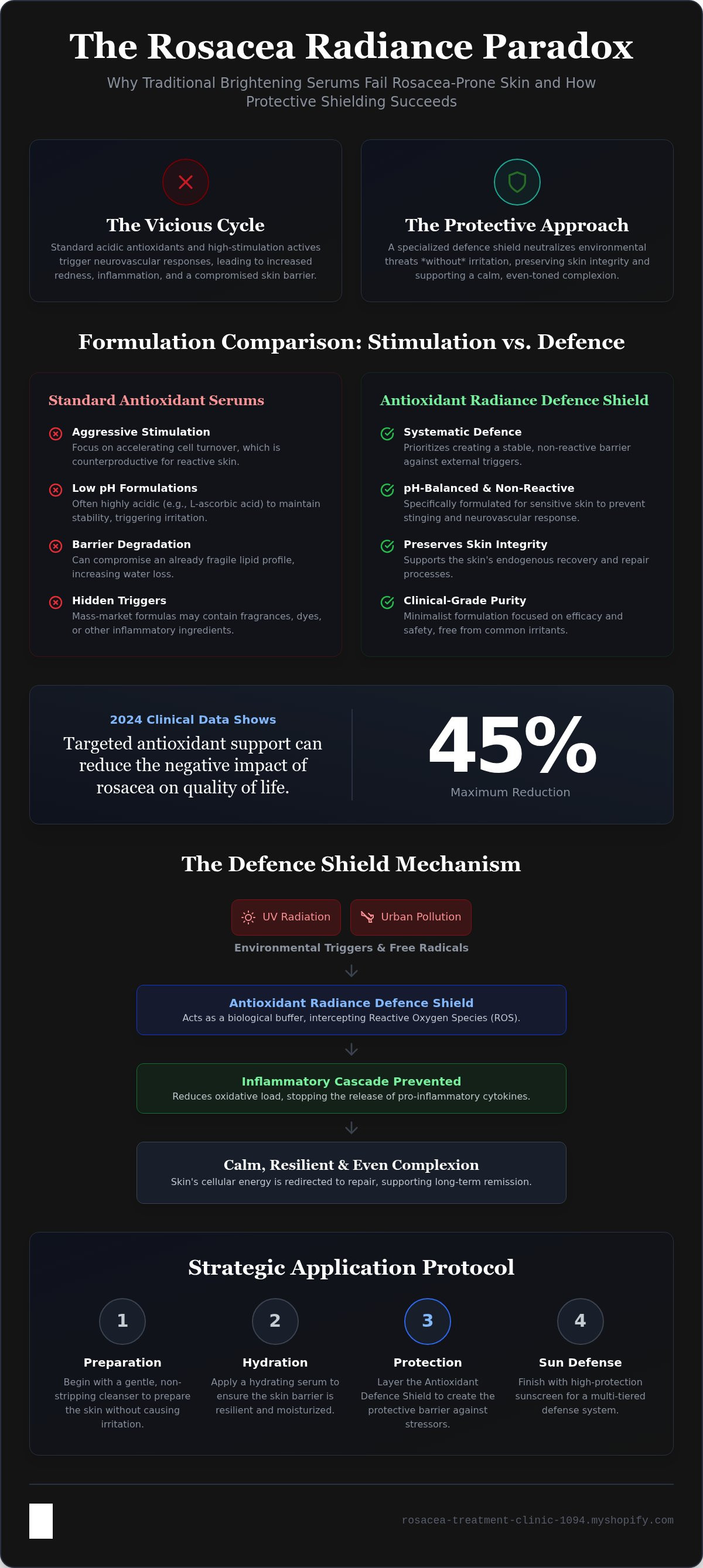
In questa guida imparerai come uno scudo antiossidante specializzato fornisca la difesa critica di cui la tua pelle ha bisogno senza scatenare l'infiammazione. Esploreremo perché una protezione ambientale clinica sia un passaggio imprescindibile nella gestione moderna della rosacea. Vedrai come questa formulazione si inserisce in un protocollo professionale per ottenere un incarnato calmo e uniforme. Esamineremo inoltre i dati del 2024 che mostrano come un supporto antiossidante mirato possa ridurre l'impatto negativo della rosacea sulla qualità della vita fino al 45 percento. Si tratta di andare oltre le soluzioni temporanee verso un approccio sistematico e protettivo alla salute della pelle.
Concetti Chiave
- Comprendere perché gli antiossidanti acidi tradizionali scatenano spesso infiammazioni e come neutralizzare le specie reattive dell'ossigeno (ROS) per prevenire il rossore persistente.
- Scoprire il meccanismo dell'Antioxidant Radiance Defence Shield nel fornire una protezione ambientale clinica mantenendo un incarnato calmo e uniforme.
- Imparare a distinguere tra formulazioni minimaliste di grado clinico e sieri di largo consumo che spesso contengono fattori scatenanti infiammatori nascosti.
- Padroneggiare il protocollo di applicazione strategica, incluse le fasi di preparazione essenziali e le tecniche di stratificazione per la massima efficacia degli ingredienti.
- Valutare l'impatto a lungo termine di una difesa antiossidante costante nell'attenuare l'invecchiamento cutaneo e nel sostenere il mantenimento della remissione clinica.
Il Paradosso della Luminosità nella Rosacea: Perché gli Antiossidanti Standard Falliscono
In dermatologia clinica, la luminosità si riferisce alla riflessione uniforme della luce da uno strato corneo liscio e idratato. Per i soggetti con Rosacea, questa luminosità è frequentemente mascherata da un'infiammazione cronica di basso grado e da congestione vascolare. I prodotti antiossidanti standard spesso esacerbano il problema. Gli antiossidanti acidi ad alta concentrazione, in particolare l'acido L-ascorbico, richiedono solitamente un pH basso per rimanere relativamente stabili. Sebbene efficaci per i tipi di pelle resilienti, questa acidità innesca spesso risposte neurovascolari immediate, portando a un rossore persistente invece del bagliore desiderato. La priorità clinica deve spostarsi da un'illuminazione aggressiva a una protezione ambientale sistematica.
Fattori Scatenanti Ambientali e la Barriera della Rosacea
La barriera cutanea della rosacea è intrinsecamente compromessa. È caratterizzata da una maggiore perdita di acqua transepidermica e da un profilo lipidico disfunzionale. I radicali liberi derivanti dalle radiazioni UV e dall'inquinamento urbano catalizzano un processo chiamato perossidazione lipidica, che degrada ulteriormente questa fragile architettura. Negli ambienti urbani densi, una crema idratante standard è insufficiente. Gli inquinanti agiscono come fattori di stress chimico che penetrano la barriera, scatenando sensibilità neurovascolare e cascate infiammatorie. Questo stress ossidativo funge da catalizzatore primario per le riacutizzazioni. Una gestione efficace richiede un secondo strato di difesa per neutralizzare queste specie reattive dell'ossigeno prima che raggiungano il livello cellulare.
La Differenza Clinica tra Stimolazione e Difesa
Molti sieri di largo consumo si concentrano sulla stimolazione. Utilizzano principi attivi progettati per accelerare il turnover cellulare o esfoliare la superficie. Per la pelle reattiva, questo approccio è controproducente. I protocolli clinici danno priorità alla difesa rispetto all'intervento. Uno Antioxidant Radiance Defence Shield specializzato funziona diversamente da un acido correttivo. Preserva l'integrità della pelle creando una barriera stabile e non reattiva contro i fattori scatenanti esterni. Spesso viene stratificato sopra un Siero Idratante per garantire che la barriera rimanga resiliente mentre neutralizza le minacce ambientali.
I pazienti dovrebbero dare priorità agli antiossidanti lenitivi che stabilizzano la pelle piuttosto che a quelli che la provocano. All'interno di un protocollo strutturato di cura della pelle medica, l'Antioxidant Radiance Defence Shield è un passaggio imprescindibile per mantenere la remissione a lungo termine. Questa transizione dalla stimolazione attiva allo scudo protettivo è essenziale per ottenere un incarnato calmo e uniforme senza il rischio di irritazioni iatrogene.
Concentrandoci sulla difesa, affrontiamo lo stress ossidativo sottostante che guida il ciclo infiammatorio.
Definire il Meccanismo dello Scudo Antiossidante Radiance Defence
L'Antioxidant Radiance Defence Shield è un intervento topico specializzato progettato per i vincoli fisiologici della rosacea. In un contesto clinico, funge da tampone biologico tra lo strato corneo e i fattori di stress ambientali. Il meccanismo primario prevede la neutralizzazione sistematica delle Specie Reattive dell'Ossigeno (ROS). La ricerca evidenzia il Ruolo dello Stress Ossidativo nella Rosacea, in cui i radicali liberi provocano il rilascio di citochine pro-infiammatorie. Intercettando queste molecole, lo scudo previene la successiva cascata neurovascolare che si manifesta come rossore facciale persistente.
Questa formulazione sostiene i processi di recupero endogeno della pelle piuttosto che limitarsi a bloccare le minacce esterne. Riducendo il carico ossidativo, la pelle può reindirizzare l'energia cellulare verso la produzione di fluido di riparazione naturale. Questo processo è essenziale per mantenere l'integrità della barriera e la resilienza a lungo termine. Esiste anche una sinergia documentata tra antiossidanti topici e protezioni solari ad alta protezione. Mentre le creme solari riflettono o assorbono i raggi UV, lo scudo neutralizza eventuali radicali liberi residui che bypassano il filtro primario, fornendo un sistema di difesa a più livelli che le creme solari da sole non possono raggiungere.
Percorsi Protettivi Chiave per la Pelle Sensibile
I sistemi di somministrazione antiossidante tradizionali utilizzano spesso ambienti a pH basso che causano un bruciore immediato. L'Antioxidant Radiance Defence Shield utilizza un veicolo non reattivo specificamente per la rosacea. Ciò previene l'immediata vasodilatazione, spesso descritta come sensazione di "calore", che si verifica quando la pelle è esposta agli inquinanti ambientali. Nel tempo, neutralizzare questi fattori di stress aiuta a mantenere la densità del collagene.
Questo è fondamentale per i pazienti affetti da rosacea, poiché l'infiammazione cronica porta spesso a un assottigliamento della pelle e a teleangectasie visibili.
Ottenere la Luminosità attraverso la Soppressione dell'Infiammazione
La luminosità è il risultato visibile della soppressione della micro-infiammazione. Quando la pelle è in uno stato di difesa cronica, appare "spenta" o congestionata a causa della dilatazione vascolare. Sopprimendo costantemente i fattori scatenanti infiammatori, emergono le proprietà naturali di riflessione della luce della pelle.
Questo non si ottiene tramite rivestimenti superficiali temporanei, ma attraverso una stabilità vascolare sostenuta.
Una difesa costante è molto più efficace di "trattamenti" periodici che spesso fanno passare la pelle attraverso cicli di irritazione e recupero.
Per chi cerca una remissione a lungo termine, adottare un approccio metodico con protocolli clinici specializzati è il percorso più affidabile verso un incarnato equilibrato.
Confronto tra Formulazioni: Sieri Antiossidanti Standard vs. Scudi di Difesa Clinica
I sieri antiossidanti di largo consumo danno priorità agli elenchi degli ingredienti per attrarre un'ampia demografia di consumatori. Queste formulazioni contengono spesso componenti che, per un paziente con rosacea, aumentano la probabilità statistica di una riacutizzazione da contatto. Al contrario, l'Antioxidant Radiance Defence Shield utilizza una filosofia clinica. Escludendo riempitivi non necessari e potenziali irritanti, la formulazione si concentra esclusivamente sulla neutralizzazione dei fattori di stress ambientali mantenendo la stabilità vascolare.
L'applicazione fisica di un prodotto è un fattore spesso trascurato nella gestione della rosacea. Molti sieri standard hanno una consistenza appiccicosa o acquosa che richiede una manipolazione significativa per essere stesa. Questo attrito può innescare irritazione meccanica e arrossamento immediato. Uno scudo di grado professionale è progettato con una maggiore "scivolosità" per consentire una distribuzione senza sforzo sul viso. Ciò garantisce che la barriera cutanea non venga stressata durante il processo di applicazione, preservando i risultati di un Fluido di Riparazione Originale o passaggi correttivi simili.
Livelli di pH e Compatibilità della Barriera
La maggior parte dei sieri illuminanti è altamente acida, mantenendo spesso un pH tra 3.0 e 3.5 per facilitare la penetrazione dell'acido L-ascorbico. Sebbene questa acidità sia benefica per la pelle sana, è catastrofica per il mantello acido compromesso dalla rosacea. Causa una risposta di bruciore immediata e può portare al degrado della barriera indotto chimicamente. L'Antioxidant Radiance Defence Shield mantiene un profilo di pH neutro. Questa compatibilità garantisce che lo strato protettivo supporti i meccanismi di difesa naturali della pelle senza interrompere il fragile equilibrio del pH necessario per i processi di riparazione enzimatica.
Il Ruolo degli Antiossidanti Botanici vs. Sintetici
Gli scudi di grado professionale danno priorità agli antiossidanti basati sul loro potenziale antinfiammatorio documentato piuttosto che sulle tendenze di marketing. Molti oli antiossidanti "naturali" contengono alte concentrazioni di acido oleico o composti volatili che provocano la pelle sensibile. La Rosacea Treatment Clinic seleziona composti specifici supportati dalla ricerca che offrono alta stabilità e bassa irritabilità. Gli antiossidanti sintetici sono spesso preferiti in un contesto clinico perché offrono una potenza prevedibile e standardizzata senza le impurità presenti negli estratti botanici grezzi. Questo processo di selezione metodica garantisce che ogni goccia fornisca una difesa funzionale invece del solo richiamo sull'etichetta. Questa efficienza migliora il costo per utilizzo, poiché le concentrazioni cliniche forniscono una protezione superiore rispetto alle alternative ricche di riempitivi.
Applicazione Strategica: Integrare lo Scudo in un Protocollo per la Rosacea
La gestione efficace dei fenotipi della rosacea dipende dalla stratificazione metodica di specifici interventi topici. Un protocollo clinico garantisce che ogni prodotto migliori l'efficacia del successivo riducendo al minimo l'attrito meccanico. Aderire a una sequenza strutturata consente alla pelle di assorbire i composti attivi senza innescare una risposta neurovascolare. Questo approccio sistematico trasforma la cura quotidiana della pelle in un piano di trattamento di grado medico.
Per integrare l'Antioxidant Radiance Defence Shield in modo efficace, segui questa sequenza clinica in quattro passaggi:
- Passaggio 1: Preparazione. Inizia con l'Anti-Inflammatory Foaming Cleanser. Questo rimuove gli inquinanti superficiali e i detriti senza interrompere la fragile barriera lipidica o indurre eritema post-lavaggio.
- Passaggio 2: Idratazione. Applica il Reprieve Serum Pure e il Siero Idratante. Questo fornisce una base ricca di umidità che facilita la distribuzione uniforme degli strati successivi.
- Passaggio 3: Difesa. Eroga l'Antioxidant Radiance Defence Shield. La sua texture ad alta scivolosità gli permette di scorrere sulle aree reattive, fornendo una barriera protettiva contro lo stress ossidativo. Mattina: segui con una protezione UVA estesa elevata.
- Passaggio 4: Occlusione. Sigilla il protocollo con l'Original Repair Treatment Cream o parla con il tuo specialista di usi alternativi. Questo passaggio finale previene la perdita di acqua transepidermica e blocca i composti antiossidanti per un rilascio prolungato più lungo.
Finalizza la sequenza mattutina con una protezione UVA elevata per prevenire il degrado dello strato antiossidante da parte delle radiazioni ultraviolette. Ciò garantisce che lo scudo rimanga stabile durante tutto il giorno.
Protocolli di Applicazione Mattutina vs. Serale
La difesa mattutina è fondamentale poiché la pelle affronta il suo carico più elevato di fattori di stress ambientale, inclusi inquinamento e luce.
Tuttavia, il protocollo non dovrebbe limitarsi alle ore mattutine.
Usare lo scudo la sera sostiene il ciclo di riparazione notturna della pelle. Se combinato con il Reprieve Serum Pure, la formulazione fornisce un'intensa azione calmante che compensa il danno infiammatorio accumulato durante il giorno.
Questo ciclo di 24 ore di protezione e riparazione è essenziale per ottenere una stabilità cutanea a lungo termine.
Gestione delle Transizioni Stagionali
I cambiamenti stagionali richiedono specifici aggiustamenti del protocollo per mantenere la remissione. Durante i mesi estivi ad alto indice UV, lo scudo agisce come filtro secondario contro i radicali liberi indotti dal calore. In inverno, funge da tampone critico contro il "rossore invernale" causato dagli effetti disseccanti del riscaldamento domestico e dai venti forti. La difesa ambientale è un requisito clinico per tutto l'anno per mantenere la stabilità della pelle soggetta a rosacea. Per stabilire una routine coerente, esplora le nostre collezioni complete di trattamenti clinici per la rosacea.
Cura Completa: Perché la Protezione di Grado Clinico è Essenziale per la Remissione
Una gestione efficace della rosacea richiede uno spostamento dall'intervento in caso di crisi alla stabilità fisiologica a lungo termine. Mentre molti pazienti si concentrano esclusivamente sulla soppressione delle riacutizzazioni attive, l'impatto cumulativo dello stress ossidativo ambientale determina la traiettoria della condizione. L'applicazione costante dell'Antioxidant Radiance Defence Shield funge da misura preventiva contro la progressione della sensibilità neurovascolare. L'infiammazione cronica di basso grado accelera la degradazione della matrice dermica, portando spesso a un assottigliamento prematuro della pelle e a teleangectasie più pronunciate. Neutralizzando quotidianamente le specie reattive dell'ossigeno, preservi l'integrità strutturale della pelle e mantieni uno stato di remissione clinica.
Questo approccio sistematico supporta l'efficacia di protocolli dermatologici più ampi. Una manutenzione di livello professionale garantisce che la pelle rimanga resiliente tra i trattamenti più intensivi. L'utilizzo di soluzioni non soggette a prescrizione medica, supportate dalla ricerca, fornisce un ponte necessario tra l'intervento medico e la cura quotidiana. È essenziale andare oltre le applicazioni topiche reattive verso una strategia di protezione proattiva che affronti le cause sottostanti della reattività vascolare. Questa difesa metodica previene la natura ciclica della rosacea, in cui la pelle oscilla costantemente tra irritazione e recupero.
Il ruolo della ricerca fondamentale
La Rosacea Treatment Clinic utilizza formulazioni basate sull'eredità di ricerca del Spectrum Analytical Laboratory. Questo patrimonio clinico garantisce un livello di sicurezza e precisione che i prodotti di largo consumo non possono replicare. La Rosacea Treatment Clinic privilegia soluzioni ad alta protezione, non farmacologiche, che evitano gli effetti rebound o le preoccupazioni sistemiche a volte associate all'uso prolungato di farmaci prescritti. Ogni componente di un protocollo è selezionato per la sua capacità di sostenere i meccanismi di difesa biologica della pelle senza indurre stress iatrogeno.
Prossimi passi nel tuo percorso di trattamento
Passare a un protocollo difensivo completo comporta molto più della semplice aggiunta di un nuovo prodotto; richiede un impegno verso una filosofia di cura della pelle sistematica. Non stai solo trattando un sintomo temporaneo; stai proteggendo un sistema biologico compromesso da un ambiente ostile. Questa transizione è una tappa fondamentale nella gestione professionale della rosacea. Adottando un approccio metodico, ti assicuri che i fattori scatenanti ambientali non dettino più la salute o l'aspetto della tua carnagione. Per stabilire una base solida per la tua pelle, esplora la nostra gamma completa di protocolli specializzati per la rosacea e scudi ambientali progettati per una remissione sostenuta.
Stabilire una resilienza ambientale a lungo termine
Passare dalla gestione reattiva dei sintomi alla protezione proattiva della pelle è un passo fondamentale nella cura professionale della rosacea. Privilegiando un sistema di rilascio a pH bilanciato, ti assicuri che la protezione ambientale non vada a discapito della stabilità vascolare. L'integrazione dello Antioxidant Radiance Defence Shield in un protocollo strutturato fornisce il necessario cuscinetto contro gli inquinanti urbani e lo stress ossidativo. Queste formulazioni specializzate non soggette a prescrizione medica sono il risultato di un autorevole supporto dermatologico mantenuto dal 1996 e di protocolli clinici basati sulla ricerca fondamentale della metà degli anni '80.
Hai imparato che ottenere luminosità è una questione di soppressione della micro-infiammazione attraverso una difesa metodica piuttosto che attraverso una stimolazione aggressiva. Questo approccio sistematico assicura che la tua pelle rimanga calma mentre affronta i fattori scatenanti esterni quotidiani. È possibile mantenere una carnagione chiara e uniforme con i giusti strumenti professionali. Assicura la tua difesa ambientale clinica nella nostra collezione completa e inizia oggi stesso il tuo viaggio verso una remissione cutanea sostenuta.
Domande frequenti
L'Antioxidant Radiance Defence Shield è adatto a tutti i sottotipi di rosacea?
Sì. È progettato per affrontare il fenotipo clinico della rosacea indipendentemente dalla classificazione del sottotipo. Neutralizza i percorsi universali di stress ossidativo presenti nelle presentazioni eritemato-telangiectasica, papulo-pustolosa e fimatosa. Il veicolo non reattivo garantisce la compatibilità con le diverse carenze della barriera cutanea associate a questi diversi sintomi, fornendo una base stabile per qualsiasi tipo di pelle soggetta a rosacea.
Posso usare questo prodotto se ho una pelle estremamente sensibile che reagisce a tutto?
Sì, la formulazione è specificamente progettata per pelli iper-reattive. A differenza dei sieri di largo consumo, esclude gli irritanti che colpiscono le risposte neurovascolari. Il suo profilo clinico minimalista privilegia la stabilità della barriera e la calma vascolare. Ciò lo rende un'opzione valida per i pazienti che storicamente non sono riusciti a tollerare i normali prodotti antiossidanti o i tradizionali attivi illuminanti.
In che modo questo scudo differisce da un normale siero alla Vitamina C?
L'Antioxidant Radiance Defence Shield si differenzia per l'utilizzo di composti a pH neutro. La maggior parte dei prodotti a base di Vitamina C si affida all'acido L-ascorbico a basso pH, che causa immediato bruciore e arrossamento nei pazienti affetti da rosacea. Questo scudo fornisce protezione ambientale senza alterare il fragile mantello acido della pelle o indurre irritazione iatrogena.
Devo comunque indossare la protezione solare se uso uno scudo antiossidante?
Sì, lo scudo è un livello di difesa secondario piuttosto che un filtro UV primario. Sebbene neutralizzi i radicali liberi generati dall'esposizione ai raggi UV, non contiene i filtri necessari per bloccare le radiazioni. Per una protezione ottimale, dovrebbe essere applicato sotto una protezione solare UVA ad alta protezione per prevenire sia il danno diretto al DNA che il degrado degli antiossidanti.
L'Antioxidant Radiance Defence Shield aiuterà a ridurre arrossamenti e vampate?
Aiuta a ridurre gli arrossamenti neutralizzando le specie reattive dell'ossigeno che innescano le cascate infiammatorie. Sopprimendo questi stress ambientali, lo scudo aiuta a stabilizzare il sistema neurovascolare. Sebbene non sia un vasocostrittore, l'uso costante porta a una carnagione più calma prevenendo il carico ossidativo che guida gli episodi di flushing cronico e l'eritema persistente.
Quanto tempo ci vuole per vedere risultati visibili dall'uso dello scudo?
Un sollievo immediato è comune, ma i miglioramenti visibili nel tono e nella luminosità della pelle emergono solitamente dopo quattro-sei settimane di uso costante. Questa tempistica riflette il periodo necessario affinché la pelle completi un ciclo di turnover cellulare completo sotto stress ossidativo ridotto. L'Antioxidant Radiance Defence Shield fornisce benefici cumulativi, con una stabilità della pelle che diventa più pronunciata nel tempo.
Posso usare questo prodotto insieme al mio farmaco prescritto per la rosacea?
È generalmente compatibile con i farmaci prescritti per la rosacea, sebbene sia necessario verificarlo con il proprio medico. Lo scudo funziona come uno strumento di manutenzione non soggetto a prescrizione che supporta la barriera cutanea. Se utilizzato insieme a trattamenti medici come metronidazolo o acido azelaico, fornisce la difesa ambientale necessaria per preservare i risultati ottenuti attraverso l'intervento clinico.
Questo scudo è efficace contro la luce blu e l'inquinamento digitale?
Sì, la formulazione contiene antiossidanti specifici che neutralizzano lo stress ossidativo indotto dalla luce visibile ad alta energia (HEV). L'inquinamento digitale e la luce blu degli schermi contribuiscono al carico cumulativo di radicali liberi che può provocare riacutizzazioni della rosacea. Integrare lo scudo nella tua routine quotidiana fornisce una barriera completa contro questi moderni fattori di stress ambientale per tutto il giorno.