
The most effective approach to reactive skin is not found in the pharmacy aisle but in the precise restoration of the dermal barrier. Many individuals struggle with persistent facial redness and the stinging sensations caused by standard SPF and cleansers. When searching for legitimate treatments for rosacea, the priority must shift from temporary symptom suppression to long-term structural repair. A stable, non-reactive skin barrier is the only viable defense against the environmental triggers that cause chronic flushing and inflammation.
We understand the confusion that arises when every new serum seems to trigger a flare-up. This professional guide provides authoritative, research-backed dermatological protocols designed to manage symptoms and restore skin barrier integrity without the need for prescription medications. You will discover a clear, methodical daily skincare protocol that utilizes specialized interventions like our Anti-Inflammatory Foaming Cleanser and Reprieve Serum Pure. This systematic approach focuses on the reduction of visible redness and the establishment of a resilient, professional-grade skin defense system.
Key Takeaways
- Understand why effective treatments for rosacea require a multi-stage clinical protocol rather than temporary, cosmetic redness masks.
- Identify the role of anti-inflammatory surfactants in specialized cleansing as the most critical intervention for reducing surface heat.
- Distinguish between high-potency serums, repair fluid , and nurturing complexes to ensure the safe delivery of desensitising agents to reactive skin.
- Discover why high extended UVA protection is a therapeutic pillar necessary for stabilizing the skin's underlying vascular networks.
- Establish a structured, research-based morning and evening routine designed for long-term skin barrier restoration and remission.
Clinical Realities of Rosacea Management: Beyond Temporary Symptom Suppression
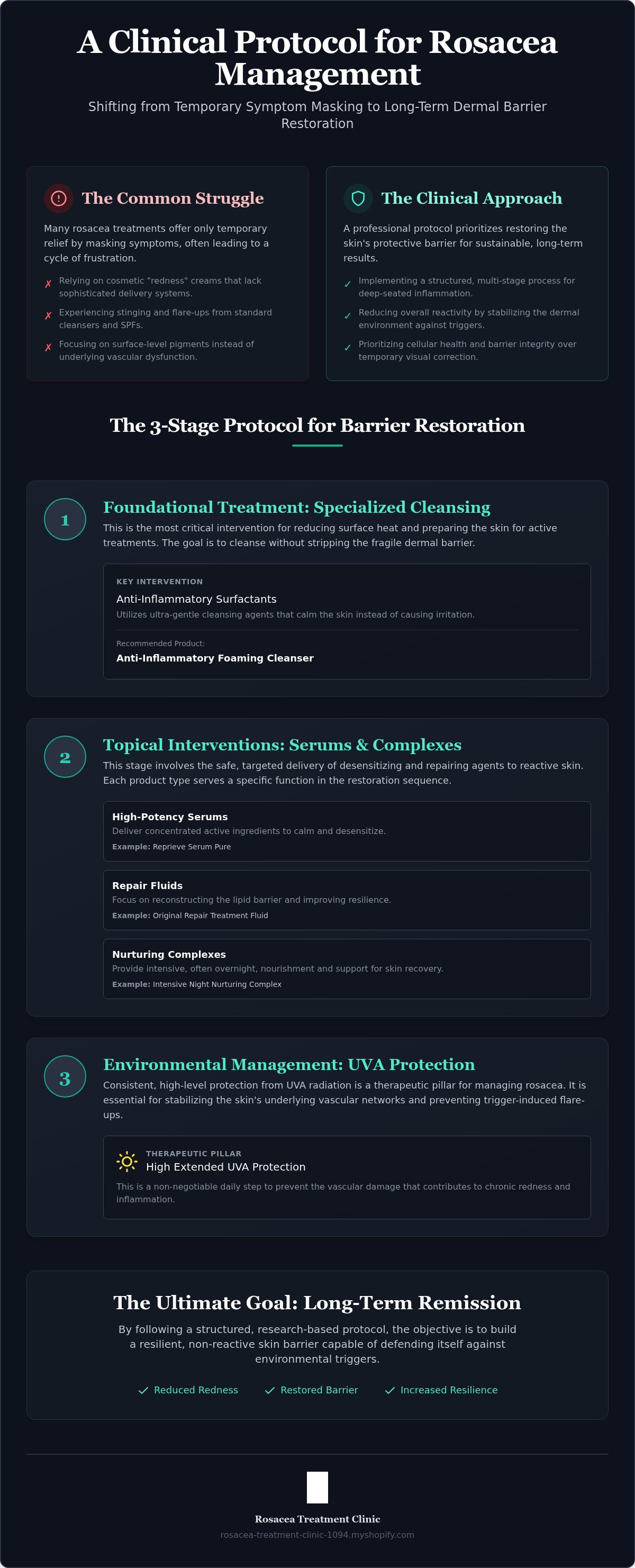
Effective management of rosacea necessitates a transition from reactive symptom masking to a structured multi-stage process. While many seek immediate relief through cosmetic "redness" creams these formulations often lack the sophisticated delivery systems required to address deep-seated inflammation. Standard retail products frequently fail because they focus on pigments rather than the underlying vascular dysfunction. For those investigating a professional comprehensive overview of rosacea and its biological mechanisms it is clear that the primary objective must be the restoration of the skin's protective barrier. This reduces overall reactivity and stabilizes the dermal environment against external triggers. Research-based dermatological protocols, such as those developed through clinical analysis since the mid-1980s, offer a sustainable, long-term solution by prioritizing cellular health over temporary visual correction.
Identifying the Rosacea Phenotype
Recognizing specific clinical signs is vital for selecting appropriate treatments for rosacea. The condition typically manifests through persistent erythema, inflammatory papules, and telangiectasia. It is essential to distinguish between transient flushing, which is a temporary vascular response, and chronic, rosacea-related redness that indicates a compromised barrier. Practitioners also emphasize early monitoring for ocular rosacea symptoms, including persistent eye irritation, dryness, or blepharitis. Identifying these specific phenotypes early allows for the implementation of targeted, drug-free protocols before vascular damage becomes irreversible or requires more invasive measures.
The Role of Non-Prescription Clinical Interventions
Clinical-grade protocols differ significantly from standard over-the-counter cosmetics. While mass-market products focus on trends clinical interventions prioritize biochemical efficacy and barrier defense. Many patients now prioritize these specialized protocols to avoid the potential side effects associated with aggressive prescriptions. By focusing on desensitising emulsions, anti-inflammatory surfactants, and high-protection UVA shields users can achieve long-term remission while maintaining skin health. This methodical approach ensures that every intervention serves a specific functional purpose in the restoration sequence. For a deeper analysis of these clinical differences, review the resource on Rosacea Facial Redness: Clinical Realities vs Common Misconceptions.
Foundational Treatment Protocols: The Role of Specialized Cleansing
Cleansing serves as the primary point of contact in any dermatological routine making it the most critical intervention for reactive skin. Standard cleansers often contain aggressive sulfates that strip essential lipids and exacerbate vascular dilation. When evaluating Rosacea treatment options, the surfactant profile of your cleanser determines the long-term stability of the dermal barrier. Our specialized Cleansers Collection utilises anti-inflammatory surfactants designed to neutralize surface heat and lift impurities without disrupting lipid integrity. This prevents the inflammatory cascade often triggered by traditional soaps. For individuals utilizing high-protection sunscreens or makeup a "pre-cleansing" protocol with a Pre-Cleansing Emulsifier is necessary. This step ensures thorough removal of environmental debris without the need for aggressive mechanical friction which is a common cause of secondary irritation.
Foaming Cleanser vs. Cleansing Emulsion
Clinical selection depends on the current state of the skin barrier. The Anti-Inflammatory Foaming Cleanser is indicated for active flare-ups where heat reduction is a priority. Conversely, the Hydrating Desensitising Cleansing Emulsion is formulated for severely compromised barriers requiring lipid replenishment. For a detailed technical breakdown refer to the analysis on Foaming Cleanser vs Cleansing Emulsion for Rosacea: A Clinical Comparison (2026). These options provide the foundation for all effective treatments for rosacea by ensuring the skin remains calm before active serums are applied.
The Clinical Importance of Temperature and Technique
Methodical application is as vital as the formulation itself. Water temperature must remain strictly tepid. Extreme heat or cold triggers immediate vasodilation and neurogenic flushing, undermining the efficacy of the protocol. We advocate for a "no-rub" technique during every cleansing cycle. This involves gently massaging the cleanser using only the pads of the fingers and rinsing with minimal pressure. This deliberate approach maintains capillary integrity. It prevents the mechanical stress that often leads to stinging or post-wash erythema. Maintaining a non-stripping approach is essential to preserve the skin's restoration and preventing the "tight" sensation that signals barrier distress. You can explore our full range of professional protocols and targeted treatments for rosacea within our specialized product collections.
Topical Interventions: Analyzing Serums, Repair Fluids, and Nurturing Complexes
Serums function as high-potency delivery systems. They bypass the skin's surface to deliver desensitising agents directly to the lower layers. In a professional dermatological protocol for rosacea topicals are categorized by their molecular weight and functional intent. A Repair Fluid serves as a lightweight, fast-absorbing lipid-replenishing agent. Conversely, a Nurturing Complex provides a denser, more occlusive layer for prolonged structural support during rest. Morning protocols prioritize environmental defense and vascular stabilization. Nocturnal applications focus on cellular restoration and barrier sealing. The Reprieve Collection represents a research-backed response to acute skin stress, utilizing specific desensitising agents to calm reactive vascular networks.
Hydrating and Desensitising Serums
High-potency serums are foundational to dermatologic treatments for rosacea. The Hydrating Serum utilizes advanced humectants to maximize moisture retention and improve dermal elasticity. For those experiencing acute sensitivity or thermal discomfort Reprieve Serum Pure offers targeted desensitising benefits to reduce the perception of stinging. These interventions are most effective when integrated into a comprehensive serum protocol. Such a system ensures that active ingredients work in synergy addressing both surface reactivity and deeper inflammatory markers simultaneously.
Nighttime Restoration and Barrier Repair
Nocturnal care is the most opportune time for barrier reinforcement. Applied after the anti-inflammatory Reprieve Night Serum Pure the Original Repair Treatment Fluid provides a lightweight option for lipid restoration, ideal for those who prefer a sheer finish. The Original Repair Treatment Cream offers a more substantial lipid profile for severely compromised skin requiring intensive protection. For deep nocturnal repair, the Intense Night Nurturing Complex delivers concentrated nutrients to support the skin's innate healing processes. The clinical role of the Night Repair Cream is to prevent transepidermal water loss and deeply repair skin while treating sings of aging. This prevents the dehydration-induced inflammation that often complicates reactive skin conditions. Consistent application of these treatments for rosacea ensures the skin remains resilient against the environmental stressors of the following day.
Environmental Management: High Extended UVA Protection as a Treatment Pillar
Dermatological protocols must redefine UVA protection as a therapeutic intervention rather than a secondary preventative measure. While UVB rays cause superficial burning, UVA wavelengths penetrate deeper into the dermis, directly impacting the reactive vascular networks responsible for chronic flushing. High Extended UVA Protection refers to formulations that block the widest possible range of the UVA spectrum, preventing the photo-induced inflammatory cascade. Standard sunscreens frequently fail rosacea patients because they convert UV energy into thermal energy and release it into vulnerable facial skin. Additionally, many mass-market products contain volatile chemicals or fragrances that can cause the "stinging eyes" sensation common in reactive phenotypes. Effective treatments for rosacea prioritize specialized filters that maintain a neutral skin temperature. You can explore these clinically validated formulations in our Sunscreens Collection.
The Clinical Necessity of SPF 50 for Reactive Skin
Utilizing a high sun protection factor is essential for stabilizing the skin's defense mechanisms. Attend SPF 50 serves as a foundational defense tool providing a physical shield against the radiation that triggers neurogenic inflammation. For patients with a severely compromised stratum corneum, the De-Sensitising Barrier Fluid SPF 50 offers dual-action protection by combining high-level UV filters with barrier-replenishing lipids. This approach ensures the skin remains cool and desensitised even during peak daylight hours. For a technical analysis of how radiation interacts with compromised skin refer to the UVA Protection Guide for Reactive and Rosacea Skin.
Antioxidant Defense and Environmental Shielding
Environmental pollutants, including particulate matter and ozone, exacerbate rosacea-related inflammation by generating oxidative stress. The Antioxidant Radiance Defence Shield acts as a secondary layer of protection, neutralizing free radicals before they can penetrate the dermal layers. When combined with high UVA filters this antioxidant shield creatse a synergistic effect with Reprieve Serum Pure that significantly reduces the frequency of flare-ups. This multi-layered defense system is a critical component of professional treatments for rosacea, ensuring that external triggers are neutralized before they reach the vascular network. Maintaining this environmental barrier is vital for achieving long-term remission. To establish your own protective protocol, view our range of specialized treatment options.
Implementing a Research-Based Dermatological Protocol for Long-Term Remission
Achieving long-term remission requires a shift from sporadic product use to a disciplined, research-based protocol. Reliability is paramount. Consistency in application is the most critical factor in stabilizing the dermal barrier and preventing inflammatory flares. While many seek "quick fix" treatments for rosacea these often lack the structural support needed for chronic management. Periodic interventions, such as the Refining Foam, provide necessary enzymatic support to maintain skin clarity without mechanical stress. For patients requiring a comprehensive system to address multi-factorial symptoms, the New Tone Harmonizing Protocol offers a structured approach to evening skin tone and reducing vascular reactivity.
The Daily Clinical Routine: Morning and Evening
A professional daily routine follows a logical progression designed to protect during the day and restore at night. Every step must be performed without aggressive friction as discussed in previous sections to preserve capillary integrity.
- Step 1: Morning Cleansing. Use the Anti-Inflammatory Foaming Cleanser to remove nocturnal metabolic waste and prep the skin surface.
- Step 2: Serum Application. Apply Reprieve Serum Pure and/or Hydrating Serum to provide a desensitising stimulus and lock in moisture.
- Step 3: Environmental Defense. Apply High Extended UVA Protection Sunscreens to neutralize vascular triggers and prevent photo-induced heat.
- Step 4: Evening Repair. Conclude the evening usage with Original Repair Treatment Fluid or the Intense Night Nurturing Complex to support deep cellular restoration.
Managing Specialized Conditions: Ocular and Papulopustular Variants
Specialized variants of the condition require targeted, eye-safe, and non-comedogenic interventions. Ocular symptoms demand pH-balanced solutions like the Ocular Conditioning Cleanser to manage blepharitis and irritation without stinging. For those managing papules or texture irregularities the Evening Pure Stimulus Serum provides a refined stimulus to improve skin clarity. These specialized treatments for rosacea ensure that even the most reactive areas of the face receive appropriate care. For more detailed guidance on eye health, consult the resource on Ocular Rosacea: Symptoms and Eye-Safe Management Tips. This methodical approach ensures all phenotypes are addressed within a single, coherent system.
Establishing Long-Term Dermal Stability
Transitioning from reactive symptom masking to a structured clinical protocol is the most effective path toward long-term remission. By prioritising barrier restoration through anti-inflammatory cleansing and high extended UVA protection you address the underlying vascular triggers rather than just surface redness. These methodical treatments for rosacea provide the defense needed to maintain a non-reactive, stable complexion. The clinical protocols, established since 1996, utilize formulations based on Spectrum Analytical Laboratory research to ensure specialized dermatological support.
True success depends on the disciplined application of these research-backed interventions. Moving beyond the confusion of standard retail options allows you to implement a professional daily sequence that respects the skin's innate biology. We invite you to Explore our Research-Based Rosacea Management Protocols and begin the restoration of your skin barrier integrity. With the right clinical guidance and a commitment to consistency achieving a resilient and calm complexion is a sustainable outcome for your skin.
Frequently Asked Questions
What are the most effective non-prescription treatments for rosacea?
The most effective non-prescription approach involves a methodical sequence of anti-inflammatory cleansing, anti-inflammatory serums, barrier repair and high extended UVA protection. These protocols focus on the restoration of the stratum corneum rather than temporary symptom masking. Research-based interventions, such as the Reprieve Serum Pure, provide a desensitising stimulus to reactive vascular networks. By stabilizing the skin barrier these clinical-grade formulations reduce the frequency and intensity of neurogenic flushing episodes through systematic dermal support.
Can rosacea be cured permanently with clinical skincare?
Rosacea is a chronic inflammatory condition that cannot be permanently cured however it can be managed into long-term remission. Clinical skincare protocols aim to stabilise the skin barrier and reduce vascular reactivity. Consistent adherence to a professional routine prevents the progression of symptoms like persistent erythema and telangiectasia. By maintaining the integrity of the dermal environment, patients can achieve a state where the skin remains calm and non-reactive to typical environmental triggers indefinitely.
Why does my sunscreen sting my rosacea-prone skin?
Stinging sensations often result from UV filters that convert radiation into thermal energy and allow this heat to be absorbed by skin. Many standard formulations also contain volatile chemicals or synthetic fragrances that penetrate a compromised barrier. Professional treatments for rosacea utilize specialized filters found in High Extended UVA Protection Sunscreens. These formulations provide a shield while maintaining a neutral skin temperature preventing the inflammatory cascade and ocular irritation commonly associated with mass-market products.
Is a foaming cleanser or a cleansing emulsion better for rosacea?
Selection depends on the current clinical state of the skin barrier. The Anti-Inflammatory Foaming Cleanser is indicated for active flare-ups where surface heat reduction is the primary goal. Conversely, the Hydrating Desensitising Cleansing Emulsion is better for severely compromised barriers requiring lipid replenishment. Both options avoid aggressive sulfates, ensuring that the cleansing process does not trigger secondary vasodilation or strip the skin's essential nurturing complex during the management of reactive phenotypes. For a detailed technical breakdown refer to the analysis on Foaming Cleanser vs Cleansing Emulsion for Rosacea: A Clinical Comparison (2026).
How long does it take to see results from a rosacea treatment protocol?
Initial reduction in surface heat and stinging often occurs within the first seven days of consistent protocol implementation. However full restoration of the skin barrier typically requires four to six weeks (aligning with the natural cellular turnover cycle). Long-term results, including a significant reduction in visible redness, depend on the cumulative effect of daily protection and nocturnal repair. Consistency remains the most critical factor in achieving a stable, non-reactive dermal environment over time.
Can I use vitamin A or retinoids if I have rosacea?
Retinoids can be integrated into a protocol if they are specifically formulated for reactive vascular networks. The Evening Pure Stimulus Serum utilizes a refined delivery system to improve skin clarity and texture without inducing the irritation typical of standard vitamin A products. When used as part of a broader dermatological protocol these agents support cellular renewal and reduce the appearance of papules. Application must always be followed by high-level UVA protection to maintain barrier stability.
What is the difference between a repair fluid and a moisturizer for rosacea?
Standard moisturizers often provide simple occlusion to prevent water loss, whereas a repair fluid focuses on active lipid restoration. The Original Repair Treatment Fluid is engineered to mimic the skin's natural lipid profile, facilitating the repair of the stratum corneum. These specialized treatments for rosacea deliver concentrated desensitising agents that a basic moisturizer lacks. This functional approach ensures that the intervention supports the skin's innate healing processes rather than just providing a temporary surface film.
Are there specific treatments for ocular rosacea symptoms?
Ocular symptoms require pH-balanced, non-stinging interventions specifically designed for the delicate eyelid margin. The Ocular Conditioning Cleanser manages blepharitis and irritation by removing inflammatory debris without disrupting the tear film. This specialized cleansing step is a vital component of a comprehensive protocol, addressing the eye dryness and grittiness associated with the ocular phenotype. Early intervention with eye-safe clinical products prevents the progression of ocular discomfort and maintains long-term visual health effectively.