
Approximately five percent of adults worldwide live with rosacea, yet a significant portion of this population remains without an effective management strategy. For those experiencing persistent facial flushing and the stinging sensations common with standard SPF products, the reliance on generic drugstore redness creams often proves ineffective. You understand the challenge of a compromised skin barrier that reacts to even the most basic topical applications. This clinical analysis details the critical 2026 advances in rosacea skincare, shifting the focus from temporary symptom suppression to systematic barrier restoration and advanced photoprotection.
It is now possible to achieve a measurable reduction in visible erythema and restore foundational skin health without the risk of flares by following research-driven breakthroughs. We will outline a methodical daily protocol that incorporates high extended UVA protection and specialized anti-inflammatory cleansers . This guide provides a professional framework for non-prescription clinical management, prioritizing the defense and long-term stability of the cutaneous environment through precise, specialized interventions. The following sections move from foundational barrier repair to advanced photoprotective measures, ensuring a clear progression toward skin health.
Key Takeaways
- Identify rosacea as a chronic vascular disorder and understand the 2026 shift toward managing specific inflammatory pathways, including cathelicidin and Demodex triggers.
- Discover how recent advances in rosacea skincare prioritize high extended UVA protection to prevent the collagen degradation that exacerbates visible telangiectasia.
- Implement a systematic 'Cleanse, Hydrate, Protect' protocol designed to restore the skin barrier and provide molecular support for fragile capillaries.
- Learn the clinical requirement for a specialized two-step cleansing process to maintain skin integrity while effectively removing high-protection photoprotective agents.
- Leverage management strategies based on thirty years of Spectrum Analytical Laboratory research to achieve long-term stability in reactive and erythematous skin types.
The Evolving Landscape of Rosacea and Facial Redness Management
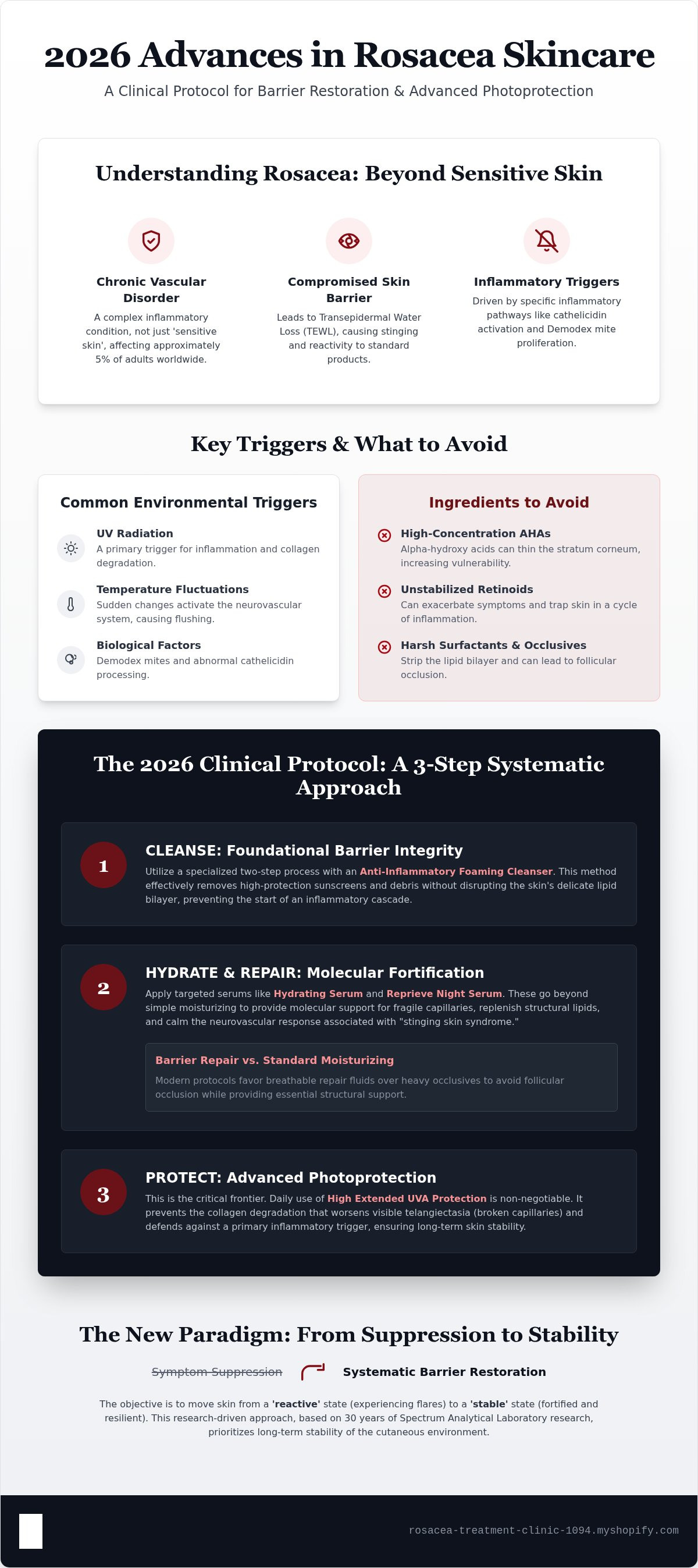
Rosacea is a complex, chronic inflammatory vascular disorder. It is often mischaracterized as mere "sensitive skin," but this classification ignores the underlying pathophysiology involving the innate immune system and neurovascular dysregulation. Current advances in rosacea skincare for 2026 have shifted focus toward the identification of specific biological triggers. This includes the proliferation of Demodex mites and the activation of cathelicidin pathways, which are antimicrobial peptides that, when processed abnormally, induce significant cutaneous inflammation and vascular expansion.
A primary clinical concern for patients is transepidermal water loss (TEWL). In a compromised state, the skin's permeability barrier fails to retain moisture, leading to the "stinging" sensations reported during standard product application. Clinical management now distinguishes between "reactive skin," which is currently experiencing an inflammatory flare, and "stable skin," where the barrier is fortified enough to tolerate structured interventions. Moving a patient from a reactive to a stable state requires a methodical reduction in environmental stressors and a cessation of aggressive topical agents.
Understanding the Inflammatory Cascade
Environmental stressors like UV radiation and temperature fluctuations trigger a rapid innate immune response in the facial skin. This response activates the neurovascular system, resulting in persistent flushing and the sensation of heat. Many traditional "anti-aging" ingredients, specifically high-concentration alpha-hydroxy acids or unstabilized retinoids, exacerbate these symptoms by further thinning the stratum corneum. These ingredients increase the skin's vulnerability to external irritants, effectively trapped in a cycle of chronic inflammation that prevents barrier recovery.
The Rise of Specialized Non-Prescription Protocols
Effective management has evolved beyond basic moisturization to research-backed dermatological support. A systematic protocol is superior to "spot-treating" redness because it addresses the entire facial environment simultaneously. The use of an Anti-Inflammatory Foaming Cleanser serves as the foundational step in this approach. By utilizing surfactants that do not disrupt the lipid bilayer, these specialized cleansers remove debris without triggering the inflammatory cascade. This methodical application ensures that the skin remains calm, allowing subsequent serums to provide the molecular support necessary for fragile capillaries and barrier fortification.
Molecular Advances in Barrier Restoration and Desensitization
Current advances in rosacea skincare emphasize a critical shift from symptom-masking to molecular fortification of the stratum corneum. For patients with a compromised barrier, the primary objective is the reduction of cutaneous reactivity through structured lipid replenishment. While traditional management often relied on heavy occlusives to trap moisture, modern clinical protocols favour breathable repair fluids. These formulations provide the necessary structural support for fragile capillaries without inducing the follicular occlusion that can lead to inflammatory papules.
The Role of Hydrating and Reprieve Serums
Stabilizing moisture levels requires more than superficial hydration. Specialized Hydrating Serums utilize molecular weights designed to penetrate the upper layers of the epidermis providing desensitization for "stinging skin syndrome." This condition, characterized by a lower threshold for sensory irritation, requires agents that calm the neurovascular response. Overnight recovery is equally vital. Utilizing Reprieve Night Serum Pure allows for a concentrated period of restoration, mimicking the skin's natural protective layers to repair damage sustained from daily environmental triggers. Daytime use of Reprieve Serum Pure helps suppress free-radical induced inflammation and contributes to photo-protection.
Barrier Repair vs. Standard Moisturizing
Rosacea-prone skin exhibits distinct physiological needs that generic emollients fail to address. Effective restoration depends on specific lipid ratios that integrate into the existing cellular matrix. The clinical efficacy of the Original Repair Treatment Fluid lies in its ability to significantly reduce transepidermal water loss (TEWL) while remaining non-comedogenic. Identifying barrier-safe ingredients involves selecting professional-grade formulations free from drying alcohols, volatile fragrances, and aggressive surfactants. This methodical approach ensures the skin transitions from a state of constant inflammation to a resilient, stable baseline.
Achieving this stability requires a systematic selection of formulations tailored to individual reactivity levels. You may review the full range of professional support options within our specialized clinical collections to determine the appropriate intervention for your specific skin profile.
The Critical Frontier: High Extended UVA Protection
Standard SPF metrics primarily quantify protection against UVB radiation. While this is necessary for preventing acute erythema, it is an insufficient metric for chronic vascular management. UVA radiation accounts for approximately 95% of the UV radiation reaching the Earth's surface and penetrates the dermis more deeply than UVB. This deep penetration degrades the collagenous matrix that supports facial capillaries. When this support structure fails, vessels become permanently dilated, leading to visible telangiectasia and increased facial heat. Current advances in rosacea skincare identify High Extended UVA Protection as the non-negotiable gold standard for clinical management in 2026.
This standard goes beyond generic "broad spectrum" claims by ensuring the protection curve remains stable across the entire UVA spectrum. For the rosacea patient, this isn't merely about preventing aging; it is about maintaining the structural integrity of the skin to prevent the progression of vascular symptoms. Without this specific defense, even the most advanced serums will struggle to provide lasting results against the constant degradation caused by daily light exposure.
UV Protection for Rosacea: Beyond SPF 50
The distinction between UVB (burning) and UVA (aging and inflammation) is critical for daily protocol design. While UVB triggers immediate flares, UVA sustains the underlying inflammatory state. Many patients experience a "sunscreen sting" when using standard chemical filters that penetrate a compromised barrier. A specialized formulation like the De-Sensitizing Barrier Fluid SPF 50 is essential. It provides a high-protection shield that remains on the skin surface, reflecting radiation without the heat-generating chemical reactions that often trigger neurovascular flushing.
Environmental Shields and Antioxidant Defense
Modern management must also account for the synergy between UV radiation and atmospheric particulate matter. Urban pollutants generate free radicals that accelerate oxidative stress in facial skin, further weakening the barrier. Reprieve Serum Pure and The Antioxidant Radiance Defence Shield acts as a secondary layer of protection, neutralizing these stressors before they can activate the innate immune response.
Consistent application ensures the skin remains calm in high-stress environments.
Follow these practical steps for optimal defense:
- Apply high-protection fluid as the final step of the morning protocol.
- Ensure even distribution over the central facial area where flushing is most prevalent.
- Wait three minutes for the protective shield to set before environmental exposure.
- Reapply during periods of extended outdoor activity to maintain the UVA defense curve.
Designing a 2026 Clinical Protocol for Reactive Skin
A successful management strategy relies on the 'Cleanse, Hydrate, Protect' framework. This systematic approach ensures that each intervention supports the next without overwhelming the skin's recovery capacity. By following a structured sequence patients move from reactive states to long-term stability. This methodical progression is essential for the five percent of the global population living with this chronic vascular condition.
The necessity of a two-step cleansing process is a direct result of advances in rosacea skincare and the adoption of high-protection photoprotective agents. Robust UVA filters are designed for high adherence; however, their incomplete removal can lead to follicular congestion. A methodical two-step approach ensures the skin is prepared for repair serums without the mechanical irritation associated with aggressive scrubbing. This process respects the fragile nature of the cutaneous barrier while maintaining hygiene standards necessary to control Demodex mites.
Step 1: Non-Invasive Cleansing
Standard cleansers often utilize harsh surfactants like sodium lauryl sulfate that strip the lipid barrier and exacerbate stinging. Choosing between Foaming Cleansers vs. Cleansing Emulsions depends on current reactivity levels and skin type. For those with ocular involvement specialized techniques are required to prevent blepharitis without irritating the delicate mucosal surfaces. Cleansing should always be performed with lukewarm water to avoid the thermal-induced vasodilation that triggers flushing.
Step 2: Targeted Repair and Support
Timing is critical for inflammatory control. Night-time is the primary window for restoration, as the skin's permeability increases during sleep. Applying the New Tone Harmonizing Protocol during this circadian repair cycle allows active agents to address vascular hyper-reactivity and uneven tone effectively. Follow The Skincare Programme for the optimal layering. Protocol adjustments are also necessary for seasonal transitions:
- Winter: Increase the use of Night Repair to combat low humidity and indoor heating.
- Summer: Prioritize lightweight, breathable antioxidants and higher frequency of photo-protection.
- Flares: Revert to a minimalist "rescue" routine focused solely on desensitization.
Select a structured regimen from our clinical protocol collections to begin your barrier restoration process.
The Rosacea Treatment Clinic Methodology: Research-Based Care
The Rosacea Treatment Clinic, established in 1996, operates on a foundation of research initiated by the Spectrum Analytical Laboratory in the mid-1980s. This specialized focus has allowed for the development of dermatological interventions that address the underlying vascular and inflammatory components of the condition. We prioritize ocular rosacea management and high-protection photoprotective agents including antioxidants, areas often neglected by mass-market manufacturers. Our methodology prioritizes long-term cutaneous stability over temporary cosmetic masking. We function as a methodical guide for patients who have failed standard treatments, providing a systematic framework for home-based clinical care.
We adopt a 'Clinical Reality' approach to management. Rosacea is a chronic condition, and transparency regarding its long-term nature is essential for patient success. We do not promise instant cures; instead, we offer a pathway to significant, sustained reduction in erythema and barrier reactivity. These advances in rosacea skincare are the result of decades spent analyzing patient responses and refining formulations to meet the highest dermatological standards. This approach manages expectations while delivering a professional-grade alternative to ineffective drugstore options.
A Legacy of Specialized Rosacea Research
Thirty years of clinical focus provides a depth of knowledge that 'beauty industry' trends cannot replicate. We eschew marketing buzzwords in favor of scientific rigor, ensuring every ingredient serves a defensive or restorative purpose. This expertise is distilled into our Clinical Rosacea Treatment Guide, which provide the technical information necessary for patients to understand their specific phenotype and management requirements. By focusing on the structural integrity of the skin we achieve outcomes that support the fragile neurovascular system.
Accessing Professional-Grade Support
Navigating our online platform allows patients worldwide to access research-based protocols previously reserved for in-person consultations. This digital accessibility ensures that high-level care is no longer geographically restricted. By consulting the Clinical Criteria for Rosacea Skincare users can evaluate formulations against established safety and efficacy benchmarks. This ensures that every step of your protocol is supported by verified data rather than anecdotal claims.
Begin your systematic protocol with selections from the Rosacea Treatment Clinic Collections to achieve the barrier restoration and photo-protection goals outlined in this clinical management guide.
Implementing Your Clinical Management Strategy
Managing a chronic vascular condition requires a shift from superficial remedies to systematic, research-backed interventions. These advances in rosacea skincare demonstrate that long-term stability is achievable through precise barrier restoration and high extended UVA defense. By prioritizing non-invasive cleansing and molecular capillary support, you move beyond the cycle of persistent flushing and stinging. Every step in a professional protocol serves a defensive purpose, ensuring the cutaneous environment remains calm and resilient against environmental triggers.
The Rosacea Treatment Clinic has provided specialized protocols based on Spectrum Analytical Laboratory research since 1996. Our methodology replaces the trial-and-error approach with clinical rigor, offering innternational access to professional-grade support for those who have failed standard treatments. You doo not have to navigate reactive skin alone. Establishing a methodical daily routine is the most effective way to restore your skin's defensive function and achieve a predictable, flare-free baseline. Taking a structured approach today ensures the health and stability of your skin for the future.
Explore Clinical Rosacea Protocols at the Rosacea Treatment Clinic
Frequently Asked Questions
What are the most significant advances in rosacea skincare for 2026?
The most significant advances in rosacea skincare for 2026 involve a transition from subtype classification to phenotype-based management. This approach targets specific symptoms like persistent erythema and neurovascular flushing rather than broad categories. Additionally, the integration of dual-release oral treatments and encapsulated topicals has improved outcomes for inflammatory lesions. Clinical focus has shifted toward molecular-level barrier restoration, utilizing specific lipid ratios to stabilize the cutaneous environment against external triggers.
Can non-prescription skincare effectively manage rosacea redness?
Non-prescription skincare effectively manages facial redness by addressing underlying barrier dysfunction and vascular reactivity. While it does not replace medical intervention for severe cases a systematic protocol focusing on desensitisation and high-protection photo-protection significantly reduces visible erythema. By utilizing specialized anti-inflammatory cleansers and reprieve serums, patients can achieve a stable baseline. This method prioritizes the reduction of transepidermal water loss which is a primary driver of chronic inflammation.
Why does my sunscreen always sting my rosacea-prone skin?
Sunscreen stinging occurs when filters penetrate a compromised skin barrier and reach sensory nerve endings. This reaction is often exacerbated by volatile alcohols or fragrances found in mass-market SPF products. Rosacea-prone skin requires specialized formulations that remain on the surface. These products provide a shield against UV radiation without the heat-generating chemical reactions that trigger neurovascular flushing and sensations of heat in reactive skin types.
How does a clinical protocol differ from a standard beauty routine?
A clinical protocol differs from a standard beauty routine through its methodical, sequential approach and focus on dermatological efficacy. Standard routines often prioritize beauty industry trends which can introduce irritants. In contrast, a clinical protocol like the 'Cleanse, Hydrate, Protect' framework utilizes research-backed formulations in a specific order to minimize reactivity. This systematic application ensures that each product supports barrier recovery without causing the heat trapping or pilling common in layered cosmetic products.
Is it possible to repair the skin barrier if I have chronic rosacea?
It is possible to repair the skin barrier even with chronic rosacea by consistently applying lipid-replenishing agents . Recent advances in rosacea skincare emphasize the use of repair fluids that mimic the skin's natural protective layers, specifically focusing on ceramide and fatty acid ratios. Successful restoration requires a commitment to a minimalist protocol that reduces mechanical irritation. Over time, this fortification decreases transepidermal water loss and raises the skin's threshold for sensory irritation and flushing.
What is the role of UVA protection in preventing rosacea flares?
UVA protection is vital because these long-wave rays penetrate deeply into the dermis, degrading the collagen matrix that supports facial blood vessels. This structural damage leads to permanent telangiectasia and chronic redness. Unlike UVB, which causes immediate burning, UVA contributes to the persistent inflammatory state of rosacea skin. Utilizing High Extended UVA Protection ensures that the vascular system remains shielded from the specific wavelengths that accelerate neurovascular dysregulation and collagen loss.
How should I cleanse my face if I have both rosacea and ocular symptoms?
If you experience both facial and ocular symptoms, you should use a non-invasive cleansing technique with lukewarm water and specialized surfactants. A two-step process is recommended to remove high-protection SPF without aggressive rubbing. For the periocular area utilize Ocular Conditioning Cleanser. This prevents the development of blepharitis while ensuring that the delicate skin around the eyes remains calm and hydrated during the cleansing cycle. For facial cleansing utilize Pre-Cleansing Emulsifier (P.M. only) prior to one of the other cleansers (A.M. and P.M.).
What ingredients should I avoid in rosacea skincare products?
Patients should avoid ingredients that induce vasodilation or disrupt the lipid bilayer. Specifically, problematic ingredients include volatile alcohols, synthetic fragrances, menthol, eucalyptus, and witch hazel. Additionally, aggressive exfoliants like high-concentration glycolic acid or harsh physical scrubs should be excluded from your protocol. These substances increase transepidermal water loss and trigger the innate immune response, leading to immediate flares although they may also be prescribed for overall benefit as part of a medically-supervised Skincare Programme. Focus instead on barrier-safe formulations that prioritize desensitization and structural support for reactive skin profiles.