
The assumption that chronic eye redness is merely a byproduct of screen time or seasonal allergies often delays the necessary clinical intervention for ocular rosacea. For many, the persistent sensation of a "foreign body" or debilitating sensitivity to light is not a temporary inconvenience but a sign of underlying vascular and glandular dysfunction. If you have found that standard lubricating drops offer only fleeting relief, it is because these generic solutions fail to address the inflammatory nature of the condition.
We understand the frustration of managing symptoms that fluctuate with every environmental trigger. This article serves as a comprehensive clinical guide to identifying ocular rosacea and implementing research-based management protocols for sustained eye health. You will learn how to transition from reactive symptom suppression to a proactive restoration strategy. We will preview the essential steps for a sustainable ocular hygiene protocol, including the application of specialized formulations like the Ocular Conditioning Cleanser and Ocular Soothing Serum to reduce inflammation and protect the delicate ocular barrier.
Key Takeaways
- Identify the clinical markers of ocular rosacea to differentiate chronic inflammatory symptoms from temporary environmental irritation or standard allergies.
- Recognize primary environmental and biological triggers, particularly the role of UV radiation, to implement more effective defensive measures for the ocular surface.
- Transition from generic hygiene products to specialized, pH-balanced protocols like the Ocular Conditioning Cleanser to stabilize the sensitive ocular margin.
- Establish a methodical daily sequence that prioritizes technical, research-based serum over heavy, occlusive creams that often exacerbate reactive eye contours.
- Develop a sustainable, non-prescription management plan based on thirty years of clinical research to achieve long-term reduction in ocular inflammation.
Understanding Ocular Rosacea: Clinical Definition and Pathophysiology
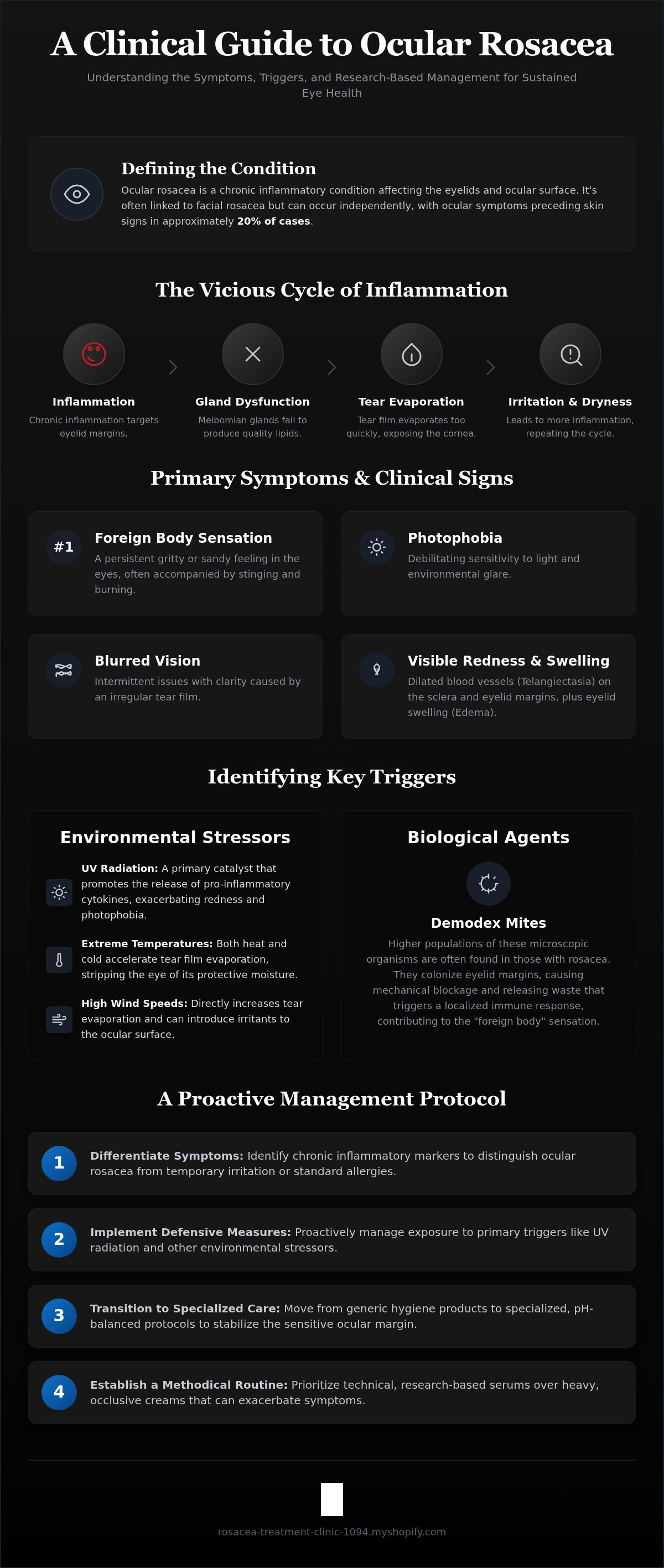
Ocular rosacea is a chronic inflammatory condition that primarily targets the eyelids and the delicate ocular surface. While most commonly diagnosed in adults between the ages of 30 and 50 its clinical presentation is often complex and multifaceted. It is frequently associated with facial rosacea yet the two do not always appear simultaneously. Research indicates that ocular symptoms can precede cutaneous signs in approximately 20% of cases. This highlights the necessity of early clinical identification as the eyes may be the primary site of inflammatory activity before facial flushing or papules emerge.
The core pathophysiology involves a significant disruption of tear film stability. Chronic inflammation within the eyelid margins often leads to meibomian gland dysfunction. When these glands fail to produce high-quality lipids, the tear film evaporates too quickly, leaving the corneal surface exposed. This instability creates a self-perpetuating cycle of dryness, irritation, and further inflammatory recruitment which eventually compromises the structural integrity of the ocular barrier.
Primary Symptoms and Clinical Signs
Patients typically report a persistent "foreign body" sensation often described as a gritty or sandy feeling in the eyes. This technical grittiness is frequently accompanied by localised stinging and burning. As the inflammatory state persists, secondary indicators become more prominent:
- Photophobia: A heightened, often debilitating sensitivity to light and environmental glare.
- Blurred Vision: Intermittent clarity issues caused by the irregular tear film.
- Telangiectasia: Visible, dilated blood vessels appearing on the sclera (the white of the eye) or along the eyelid margins.
- Eyelid Edema: Noticeable swelling and redness of the eyelids (often referred to as blepharitis).
The Link Between Skin and Eye Rosacea
Facial and ocular manifestations share identical inflammatory pathways, primarily involving the dysregulation of the innate immune system and vascular hyper-reactivity. Despite these shared mechanisms clinical observation reveals a frequent discrepancy in severity. The intensity of facial redness does not consistently correlate with the degree of ocular inflammation. A patient might exhibit minimal skin involvement while suffering from advanced ocular distress. This suggests a systemic inflammatory predisposition where the localized response varies. Recognizing this disconnect is vital for implementing a specialized ocular rosacea protocol that addresses the eyes independently of facial treatments.
Identifying Triggers and Risk Factors in Ocular Inflammation
Managing ocular rosacea requires a methodical identification of external and internal triggers that compromise the ocular surface. These factors generally fall into three categories: environmental stressors, dietary influences, and biological agents. Unlike general dry eye the inflammatory response in rosacea patients is often hyper-reactive. Even minor exposure can lead to significant vascular dilation and discomfort. Identifying these triggers is the first step toward stabilizing the ocular environment.
UV radiation stands as a primary environmental catalyst for inflammation. Chronic exposure to ultraviolet rays does not just affect the skin; it penetrates the ocular tissues, promoting the release of pro-inflammatory cytokines. This process exacerbates surface redness and increases photophobia. For a detailed analysis of defense strategies, refer to the UVA Protection Guide for Reactive and Rosacea Skin. Additionally extreme temperatures and high wind speeds accelerate tear film evaporation stripping the eye of its protective moisture and leaving the cornea vulnerable to friction.
Biological factors also play a critical role. The presence of Demodex mites, microscopic organisms naturally found in hair follicles, is often higher in those with rosacea. These mites colonize the eyelid margins, causing mechanical blockage and releasing waste products that trigger a localized immune response. This biological load contributes significantly to the persistent stinging and "foreign body" sensation reported by many patients.
Environmental and Hereditary Factors
Modern lifestyle factors, specifically prolonged screen time, aggravate existing ocular distress. The "blue light" emitted by digital devices often leads to a reduced blink rate, which further destabilizes the tear film. This is compounded by hereditary predispositions. Those with a family history of vascular reactivity often experience more frequent ocular flushing as their capillary walls are naturally more prone to dilation under stress. Identifying these personal risk factors is the first step toward a specialized management protocol.
The Role of Meibomian Gland Dysfunction (MGD)
Meibomian Gland Dysfunction (MGD) is the primary physiological driver of ocular rosacea symptoms. The meibomian glands, located within the eyelids, are responsible for secreting the lipid layer of the tear film. In rosacea patients these glands often become blocked with thickened secretions. This deficiency in the lipid layer causes the aqueous part of the tear to evaporate almost instantly. Without intervention MGD frequently progresses to chronic blepharitis characterized by crusting and severe eyelid margin inflammation. Standard artificial tears often fail because they do not address the underlying lipid deficiency or the inflammatory root of the blockage.
Clinical Management Protocols: Beyond Standard Hygiene
Standard management often suggests warm compresses or diluted baby shampoo. These methods are outdated and potentially counterproductive for patients. Alkaline detergents strip the eyelid's delicate acid mantle, exacerbating dryness and triggering further inflammation. Clinical protocols prioritize pH-balanced, non-alkaline interventions that restore rather than disrupt the ocular environment. For a deeper analysis of these methods see the guide on Ocular Rosacea Treatment: Professional Relief and Care Tips.
Conditioning the skin represents a fundamental shift from traditional "scrubbing." Instead of aggressive mechanical removal of debris, which can cause micro-tears in the delicate eyelid tissue, the clinical focus is on softening and emulsifying the biological load. This process gently removes inflammatory triggers while simultaneously delivering calming agents to the skin. This dual-action approach ensures the ocular surface remains resilient significantly reducing the risk of secondary infections or the progression of meibomian gland dysfunction. When managing ocular rosacea the goal is always to preserve the integrity of the eyelid margin.
Specialized Ocular Cleansing
Effective management of ocular rosacea starts with the dedicated Ocular Conditioning Cleanser. Unlike standard foaming agents that contain harsh sulfates this formulation uses technical lipids to dissolve crusting and mite waste without stinging. To perform a clinical lid margin cleanse apply the cleanser with a cotton round moving in a horizontal motion along the lash line. This methodical approach clears blocked meibomian glands without aggravating the reactive eye contour. Avoiding foaming agents is essential; surfactants often penetrate the tear film, causing the very stinging and blurred vision patients seek to avoid.
The Importance of Barrier Repair
The ocular barrier consists of the physical eyelid skin and the lipid interface that prevents moisture loss. When this barrier is compromised, transepidermal water loss increases, leading to the burning sensation typical of the condition. Utilizing specialized fluids helps reinforce this lipid layer, providing a defensive shield against environmental irritants like wind or dust. Incorporating products from our Barrier Repair collection or optimally the Restore Eye Contour Repair Complex provides the necessary structural support to stabilize the eye contour. These research-based topicals are designed to be eye-safe, offering a level of protection that generic moisturisers cannot achieve.
Formulating a Protective Routine for Reactive Eye Contours
Managing ocular rosacea requires a disciplined, sequential approach. A structured morning and evening protocol stabilizes the ocular surface and prevents inflammatory flares before they escalate. This sequence focuses on defensive restoration rather than aggressive intervention. It is not enough to simply clean the area; you must also provide the structural support necessary for the ocular barrier to function effectively. A methodical routine ensures that every application serves a specific protective purpose.
Many patients mistakenly apply heavy, occlusive creams to the eye area in an attempt to soothe dryness. In a rosacea context, these thick formulations can trap heat and exacerbate vascular dilation. They can also migrate into the eye, potentially blocking meibomian glands further. Technical, research-based serum is preferred because it offers high concentrations of active ingredients without weight. These serums deliver essential nutrients to the periocular skin while maintaining a breathable surface that does not trigger heat-related flushing.
Application technique is as critical as the formulation itself. Rubbing the eyelids triggers mechanical irritation and localized heat which can lead to immediate stinging. We recommend a "patting" technique using the ring finger. This finger naturally applies the least amount of pressure ensuring you do not compromise the fragile capillaries around the eye. By patting products gently into the skin you minimize friction and ensure the product remains on the periocular surface without migrating into the tear film.
Serum Application for Ocular Relief
The Ocular Soothing Serum plays a clinical role in neutralizing free radicals generated by UV exposure and environmental pollutants. These reactive oxygen species contribute to the oxidative stress that fuels chronic inflammation. By neutralizing these agents the serum helps mitigate the debilitating burning sensation associated with ocular flares.
Effective penetration in the thin, delicate eye area requires specific molecular weights.
The technical formulation is engineered to bypass the surface barrie, delivering active antioxidant support precisely where the inflammatory cascade is most active.
Environmental Defense and UVA Protection
Standard sunscreens often contain volatile chemical filters or synthetic fragrances that cause severe stinging and lacrimation. In the context of ocular rosacea this irritation is unacceptable. However UV protection remains a non-negotiable pillar of management. High Extended UVA Protection is vital for preventing the deep-tissue vascular dilation that characterizes ocular flares. The De-Sensitizing Barrier Fluid SPF 50 acts as a protective finishing step. It provides a physical shield against environmental triggers while remaining completely eye-safe, ensuring long-term stability without the risk of chemical migration.
Explore our full range of specialized ocular protocols to build your customized daily routine.
The Rosacea Treatment Clinic Approach: Research-Based Ocular Care
The Rosacea Treatment Clinic, established in 1996, operates on a philosophy of clinical precision and methodical restoration. Our protocols are the result of over 30 years of foundational research conducted by Spectrum Analytical Laboratory. We prioritise dermatological interventions that focus on the structural integrity of the ocular environment. This research-driven approach ensures that every intervention in our Ocular Rosacea collection is grounded in scientific rigor. The ultimate goal is not temporary relief, but a long-term reduction in inflammatory frequency and the maintenance of a stable ocular barrier.
The Ocular Conditioning Protocol
Our specialized protocol relies on the synergy between the Ocular Conditioning Cleanser and the Restore Eye Contour Repair Complex. This two-step system addresses both the immediate symptoms of ocular rosacea and the underlying barrier deficiencies. The cleanser emulsifies biological debris and mite waste without disrupting the eyelid's acid mantle while the repair complex delivers the specific lipids required to reinforce the ocular surface. By using high-potency, targeted ingredients, we minimize the risk of over-treating the area. This focused application prevents the heat accumulation and chemical irritation that often accompany generic multi-step routines.
Long-Term Maintenance and Prevention
Successful management requires consistency, even during asymptomatic phases. Ocular inflammation is a chronic predisposition meaning the biological triggers remain even when visible redness is absent. Maintaining the conditioning routine prevents the accumulation of thickened meibum and the subsequent blockage of meibomian glands. For ongoing education and specific technical queries refer the Clinical Rosacea Treatment 2026 FAQ Management Guide. This resource assists patients in adjusting their protocols based on seasonal shifts or environmental changes.
A holistic approach often involves coordinating ocular care with broader facial management. We encourage you to consult our full collections to ensure your entire dermatological routine remains compatible and non-inflammatory. By adhering to a research-based system you move away from reactive symptom suppression and toward a sustainable state of ocular health.
Establishing Long-Term Ocular Stability
Achieving lasting relief from ocular rosacea requires a fundamental shift from reactive symptom suppression to a proactive, research-based restoration protocol. By prioritizing pH-balanced cleansing and technical antioxidant support you address the underlying meibomian gland dysfunction rather than just masking temporary discomfort. This methodical approach, rooted in foundational research from the mid-1980s, ensures the ocular barrier remains resilient against environmental triggers. It is about building a defensive shield that respects the eye's delicate physiology and prevents the cycle of chronic inflammation from progressing.
The Rosacea Treatment Clinic has provided specialized, medical-adjacent solutions since 1996. Our protocols do not just offer temporary fixes; they provide a structured framework for long-term maintenance. Consistency remains the primary driver of success. Maintaining your ocular hygiene even during asymptomatic phases prevents the recurrence of debilitating flares and protects your vision. We invite you to view the research-based ocular rosacea protocol and begin your transition to specialized care. You can achieve a sustainable state of clarity and comfort with the right clinical guidance.
Frequently Asked Questions
Can ocular rosacea cause permanent eye damage or blindness?
Untreated ocular rosacea can lead to permanent visual impairment. Chronic inflammation often results in keratitis, corneal scarring, and ulceration. These structural changes compromise optical clarity. Early clinical intervention is necessary to prevent the progression of these complications. While total blindness is rare, the risk of significant, irreversible vision loss is a primary reason for implementing a methodical management protocol as soon as symptoms are identified.
Is ocular rosacea contagious or caused by poor hygiene?
This condition is not contagious and is not a result of poor hygiene. It is a chronic inflammatory and vascular disorder. While the presence of Demodex mites is often higher in patients with this condition, these organisms are part of the natural skin microbiome. The inflammatory response is triggered by immune system dysregulation rather than a lack of cleanliness. Standard drugstore hygiene is typically too abrasive for this specific condition.
How long does it take for ocular rosacea treatments to show results?
Most patients observe a reduction in inflammatory frequency within four to six weeks of starting a specialized protocol. Stabilizing the ocular barrier and restoring meibomian gland function is a gradual process. It takes time for the lipid layer of the tear film to reach a consistent equilibrium. Long-term maintenance is required to prevent the recurrence of symptoms as the underlying vascular hyper-reactivity remains even during periods of clarity.
What is the fastest way to soothe a burning ocular rosacea flare-up?
The most effective way to soothe an acute flare is to apply a compress of Ocular Conditioning Cleanser followed by the Ocular Soothing Serum. This technical formulation helps neutralize reactive oxygen species that fuel the burning sensation. Avoid warm compresses during an active flare as heat promotes further vascular dilation. This methodical cooling approach reduces localized heat and calms the hyper-reactive capillaries around the eyelid margins and ocular surface.
Can I still wear contact lenses or eye makeup with ocular rosacea?
Contact lenses and makeup can be used provided you implement a strict ocular hygiene protocol. Avoid products containing volatile chemicals or synthetic fragrances that trigger stinging. We recommend using the Ocular Conditioning Cleanser to remove debris without compromising the tear film. If symptoms are acute pause the use of contact lenses to allow the ocular surface to recover from friction and ensure the lipid layer is sufficiently reinforced.
Does ocular rosacea ever go away completely?
There is currently no cure for ocular rosacea; it requires lifelong management. This is a chronic inflammatory predisposition. While you can achieve long-term remission and significant symptom reduction the underlying vascular sensitivity persists. Maintaining a consistent daily routine, even when the eyes appear clear, is essential for preventing future inflammatory cycles. Ongoing education via resources like our Clinical Rosacea Treatment 2026 FAQ Management Guide helps in long-term prevention.
How do I distinguish between ocular rosacea and standard dry eye syndrome?
Distinguishing between these conditions requires a clinical assessment of the eyelid margins. Unlike standard dry eye this condition often presents with telangiectasia (visible dilated vessels) on the sclera and meibomian gland blockage. While both involve tear film instability rosacea is characterized by a specific inflammatory cascade and vascular involvement. Identifying these physical signs is critical for selecting a research-based protocol that addresses the root inflammatory cause rather than just providing temporary lubrication.
Is it safe to use facial rosacea creams near my eyes?
It is generally unsafe to use facial rosacea creams near the eyes. The skin in the periocular region is significantly thinner and more permeable than the rest of the face. Facial formulations often contain active ingredients or concentrations that are too aggressive for the ocular margin. These products can also migrate into the tear film, causing severe stinging and blurred vision. Always utilize specialized, eye-safe topicals designed specifically for reactive eye contours.