
L'assunto che l'eritema persistente richieda sempre l'occlusivo più pesante possibile è spesso un errore clinico. Per molti, l'applicazione di creme idratanti dense e tradizionali crea una sensazione di "soffocamento" che intrappola il calore e aumenta il rischio di bruciore. La scelta tra siero e crema per la rosacea non è una questione di preferenza personale, bensì una decisione strategica basata sul peso molecolare e sulle esigenze specifiche della fase infiammatoria della propria pelle.
Probabilmente avrete già provato la frustrazione di una pelle che rimane secca nonostante l'applicazione di prodotti pesanti, o che ha reagito negativamente a prodotti commercializzati come "delicati". Questa analisi professionale esamina i sistemi di rilascio e le texture necessari per gestire efficacemente la pelle a tendenza rosacea. Forniremo una struttura per valutare in che modo le diverse formulazioni influiscono sulla funzione barriera e sull'irritazione sistemica. Imparerete i criteri precisi per scegliere tra interventi come la Crema Trattante Riparatrice Originale e sieri concentrati. Questa guida chiarisce come sequenziare i prodotti per la massima biodisponibilità, consentendovi di ridurre il rossore visibile ripristinando al contempo i naturali meccanismi di difesa della pelle con precisione chirurgica.
Punti Chiave
- Comprendere le distinte differenze meccaniche tra sistemi di rilascio concentrati e barriere occlusive nella gestione del rossore facciale persistente.
- Valutare i criteri di selezione clinica per siero vs crema per la rosacea in base alla densità degli ingredienti e alla specifica fase infiammatoria della pelle.
- Scoprire perché i sieri a base acquosa sono essenziali per veicolare i principi attivi senza intrappolare il calore, che può spesso esacerbare le sensazioni di bruciore e pizzicore.
- Padroneggiare la sequenza professionale di stratificazione "dal più sottile al più denso" per garantire la massima biodisponibilità degli attivi e una protezione strutturale ottimale.
- Identificare come integrare interventi specializzati come Reprieve Serum Pure in una routine metodica per un ripristino duraturo della barriera.
Comprendere i ruoli funzionali di sieri e creme
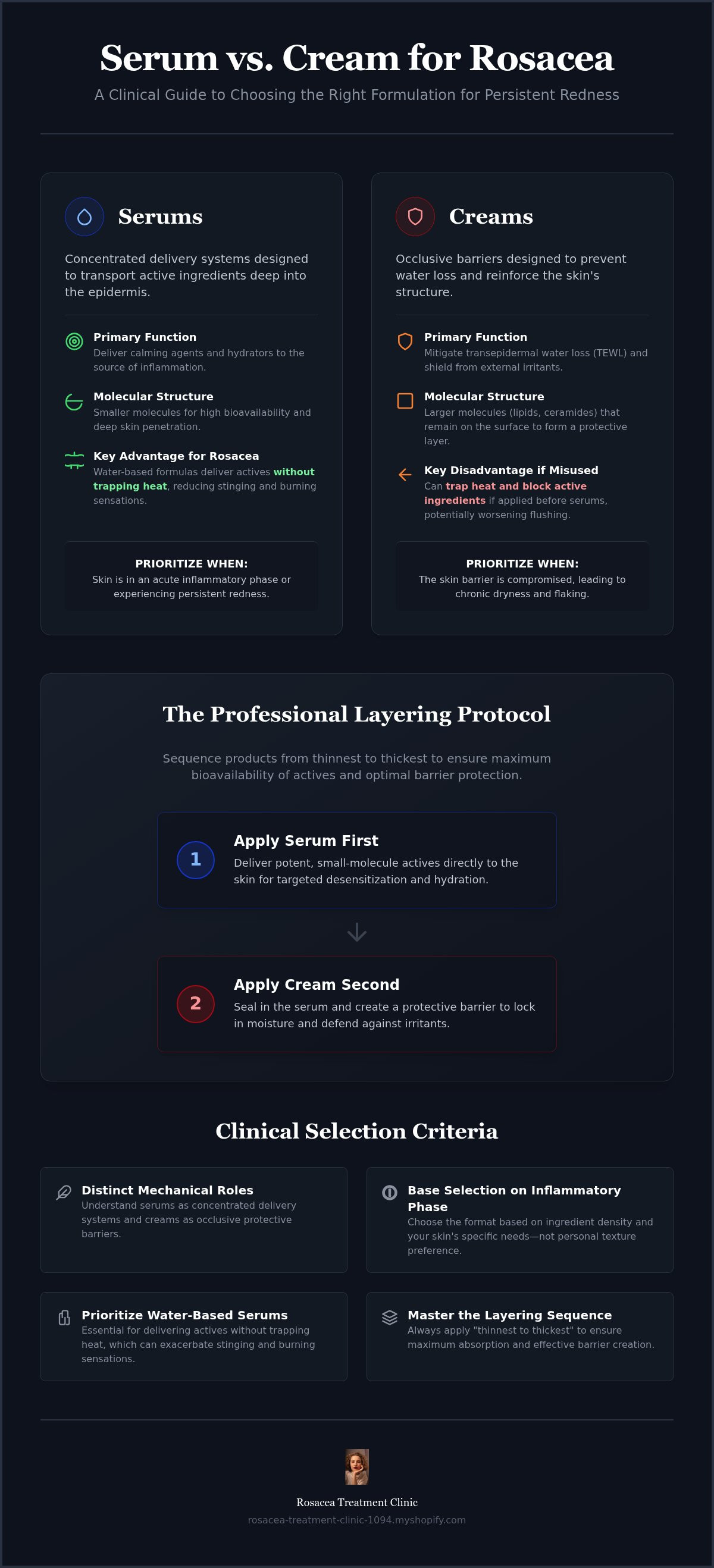
Distinguere tra un siero e una crema è fondamentale per gestire efficacemente la Rosacea. In un contesto clinico, questi non sono idratanti intercambiabili, ma sistemi di rilascio distinti con ruoli funzionali specifici. I sieri agiscono come veicoli di rilascio concentrati, progettati per trasportare i principi attivi negli strati più profondi dell'epidermide. Al contrario, le creme fungono da barriere occlusive. Il loro obiettivo primario è mitigare la perdita d'acqua transepidermica (TEWL) e rafforzare l'integrità strutturale della pelle. Senza questa distinzione, i pazienti spesso applicano prodotti che non riescono a raggiungere la fonte dell'infiammazione o che non riescono a proteggere la barriera compromessa.
Una gestione efficace della pelle reattiva richiede una transizione da una routine di cura della pelle standard a un protocollo clinico metodico. Un protocollo dà priorità sia all'intervento attivo che alla protezione ambientale. Per chi si trova a dover scegliere tra siero e crema per la rosacea, è essenziale riconoscere che questi formati lavorano in tandem. Uno fornisce lo stimolo correttivo, mentre l'altro mantiene l'ambiente fisiologico necessario per la guarigione. Questo approccio sistematico garantisce che la pelle non sia solo temporaneamente lenita, ma funzionalmente ripristinata nel tempo attraverso interventi precisi e basati sulla ricerca.
La differenza molecolare: perché è importante per il rossore
Il peso molecolare determina l'efficacia di qualsiasi applicazione topica. I sieri utilizzano molecole più piccole che penetrano nello strato corneo per raggiungere l'epidermide vitale, dove hanno origine l'infiammazione e la reattività vascolare. Questa elevata biodisponibilità è fondamentale per desensibilizzare la pelle durante una riacutizzazione. Il dibattito siero vs crema per la rosacea spesso ignora questa realtà molecolare. Le creme utilizzano molecole più grandi, come lipidi e ceramidi, che rimangono in superficie. Questi ingredienti sigillano lo strato corneo superiore, creando uno scudo difensivo contro gli irritanti esterni. Comprendendo questa gerarchia, potete assicurarvi che gli agenti attivi non vengano bloccati da occlusivi pesanti applicati troppo presto nella sequenza.
Quando dare priorità a un formato rispetto all'altro
Date priorità ai sieri durante le fasi infiammatorie acute o quando si affrontano problemi specifici come il rossore persistente. Formulazioni come Reprieve Serum Pure veicolano agenti calmanti immediati senza il peso di oli pesanti. Le creme diventano la priorità quando la barriera cutanea è compromessa, portando a secchezza cronica e desquamazione. La comune paura di "soffocare" la pelle con occlusivi densi è spesso mal riposta. Un prodotto formulato professionalmente, come la Crema Trattante Riparatrice Originale, fornisce la protezione necessaria senza intrappolare il calore o ostruire i pori. La scelta del formato corretto dipende dal fatto che la vostra pelle richieda, in quel preciso momento, una desensibilizzazione attiva o un rinforzo strutturale.
Il vantaggio clinico dei sieri nella gestione della rosacea
I sieri offrono un distinto vantaggio terapeutico grazie alla loro elevata biodisponibilità. A differenza delle creme, che spesso contengono lipidi pesanti in grado di intrappolare il calore, i sieri a base acquosa rilasciano i principi attivi direttamente a livello cellulare senza compromettere la termoregolazione. Questo è un fattore critico nella differenza tra un siero e una crema per pelle sensibile. In questo caso le formulazioni pure sono essenziali. Esse eliminano i trigger comuni come fragranze o emulsionanti che spesso risiedono nei veicoli più densi. Gli attivi ad alta densità in una base a bassa viscosità assicurano che la pelle riceva lo stimolo necessario per la riparazione senza attriti inutili durante l'applicazione.
La notte è il momento in cui la permeabilità cutanea aumenta e i meccanismi di riparazione accelerano. Utilizzare una formulazione specializzata come Reprieve Night Serum Pure consente un recupero notturno mirato. Questo processo supporta la pelle durante il suo naturale ciclo di riparazione, affrontando i marcatori infiammatori senza il rischio di arrossamenti indotti dall'occlusione. Quando si considera un protocollo siero vs crema per la rosacea, il siero notturno funge da intervento attivo che prepara la pelle alla barriera protettiva applicata successivamente.
Idratazione vs. Nutrimento: Il compito primario del siero
È vitale distinguere tra l'aggiunta di acqua alla pelle (idratazione) e l'intrappolamento dell'umidità esistente (nutrimento/emollienza). La pelle disidratata perde la sua elasticità e diventa significativamente più reattiva ai trigger interni ed esterni. Un Siero Idratante dedicato fornisce l'ambiente acquoso necessario per supportare i processi enzimatici all'interno della barriera. Quando valutate il siero vs crema per la rosacea, ricordate che l'obiettivo primario di un siero è spesso l'idratazione profonda dei tessuti. Questo ambiente ricco d'acqua è necessario affinché la pelle mantenga le sue funzioni desensibilizzanti durante tutto il giorno.
Calmare la risposta neurovascolare
I sieri facilitano il rilascio diretto di agenti antinfiammatori a livello vascolare. Questo intervento è necessario per stabilizzare l'architettura sottostante della pelle e ridurre la frequenza degli episodi di arrossamento. La reattività neurovascolare è l'iper-risposta della pelle a stimoli interni ed esterni. Utilizzando sistemi di rilascio a pH bilanciato e non irritanti, un protocollo professionale può modulare questa risposta senza causare ulteriori traumi allo strato corneo. Questo approccio mirato è una componente fondamentale di un piano di trattamento completo progettato per una stabilità a lungo termine.
Confronto tra siero e crema per la rosacea: un'analisi strutturale
La composizione strutturale di questi due formati determina la loro interazione con il panorama fisiologico della pelle. I sieri sono caratterizzati da un'elevata densità di principi attivi idrosolubili e da una base a bassa viscosità. Ciò consente un assorbimento immediato, spesso definito come "penetrazione flash", che mira agli strati vitali dell'epidermide. Le creme, al contrario, possiedono un elevato contenuto lipidico. Utilizzano emollienti e occlusivi per creare un meccanismo a rilascio prolungato che protegge la superficie cutanea per diverse ore. Comprendere la distinzione strutturale siero vs crema per la rosacea è essenziale per costruire un protocollo che affronti sia la reattività interna che la vulnerabilità esterna.
Il tempo di assorbimento rappresenta una differenza clinica fondamentale. Uno studio clinico sui trattamenti per la rosacea sottolinea che il veicolo influenza significativamente il rilascio degli agenti antinfiammatori. I sieri forniscono una desensibilizzazione immediata, mentre le creme offrono un effetto più lento. Valutare il rapporto costo-efficacia richiede di guardare oltre il prezzo per millilitro. A causa dell'elevata concentrazione di attivi nei sieri, è necessario un volume minimo per l'effetto terapeutico. Le creme richiedono un volume maggiore per fornire un'adeguata copertura superficiale e un rinforzo della barriera, rendendole la componente di volume fondamentale di un regime quotidiano.
| Caratteristica | Siero (Intervento Attivo) | Crema (Protezione Strutturale) |
|---|---|---|
| Funzione Primaria | Desensibilizzazione dei tessuti profondi | Rinforzo della barriera e prevenzione della TEWL |
| Densità degli Ingredienti | Alta concentrazione di soluti | Elevato contenuto lipidico ed emolliente |
| Velocità di Assorbimento | Rapida (sotto i 60 secondi) | Graduale (protratta per ore) |
| Tempistica di Applicazione | Applicato per primo sulla pelle pulita | Applicata per ultima per sigillare gli attivi |
Riparazione della barriera: la forza della crema
Le creme sono indispensabili per i pazienti con un mantello lipidico compromesso. La Crema Trattante Riparatrice Originale è progettata specificamente per reintegrare i lipidi essenziali, come ceramidi e acidi grassi, di cui la pelle a tendenza rosacea è spesso carente. Per coloro che presentano una grave disfunzione della barriera, i fluidi riparatori forniscono un apporto lipidico più leggero; tuttavia, una crema a viscosità piena è necessaria per fornire il sigillo occlusivo richiesto per il recupero a lungo termine della pelle più secca. Questo strato può essere utilizzato per impedire agli irritanti ambientali di raggiungere il sensibile tessuto sottostante in qualsiasi momento.
Stimolo mirato: la forza del siero
I sieri agiscono come veicolo primario per i protocolli specializzati. L' Evening Pure Stimulus Serum prepara la pelle ai successivi passaggi del trattamento, veicolando potenti antiossidanti direttamente nel sito dello stress ossidativo. Queste formulazioni neutralizzano i radicali liberi prima che possano scatenare la risposta neurovascolare. Utilizzando un siero come primo passaggio dopo la detersione, assicurate che gli ingredienti più potenti raggiungano la massima biodisponibilità senza essere bloccati dalle molecole lipidiche più grandi presenti nelle creme.
Protocolli di stratificazione strategica per pelli reattive
La sequenza determina l'efficacia clinica di qualsiasi intervento. La regola "dal più sottile al più denso" non è un suggerimento, è un requisito fisiologico. Applicare una crema ricca di lipidi prima di un siero a base acquosa crea una barriera che impedisce ai soluti attivi di raggiungere l'epidermide vitale. Questo errore comune rende inutili le parti più potenti di un protocollo. Quando raffinate una strategia siero vs crema per la rosacea, dovete dare priorità all'assorbimento degli attivi a basso peso molecolare prima di sigillare la superficie con occlusivi.
Concedere adeguati tempi di attesa può essere essenziale per prevenire l'effetto "pilling" (formazione di pallini). Ciò può verificarsi quando la base acquosa di un siero non si è completamente integrata con lo strato corneo prima dell'applicazione di una crema, causando lo sfaldamento dei prodotti. Un'attesa da 60 a 90 secondi è solitamente sufficiente. Questa pausa assicura che il sistema di rilascio del siero abbia trasportato con successo gli agenti antinfiammatori nella pelle. Una corretta sequenza evita la sensazione di "soffocamento" spesso segnalata quando vengono applicati troppi strati densi contemporaneamente.
Un protocollo difensivo diurno
I protocolli mattutini si concentrano su protezione e idratazione. La sequenza raccomandata è: Detergente > Siero Idratante > SPF 50. L'uso di un siero come base previene l'effetto "disidratante" spesso associato alle protezioni solari minerali. I Solari ad Alta Protezione UVA Estesa dovrebbero fungere da strato finale per fornire uno scudo completo contro i trigger ambientali. Questa stratificazione assicura che la pelle rimanga idratata sotto la barriera difensiva per tutto il giorno.
Un protocollo riparatore notturno
La sera è la finestra critica per la riparazione attiva e la desensibilizzazione. La sequenza si sposta su: Detergente > Reprieve Night Serum Pure > Intensive Night Nurturing Complex. Questa combinazione mira ai marcatori infiammatori più profondi mentre la pelle è nella sua fase rigenerativa di picco. La temperatura cutanea notturna aumenta, rendendo essenziale la riparazione della barriera per prevenire l'arrossamento mattutino. Utilizzando un siero notturno concentrato seguito da un complesso nutriente, fornite il supporto strutturale necessario per mitigare l'arrossamento indotto dal calore. Per risultati duraturi, potete esplorare questi protocolli professionali per la rosacea per trovare la combinazione più adatta al vostro specifico profilo infiammatorio.
Interventi mirati: scegliere il proprio protocollo specializzato
La scelta di un protocollo richiede un'accurata identificazione della sfida cutanea primaria. L'eritema persistente, la xerosi cronica e le irregolarità della texture richiedono ciascuna un diverso rapporto tra soluti attivi e lipidi protettivi. Quando determinate l'equilibrio ideale tra siero vs crema per la rosacea, il primo passo è assicurarsi che la pelle sia preparata tramite un detergente specializzato. Un agente detergente professionale, come un' emulsione desensibilizzante, rimuove le impurità senza alterare il mantello acido. Questa preparazione è il prerequisito per l'assorbimento senza ostacoli del protocollo successivo. Se la vostra pelle non risponde agli interventi standard, è necessaria una consulenza professionale per personalizzare il sistema di rilascio in base alle vostre specifiche esigenze fisiologiche.
Per la pelle soggetta ad arrossamento: puntare su Reprieve
Reprieve è progettato per la stabilizzazione neurovascolare. Reprieve Serum Pure è la scelta definitiva per le pelli altamente reattive, poiché esclude anche il minimo emulsionante. Questa formulazione può essere integrata in qualsiasi routine esistente come fase desensibilizzante primaria dopo la detersione. La consistenza è importante. Per le riacutizzazioni acute caratterizzate da calore e bruciore, combinare questo siero con la Cooling Stress Lotion fornisce un sollievo termico immediato. Questa combinazione agisce sulla risposta vascolare fornendo al contempo gli agenti calmanti necessari agli strati epidermici più profondi, modulando efficacemente l'infiammazione neurogena che causa il rossore.
Per chi ha una barriera compromessa: concentrarsi sulla riparazione
Per chi soffre di secchezza cronica e desquamazione visibile, l'attenzione deve spostarsi sul rinforzo strutturale. Nel valutare il confronto tra siero e crema per la rosacea nel contesto di un cedimento della barriera cutanea, la capacità della crema di fornire uno scudo fisico è fondamentale. Mentre un fluido può essere sufficiente per i casi lievi, la Night Repair Cream offre l'elevata densità lipidica necessaria per sigillare una barriera gravemente compromessa. Questo strato occlusivo è necessario per prevenire il ciclo di irritazione causato dall'esposizione ambientale e dalla perdita di acqua transepidermica. Un complesso nutriente costante fornisce il supporto lipidico prolungato necessario per far passare la pelle da uno stato reattivo a uno stabile. La salute della barriera a lungo termine si ottiene superando il sollievo sintomatico e affrontando la carenza lipidica sottostante. Incoraggiamo gli utenti a esplorare le collezioni cliniche complete per garantire che ogni passaggio del loro regime contribuisca a questo ripristino olistico.
Ottimizzare il protocollo per la rosacea per una stabilità a lungo termine
Una gestione efficace richiede un passaggio fondamentale dalla cura superficiale all'intervento metodico. Abbiamo stabilito che la scelta tra siero e crema per la rosacea è regolata dal peso molecolare e dalla fase specifica della risposta infiammatoria della pelle. I sieri ad alta densità rilasciano soluti antinfiammatori direttamente nell'epidermide vitale. Le creme ricche di lipidi forniscono il sigillo strutturale necessario per prevenire la perdita di acqua transepidermica e proteggere dai fattori scatenanti esterni. Il successo risiede nella sequenza precisa di questi sistemi di rilascio per garantire la massima biodisponibilità.
I nostri protocolli clinici si basano sulla ricerca del Spectrum Analytical Laboratory condotta dalla metà degli anni '80. Queste formulazioni forniscono un supporto specialistico, non soggetto a prescrizione medica, per chi affronta eritema persistente e disfunzione della barriera. Offriamo spedizioni in tutto il mondo garantendo che le cure basate sulla ricerca siano disponibili indipendentemente dalla vostra posizione. Non dovete gestire la pelle reattiva per tentativi ed errori. Applicando il rigore scientifico alla vostra routine quotidiana, ripristinerete i meccanismi di difesa naturali della pelle e otterrete un incarnato calmo e resiliente.
Esplora le collezioni cliniche basate sulla ricerca
La stabilità è a portata di mano quando si privilegiano la precisione e il ripristino di grado professionale.
Domande frequenti
Posso usare un siero e una crema insieme per la mia rosacea?
Sì, combinarli è spesso l'approccio clinico più efficace. I sieri forniscono un intervento attivo mirato, mentre le creme offrono una protezione strutturale essenziale. Usarli insieme permette di affrontare contemporaneamente l'infiammazione dei tessuti profondi e il compromesso della barriera superficiale. Questa strategia a più livelli assicura che la pelle rimanga idratata e difesa durante tutto il giorno, fornendo un risultato più completo rispetto all'uso di un singolo formato di prodotto.
Il siero è meglio di una crema per ridurre il rossore del viso?
I sieri sono solitamente più efficaci per il rossore acuto perché rilasciano concentrazioni più elevate di agenti antinfiammatori direttamente al livello vascolare. Il basso peso molecolare di un siero permette una penetrazione più profonda rispetto a una crema. Quando si confrontano siero e crema per la rosacea per la riduzione del rossore, il siero agisce come trattamento attivo mentre la crema mantiene l'ambiente fisiologico necessario affinché quei principi attivi funzionino.
Quanto tempo dovrei aspettare tra l'applicazione del siero e della crema?
Dovreste attendere circa 60-90 secondi dopo l'applicazione del siero. Questo intervallo consente al sistema di rilascio di trasportare i principi attivi nell'epidermide prima di applicare uno strato occlusivo. Applicare una crema troppo rapidamente può portare a un assorbimento ridotto. Una breve pausa assicura che ogni strato svolga il suo ruolo funzionale specifico senza interferenze, mantenendo l'integrità del protocollo.
Una crema densa ostruirà i miei pori peggiorando la rosacea?
Le creme riparatrici formulate professionalmente non ostruiscono solitamente i pori. Prodotti come la Original Repair Treatment Cream utilizzano lipidi non comedogenici progettati per rinforzare la barriera senza intrappolare calore eccessivo o detriti. Sebbene alcuni occlusivi generici pesanti possano scatenare sensazioni di "soffocamento", le creme di grado clinico si concentrano sul ripristino del mantello lipidico senza compromettere la respirazione cutanea. Ciò previene le eruzioni acneiformi talvolta associate a prodotti densi e formulati male.
Quale dovrei applicare prima, il siero o la crema?
Applicate sempre prima il vostro siero sulla pelle pulita. Questo segue il protocollo clinico "dal più sottile al più denso". Poiché i sieri hanno una viscosità inferiore e una struttura molecolare più piccola, devono raggiungere direttamente la superficie della pelle. Applicare prima una crema crea una barriera lipidica che blocca i principi attivi del siero. Questa sequenza è un fattore critico nella decisione tra siero e crema per la rosacea; un ordine errato riduce significativamente l'efficacia.
I sieri sono necessari se utilizzo già una crema riparatrice di alta qualità?
Sì, i sieri sono necessari per affrontare fattori scatenanti infiammatori specifici che le creme non possono raggiungere. Mentre una crema riparatrice ripristina lo strato corneo, manca del sistema di rilascio concentrato richiesto per la desensibilizzazione dei tessuti profondi. I sieri forniscono lo stimolo attivo necessario per modulare la reattività neurovascolare. Sono una componente vitale di un piano di trattamento completo, agendo come veicolo principale per rilasciare agenti antinfiammatori basati sulla ricerca ai tessuti reattivi.
Posso usare un siero notte durante il giorno per un supporto extra contro la rosacea?
Reprieve Night Serum Pure fornisce un ripristino antinfiammatorio, tuttavia non la fotoprotezione di Reprieve Serum Pure. Date sempre priorità a un protocollo diurno dedicato che enfatizzi la difesa ambientale. La fotoprotezione è essenziale per mitigare gli arrossamenti indotti dai raggi UV, che rappresentano il fattore scatenante esterno più comune per i pazienti affetti da rosacea.
Quali ingredienti dovrei evitare sia nei sieri che nelle creme per la rosacea?
Evitate alcol denaturato, profumi sintetici ed esfolianti aggressivi come l'acido glicolico. Questi comuni irritanti possono alterare il mantello acido e scatenare risposte neurovascolari immediate. Dovreste anche essere cauti con oli essenziali pesanti ed emulsionanti complessi che possono intrappolare il calore. Preferite formulazioni a pH bilanciato e basate sulla ricerca che privilegiano l'integrità della barriera. L'utilizzo di agenti attivi purificati riduce al minimo il rischio di bruciore, sensazione di calore o aumento dell'eritema durante l'applicazione.