
Ocular rosacea management succeeds only when specialized cleansing is paired with non-migrating barrier protection. If you are experiencing the persistent gritty sensation and eyelid swelling characteristic of this condition, you have likely found that standard skincare protocols often exacerbate stinging and inflammation. It is frustrating when products marketed as "sensitive" fail to respect the delicate pathophysiology of the ocular surface. Approximately 50% of rosacea patients experience some level of eye involvement, yet many struggle to find a stable ocular rosacea treatment that provides lasting relief without relying on prescription interventions.
This article outlines research-driven, dermatologic and ophthalmic protocols designed to reduce ocular inflammation and restore surface health. You will discover how to implement a methodical daily maintenance system using specialized cleanser and protective serum that will not migrate into the eye. We will examine the clinical necessity of barrier restoration and provide a clear sequence for achieving clearer vision and a significant reduction in chronic irritation. By following these professional conditioning step you can transition from reactive symptom management to a controlled, protective state of ocular health.
Key Takeaways
- Identify the clinical manifestations of Meibomian Gland Dysfunction and the role of microbial overgrowth in chronic eyelid inflammation.
- Learn why a professional ocular rosacea treatment requires non-ionic, pH-balanced surfactants instead of traditional, abrasive lid scrubs.
- Understand how non-migrating UVA protection prevents the activation of pro-inflammatory cytokines in sensitive ocular tissues.
- Discover a methodical two-step protocol, including specialized conditioning cleanser, to restore the ocular surface barrier and stabilize the tear film.
- Implement a targeted antioxidant strategy to protect the eyelid margins from environmental triggers and oxidative stress.
Understanding Ocular Rosacea: Clinical Manifestations and Symptoms
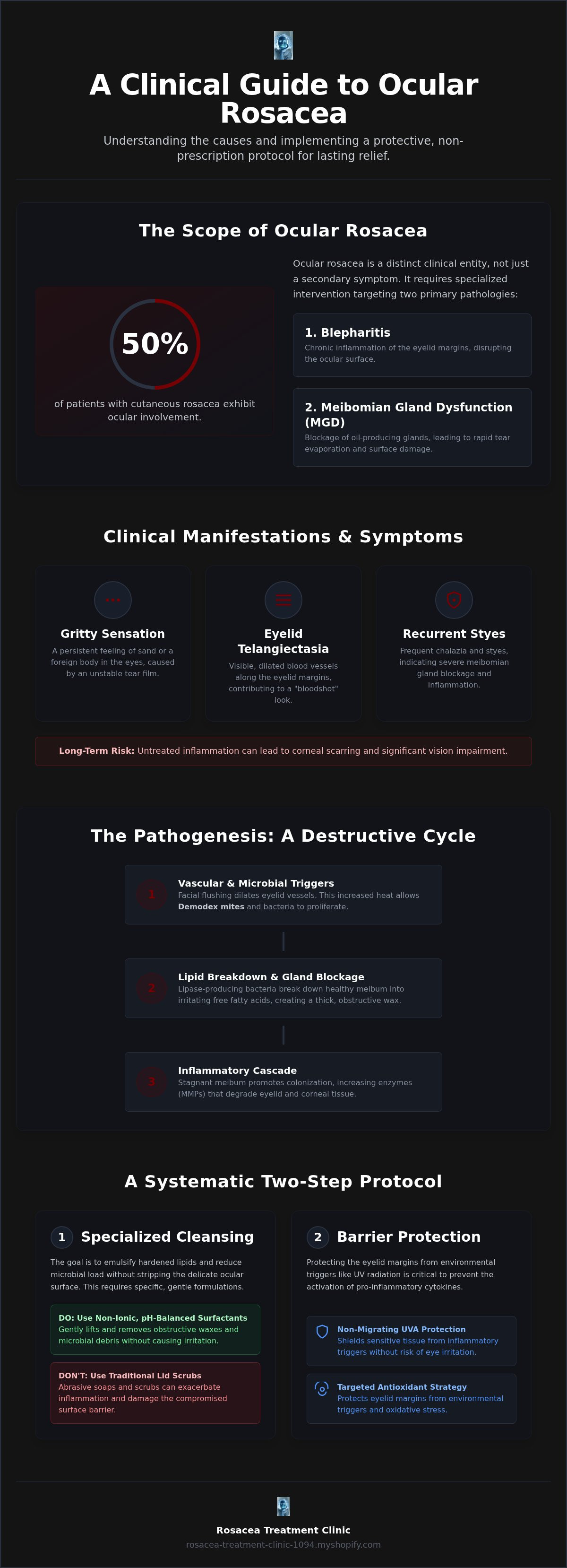
Ocular rosacea is a chronic inflammatory condition characterized by persistent irritation of the ocular surface and eyelid margins. It is not merely a secondary symptom of facial redness; it is a distinct clinical entity requiring specialized intervention. Data indicates that approximately 50% of patients with cutaneous rosacea exhibit ocular involvement. This condition primarily presents as blepharitis (eyelid inflammation) or Meibomian Gland Dysfunction (MGD). These pathologies disrupt the lipid layer of the tear film leading to rapid evaporation and surface damage. A successful ocular rosacea treatment plan must address these specific inflammatory pathways rather than relying on standard lubricant eye drops.
Clinical identification focuses on the presence of eyelid inflammation and gland obstruction. While standard dry eye disease shares some characteristics rosacea-specific inflammation is driven by vascular abnormalities and microbial overgrowth. The inflammatory process involves the release of pro-inflammatory cytokines that further damage the delicate conjunctival tissue. Identifying these differences is the first step in moving toward a professional care protocol. Effective management stabilizes the ocular environment through methodical cleansing and protection of the lid margins.
Primary Symptoms of Ocular Involvement
Patients often report a chronic gritty or foreign body sensation frequently described as having sand in the eyes. This sensation is typically accompanied by persistent telangiectasia, which are visible, dilated blood vessels along the eyelid margins. These vascular changes are a hallmark of the condition and contribute to the characteristic "bloodshot" appearance. Recurrent styes and chalazia also serve as critical indicators of meibomian gland blockage. These blockages occur when the lipids within the glands thicken and create a fertile environment for bacterial proliferation and secondary infection.
The Long-term Risks of Untreated Inflammation
Delaying intervention increases the risk of permanent ocular surface disease. Chronic inflammation can lead to corneal scarring, thinning, and neovascularization, which may result in significant vision impairment. The progression from mild stinging to severe corneal involvement is often stealthy. This clinical reality makes early adoption of a rosacea flare up management strategy vital for preserving long-term sight. Implementing a systematic ocular rosacea treatment protocol early in the disease state prevents these irreversible complications and maintains the integrity of the ocular surface.
The Pathogenesis of Ocular Inflammation in 2026
Ocular inflammation is a multifactorial process involving microbial dysbiosis and vascular dysfunction. According to an Updated Review of Ocular Rosacea the pathogenesis involves a complex interplay between the innate immune system and persistent environmental stressors. Facial flushing, a hallmark of cutaneous rosacea, correlates directly with ocular vascular changes. When facial vessels dilate, the lid margin vessels frequently follow, leading to telangiectasia and increased localized heat. This thermal shift facilitates the proliferation of Demodex mites and opportunistic bacteria which further drives the inflammatory response.
Microbial Influence and Gland Blockage
Demodex folliculorum and Demodex brevis are found in significantly higher densities on the eyelids of those requiring ocular rosacea treatment. These mites carry Bacillus oleronius, a bacterium that triggers a robust inflammatory cascade. Additionally, lipase-producing bacteria like Staphylococcus epidermidis alter meibum composition. Lipases break down essential lipids into irritating free fatty acids, transforming healthy meibum into a thick, obstructive wax. Standard soaps are insufficient for managing this microbial load. They do not have the specific non-ionic surfactants needed to emulsify these hardened lipids without damaging the delicate ocular mucosa.
The Inflammatory Cascade
Chronic gland blockage initiates a destructive cycle within the ocular environment. Stagnant meibum promotes bacterial colonization, which increases the expression of matrix metalloproteinases (MMPs). These enzymes actively degrade the connective tissue of the eyelid and the corneal surface. As this tissue integrity fails, the pH of the ocular environment shifts toward alkalinity, which further destabilizes the tear film and encourages microbial growth.
The tear film in rosacea patients undergoes a pathological transition from a protective, lipid-rich lubricant to a pro-inflammatory, hyperosmolar aqueous environment that actively degrades the corneal epithelium.
Environmental triggers like UVA radiation and wind exacerbate this underlying reactivity. In a compromised state, even minor exposures cause immediate cytokine release and burning sensations. It is why standard skincare products often trigger intense stinging; the ocular barrier is too thin to defend against common chemical irritants.
For those seeking to stabilize these inflammatory pathways adopting specialized dermatological protocols is an essential step toward long-term ocular health.
Clinical Cleansing Protocols for Ocular Surface Health
Precision in eyelid hygiene is paramount for a successful ocular rosacea treatment. Traditional recommendations often suggest dilute baby shampoo or abrasive lid scrubs. However these interventions are frequently too alkaline or physically traumatic for the reactive tissues associated with the symptoms and causes of ocular rosacea. A professional protocol prioritizes pH-balanced, non-ionic surfactants. These specialized agents emulsify pathological lipids and microbial debris without stripping essential moisture from the ocular surface or disrupting the delicate tear film chemistry.
The Importance of Gentle Debridement
Mechanical debridement must be performed with surgical precision to avoid micro-trauma to the lid margin. The primary objective is the removal of "collarettes," which are waxy, cylindrical debris at the base of the lashes that indicate Demodex activity. Utilizing the Ocular Conditioning Cleanser provides a controlled environment for this process. It softens hardened meibum and debris for effortless removal while maintaining the integrity of the eyelid skin barrier. For broader facial management, the Anti-Inflammatory Foaming Cleanser serves as a foundational tool, ensuring that inflammatory mediators from the surrounding skin do not migrate toward the periocular region.
Conditioning the Ocular Margin
Post-cleansing care is a critical phase in stabilizing the ocular environment. Once the lid margin is clear of debris applying targeted antioxidants helps neutralize the pro-inflammatory cytokines that drive persistent redness. The Ocular Soothing Serum is specifically formulated for this sensitive area. It utilizes eye-safe antioxidants to reduce heat and soothe the vascular dilation characteristic of the condition. When selecting eye-safe antioxidants clinical criteria must include an absence of volatile alcohols, a non-migrating viscosity to prevent corneal irritation, and bioavailable compounds that support tissue resilience.
Integrating these steps into a methodical AM/PM regimen creates a stable, defensive environment for the eyes. This systematic approach ensures that the meibomian glands remain patent and the ocular surface remains protected from the environmental stressors that typically trigger flares. By focusing on conditioning rather than just "cleaning" you move toward a sustainable ocular rosacea treatment strategy that restores long-term comfort and clarity.
Environmental Defense and UVA Protection for Reactive Eyes
UVA radiation serves as a silent catalyst for ocular inflammation by penetrating the thin eyelid tissue to trigger the release of pro-inflammatory cytokines such as interleukin-1 and tumor necrosis factor-alpha. This biochemical response exacerbates the vascular dysfunction and localized heat that drive meibomian gland obstruction. For patients seeking a stable ocular rosacea treatment environmental defense is as critical as cleansing. Standard sunscreens often fail this patient demographic because they do not prevent migration, whereby the formula runs into the eyes during daily wear. This results in intense stinging and secondary conjunctival irritation. Utilizing High Extended UVA Protection Sunscreens specifically formulated for reactive skin is essential to block these inflammatory pathways.
Addressing the Stinging Sensation
The ocular distress associated with standard sunscreens usually stems from volatile chemical filters and fragrance components that disrupt the tear film. These ingredients cause immediate burning and can trigger a reflex tear response that does not just irritate but also washes additional product into the eye. The De-Sensitizing Barrier Fluid SPF 50 and Attend SPF 50+ address this through non-migrating, high-stability formulations designed for the periocular region. Application should focus primarily on the orbital bone area, using a precise tapping motion to secure the product in place. This creates a protective perimeter that prevents UV-induced heat without risking corneal contact or chemical stinging.
Shielding Against Environmental Stressors
Beyond UV radiation, ambient conditions like wind, heat, and indoor air conditioning accelerate tear evaporation and exacerbate surface dryness. This leads to hyperosmolarity of the tear film which actively damages the corneal epithelium and increases sensitivity. Creating a physical shield is necessary for ocular surface stability and long-term comfort. The Restore Eye Contour Repair Complex provides a breathable, protective layer that reinforces the lipid barrier of the skin surrounding the eyes. Complementing this topical shield with wrap-around eyewear provides a vital mechanical barrier against wind-induced desiccation and airborne irritants.
It is essential to maintain this defensive shield as a core component of professional ocular management.
You can explore our full range of research-based dermatological protocols to find specific solutions for environmental protection and barrier restoration.
Implementing a Systematic Ocular Rosacea Regimen
A systematic approach is required to transition the ocular surface from a state of chronic inflammation to one of stable health. This protocol prioritizes the restoration of the meibomian glands and the reinforcement of the periocular barrier.
A successful ocular rosacea treatment plan follows a modular sequence that addresses microbial load, oxidative stress, and environmental defense.
Each step is designed to work synergistically, ensuring that the delicate ocular environment remains undisturbed by harsh chemical irritants.
By following a structured daily routine, you move beyond temporary relief toward a sustainable state of ocular comfort and clarity.
- Step 1: AM/PM cleansing with the Ocular Conditioning Cleanser to emulsify pathological lipids and remove microbial debris from the lash base.
- Step 2: Application of targeted antioxidant support to the eyelid margins to neutralize pro-inflammatory cytokines and reduce localized heat.
- Step 3: Deployment of a non-migrating protective barrier and high-level UVA shield during daylight hours to prevent UV-induced inflammatory cascades.
- Step 4: Evening restoration using the Restore Eye Contour Repair Complex to support nocturnal tissue recovery and reinforce the thin periocular barrier.
Consistency and Clinical Efficacy
Adherence is the primary driver of clinical success. Patients typically require 4-8 weeks of consistent protocol application before observing a significant reduction in chronic stinging and gritty sensations. This timeframe allows the meibomian glands to resume normal lipid production and the ocular surface to heal from previous inflammatory damage. Monitoring symptoms is essential; if a flare occurs, the regimen provides a stable foundation that can be adjusted to manage increased sensitivity. This ocular-specific care often demonstrates a strong synergy with the New Tone Harmonizing Protocol, which stabilizes the broader facial environment to prevent the migration of inflammatory mediators into the ocular region.
When to Consult a Clinical Specialist
While structured topical protocols manage the majority of symptoms, certain "red flag" indicators necessitate a professional consultation. Intense ocular pain, sudden vision impairment, or visible corneal changes are clinical signs that require immediate assessment. Rosacea Treatment Clinic acts as a specialized resource for those navigating complex inflammatory patterns that do not respond to standard maintenance. Accessing the complete Ocular Rosacea Collection ensures that each product in your regimen is research-driven and safe for long-term use. Professional guidance ensures your protocol remains optimized for your specific ocular surface requirements and long-term visual health.
Restoring Ocular Health through Methodical Clinical Protocols
Stabilizing the ocular surface requires a transition from generic care to a specialized ocular rosacea treatment that addresses the unique inflammatory pathways of the condition. By prioritizing non-ionic cleansing and non-migrating UVA protection you can effectively manage meibomian gland dysfunction and reduce chronic irritation. Consistency in these professional steps is the foundation for long-term corneal health and surface comfort. It is a structured process that moves you from reactive symptom management to a state of controlled ocular defense.
Since 1996 the Rosacea Treatment Clinic has offered specialized research-based formulations specifically designed and dermatologically tested for the most reactive and sensitive skin types. Our clinical protocols are available through global distribution, providing a reliable resource for patients seeking surgical precision in their daily maintenance. You do not have to navigate chronic stinging and redness without a proven system. Explore Clinical Ocular Rosacea Protocols today to begin your systematic restoration. Visual clarity and a calm ocular surface are within reach when you follow a research-driven path to recovery.
Frequently Asked Questions
What is the most effective ocular rosacea treatment for beginners?
The most effective approach for beginners focuses on specialized eyelid hygiene and barrier restoration. Utilizing a systematic ocular rosacea treatment protocol, such as the Ocular Conditioning Cleanser allows for the gentle emulsification of thickened meibum without causing surface irritation. This foundational step addresses the microbial load and gland blockages that drive inflammation. Once the ocular surface is stabilized, beginners should integrate ocular antioxidants, evening restoration and non-migrating UVA protection to neutralize environmental triggers and maintain long-term comfort.
Can I use regular face wash to clean my eyelids if I have ocular rosacea?
No, standard facial cleansers are typically too alkaline and contain surfactants that disrupt the delicate ocular surface. Regular face washes often feature volatile alcohols or fragrance components that trigger immediate stinging and cytokine release in reactive eyes. Professional eyelid hygiene requires pH-balanced, non-ionic formulas specifically designed to maintain the integrity of the eyelid margin skin. Using specialized conditioning cleansers prevents the micro-trauma and secondary inflammation caused by generic or abrasive products.
How long does it take for ocular rosacea symptoms to improve with a clinical protocol?
Clinical improvement typically requires 4 to 8 weeks of consistent adherence to a methodical protocol. This duration is necessary to clear meibomian gland blockages and restore a healthy lipid layer to the tear film. While some reduction in stinging may occur within the first few days the full therapeutic benefit depends on the cumulative effect of daily microbial management and barrier reinforcement. Consistent application is essential to transition the ocular surface toward a stable state.
Is ocular rosacea permanent or can it be cured?
Ocular rosacea is a chronic inflammatory condition that cannot be permanently cured however it is highly manageable through systematic care. The objective of a professional ocular rosacea treatment is to induce and maintain remission by controlling microbial overgrowth and stabilizing the tear film. By implementing a daily maintenance regimen, patients can prevent flare ups and avoid the progression of tissue damage. Long-term management focuses on defensive protection and neutralizing triggers rather than a permanent cure.
Why do my eyes sting when I apply sunscreen for rosacea?
Stinging occurs when standard chemical filters or volatile ingredients migrate from the skin into the eye, disrupting the tear film. This migration is common in formulas with low viscosity or unstable surfactants. Patients with ocular involvement have a compromised ocular surface making them more sensitive to common cosmetic irritants. Utilizing a non-migrating, high-stability formula like the De-Sensitizing Barrier Fluid SPF 50 creates a protective perimeter around the orbital bone without causing chemical ocular distress.
What are the main environmental triggers for ocular rosacea flares?
Primary triggers include UVA radiation, wind, extreme heat, and low-humidity environments such as air-conditioned offices. These stressors accelerate tear evaporation and stimulate the release of pro-inflammatory cytokines in the thin eyelid tissue. UV exposure drives vascular changes and localized heat that facilitate Demodex proliferation. Managing these triggers requires a combination of antioxidants, topical barrier complex, high-level UVA protection and mechanical shields like wrap-around eyewear to minimize surface desiccation and irritant contact.
Can ocular rosacea affect my vision if left untreated?
Yes, untreated chronic inflammation can lead to permanent vision impairment through corneal scarring and neovascularization. Persistent meibomian gland dysfunction causes severe dry eye, which eventually damages the corneal epithelium. Over time, these surface changes may result in corneal thinning or opacification. Early intervention with a clinical protocol is essential to prevent these irreversible complications. Professional management prioritizes the maintenance of a stable tear film to protect long-term visual acuity and ocular integrity.
How do I distinguish between ocular rosacea and standard blepharitis?
Ocular rosacea is distinguished by the presence of telangiectasia (dilated capillaries) on the eyelid margins and its frequent association with facial flushing. While standard blepharitis involves eyelid inflammation, rosacea-specific cases are driven by vascular abnormalities and a higher density of Demodex mites. Standard blepharitis may respond to simple hygiene, but rosacea-related inflammation requires specialized protocols to address underlying vascular reactivity. Professional clinical assessment focuses on identifying these specific vascular hallmark signs and changes in gland morphology.