
True dermatological equilibrium in rosacea-prone skin is not achieved through cosmetic coverage, but through the systematic restoration of the skin's biological barrier. For those managing persistent facial erythema and heightened sensitivity, the search for effective tone correction often leads to products that trigger further inflammation. You have likely experienced the frustration of standard brightening agents that prioritize aggressive exfoliation over structural integrity. This clinical analysis provides a comprehensive reference on the New Tone Harmonizing Protocol, a specialized framework designed to address these complexities without the use of prescription medications.
By utilizing the New Tone Harmonizing Protocol alongside the Night Repair Cream, patients can move toward a predictable reduction in visible redness and a restoration of the skin's natural defense mechanisms. This article outlines the methodical progression required to achieve skin tone uniformity and improved texture. We will explore the scientific principle behind this non-prescription approach, providing a technical guide for transitioning from basic reactive care to advanced, stabilized management. This sequence ensures every intervention supports the foundational goal of long-term dermatological stability and resilience.
Key Takeaways
- Analyze the physiological mechanisms of chronic inflammation and its direct impact on persistent facial erythema in rosacea patients.
- Understand the core objectives of the New Tone Harmonizing Protocol in achieving surface stabilization and a measurable reduction in reactive redness.
- Examine the clinical necessity of the Night Repair Cream as a foundational carrier for successful dermatological restoration.
- Learn the precise sequential layering techniques, beginning with the Anti-Inflammatory Foaming Cleanser, to optimize protocol efficacy.
- Implement long-term protective strategies, such as high extended UVA protection, to ensure the permanence of tone uniformity and barrier resilience.
Dermatological Foundations: Tone Irregularities in Rosacea
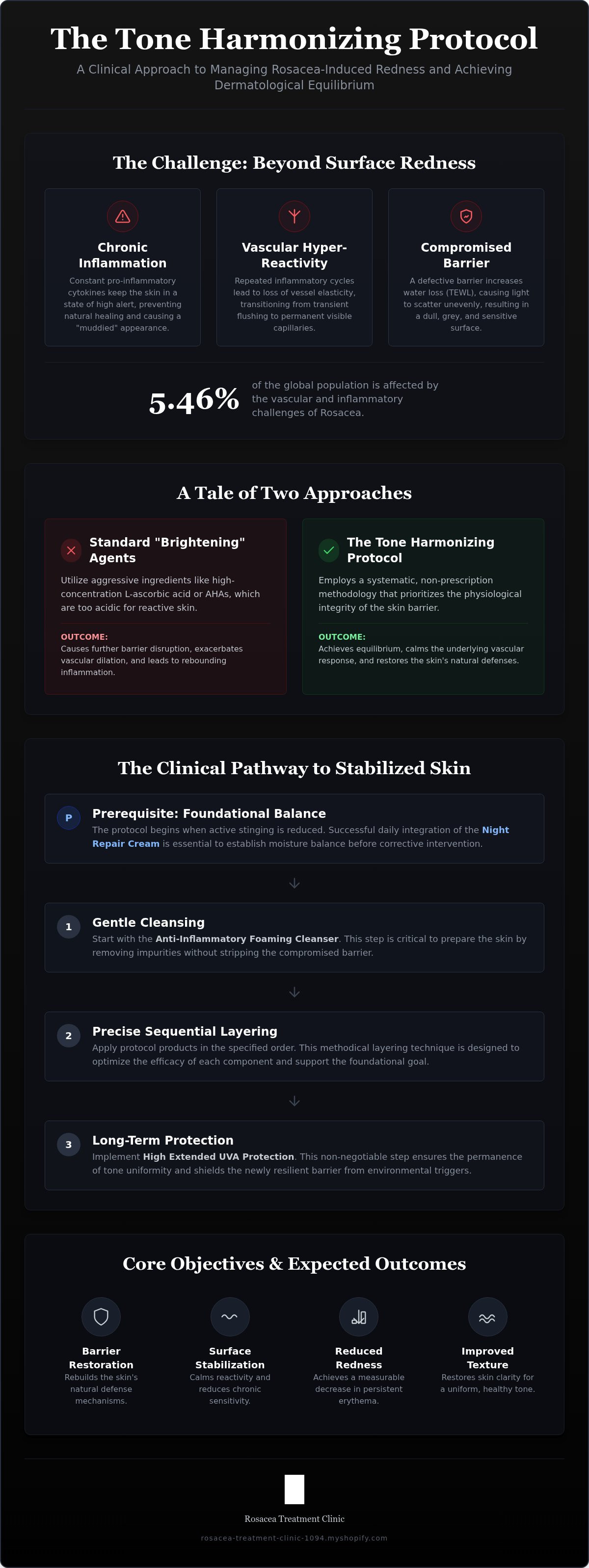
Persistent facial erythema and uneven skin texture are hallmark symptoms of Rosacea, a chronic inflammatory condition that fundamentally alters the skin's micro-environment. An estimated 5.46% of the global population is affected by these vascular and inflammatory challenges, yet many lack a systematic management plan. Unlike standard pigmentation issues, rosacea-related tone irregularities stem from a combination of vascular hyper-reactivity and a compromised epidermal barrier. This chronic state of inflammation leads to a constant influx of pro-inflammatory cytokines, which keep the skin in a state of high alert. This prevents the natural desquamation process and results in a visual "muddiness" that patients frequently encounter.
Distinguishing between post-inflammatory hyperpigmentation (PIH) and active rosacea redness is critical for effective management. While PIH involves melanin deposition following an injury, rosacea redness is primarily vascular. Standard "brightening" products frequently utilize high concentrations of L-ascorbic acid or alpha-hydroxy acids. These ingredients are often too acidic for reactive skin, causing further barrier disruption and exacerbating vascular dilation. This failure highlights the necessity of a specialized approach like the New Tone Harmonizing Protocol, which prioritizes stabilization over aggression.
The Impact of Barrier Dysfunction on Skin Clarity
A defective skin barrier allows for increased transepidermal water loss (TEWL), which directly impacts skin clarity. When the stratum corneum is dehydrated, light scatters unevenly across the surface, making the skin appear dull and grey. Chronic sensitivity also leads to micro-swelling, further obscuring a uniform skin tone. Clinical indicators that the skin is prepared for the New Tone Harmonizing Protocol include a reduction in active stinging and the successful integration of the Night Repair Cream into the daily regimen. Establishing this foundational moisture balance is a prerequisite for any corrective intervention.
Vascular Dilation and Persistent Redness
Vascular irregularities in rosacea often transition from transient flushing to permanent telangiectasia, or visible broken capillaries. These permanent changes occur when the blood vessel walls lose their elasticity due to repeated inflammatory cycles. Addressing this requires a systematic protocol rather than sporadic product application. Calming the underlying vascular response is the first step in restoring a neutral base tone. By moving through a structured sequence, patients can manage the triggers that lead to dilation, creating a stable environment where the skin's natural tone can finally emerge without the interference of constant reactive flushing.
The Mechanism of the New Tone Harmonizing Protocol
The New Tone Harmonizing Protocol is a structured dermatological methodology specifically engineered for the management of rosacea-induced discoloration. It is not a generic beauty product; it is a systematic approach that prioritizes the physiological integrity of the skin barrier. Its core objectives focus on the stabilization of the reactive surface and the reduction of persistent facial erythema. This transition from reactive to proactive care is essential for long-term skin health.
Many patients seek relief from the complex causes and triggers of rosacea, which often include environmental stressors and vascular instability. The protocol addresses these factors by utilizing non-prescription, research-based ingredients that promote equilibrium without the risk of rebounding inflammation. By avoiding the trauma associated with chemical peels, the New Tone Harmonizing Protocol provides a viable pathway for individuals who find standard "lightening" treatments intolerable.
Phase-Based Approach to Skin Uniformity
This phase-based methodology operates through a three-stage progression to ensure safety and efficacy. Initial stabilization focuses on calming the reactive surface environment, reducing the immediate intensity of flushing. Once the baseline is established, active harmonization targets specific areas of discolouration. This phase utilizes bio-compatible agents that work within the skin's natural healing cycle. Finally, the maintenance phase ensures sustained results through protective dermatological shields and consistent barrier support. This methodical pace prevents the "flare-and-fade" cycle common in less structured regimens.
Scientific Foundations from Spectrum Analytical Laboratory
Historical research conducted at Spectrum Analytical Laboratory during the mid-1980s informs the protocol's development. This research identified that chronic inflammation is the primary driver of secondary skin tone irregularities. Since 1996, the Clinic has evolved these findings into a specialized system of non-prescription care. By focusing on anti-inflammatory efficacy as the primary mechanism for tone correction, the protocol achieves results that are both visible and sustainable. This scientific rigor ensures that every application serves a functional purpose in the restoration of dermatological health. To explore the full range of specialized support, review our dermatological collections.
Synergy with Original Night Repair Cream
The New Tone Harmonizing Protocol requires a stable dermatological base to function effectively. Without a resilient epidermal barrier, active harmonizing agents can penetrate too deeply or too rapidly, triggering the very inflammatory response the protocol aims to suppress. The Night Repair Cream serves as the foundational carrier in this system. It provides the essential lipid profile necessary to seal the skin surface, ensuring that subsequent treatments are delivered in a controlled, non-reactive manner.
Barrier repair is not just a preparatory step; it is a constant prerequisite for successful tone management. Clinical observation suggests that combining lipid-rich creams with active protocols significantly reduces the incidence of treatment-induced stinging. This buffering effect allows the skin to tolerate corrective agents that might otherwise be rejected. By reinforcing the cellular matrix, the cream creates a secure environment where tone harmonization can occur without compromising structural integrity.
Ingredient Compatibility and Efficacy
The efficacy of the protocol depends on the purity of its components. Unlike mass-market formulations, the Night Repair Cream is engineered to be free from common irritants such as synthetic fragrances and volatile alcohols. These substances often undermine the efforts of harmonizing agents by inducing micro-inflammation. A healthy stratum corneum, supported by biometric lipids, optimizes the absorption of the New Tone Harmonizing Protocol. This ensures that the corrective components reach the targeted layers of the epidermis without causing surface trauma.
Alternatives: Comparing Repair Cream and Repair Fluid in the Protocol
Selecting the appropriate carrier depends on the patient's specific lipid requirements and environmental exposure. The Original Repair Treatment Fluid offers a lighter, more breathable delivery system suitable for humid climates or naturally oilier skin types. Conversely, the Original Repair Treatment Cream is the preferred choice for those with significant dryness or those in arid conditions. Adjusting the protocol based on these clinical indicators ensures the skin maintains its moisture balance while undergoing tone correction. This systematic flexibility allows for a personalized approach to rosacea management, adapting to the skin's changing needs throughout the treatment cycle.
Clinical Application: Implementing the Protocol
Successful implementation of the New Tone Harmonizing Protocol requires a disciplined, sequential approach to product application. The process begins with a non-stripping preparation phase. Utilizing the Anti-Inflammatory Foaming Cleanser is essential to remove environmental pollutants and excess sebum without triggering vascular dilation. This ensures the skin surface is receptive to active harmonizing agents. A clinical routine is most effective when performed twice daily, establishing a constant presence of anti-inflammatory support.
Layering follows a specific molecular hierarchy. Lightweight, water-based serums are applied first, followed by the protocol, and finalized with lipid-dense creams. This method ensures that each component reaches its intended depth without being blocked by heavier occlusives. Patients should monitor their skin's threshold for activity. If minor sensitivity arises, decreasing the application volume allows the barrier to adapt without interrupting the harmonization process.
The Morning Routine: Protection and Harmonization
Daytime management focuses on hydration and defense. Integrating the Harmonising Hydrating Serum provides the foundational moisture necessary to prevent transepidermal water loss. Crucially, this must be followed by a high extended UVA protection rosacea sunscreen. Since UV exposure is a documented trigger for rosacea flares, protection is the final, non-negotiable step in the morning sequence.
The Evening Routine: Intensive Repair and Recovery
The evening routine prioritizes structural recovery and deep stabilization. After a thorough evening cleanse, the Reprieve Night Serum Pure is utilized to support the skin's overnight regeneration cycle. This is followed by the application of Harmonising Hydrating Serum and the Night Repair Cream. These formulations provide the lipids required to reinforce the barrier while the protocol works to neutralize residual daytime inflammation. Consistency in this evening sequence facilitates a more rapid return to dermatological equilibrium. To begin your structured regimen, browse our specialized dermatological collections.
Long-term Management and Protective Strategies
Sustaining the results of the New Tone Harmonizing Protocol requires a transition from corrective care to a lifelong defensive strategy. Tone regression is frequently triggered by environmental stressors that induce micro-inflammation. High extended UVA protection is the most critical factor in preventing the recurrence of facial erythema. Without this shield, the skin remains vulnerable to photo-induced vascular dilation, which can undo the stabilization achieved during the active phase of the protocol. This defensive posture ensures that the skin's reactive threshold remains high, preventing the "rebound" effect often seen with less structured approaches.
Maintenance also involves the strategic use of periodic treatments to address cellular turnover. Integrating the Refining Foam once or twice weekly helps remove devitalized cells without the irritation associated with physical exfoliants. For periods of increased reactivity, the Reprieve Mask offers an intensive calming intervention. These additions to the New Tone Harmonizing Protocol provide the flexibility needed to manage the skin's fluctuating needs while preserving a uniform tone and texture.
Environmental Defense and Antioxidants
Urban environments present unique challenges for reactive skin. Particulate matter and ozone can penetrate a compromised barrier, leading to oxidative stress. The Antioxidant Radiance Defence Shield provides a secondary layer of protection against these pollutants. UV radiation remains the primary destabilizer of skin tone, often triggering immediate rosacea flares. For a detailed technical overview of these mechanisms, consult our UVA Protection Guide. Consistent application ensures that the skin's biological equilibrium is maintained regardless of external conditions.
Measuring Progress in Skin Harmonization
Clinical improvement is characterized by a measurable reduction in persistent erythema and an increase in overall dermatological resilience. Patients should observe a decrease in the frequency and intensity of flushing episodes. It is necessary to adjust the protocol in response to seasonal changes, such as increased aridity in winter or higher UV levels in summer. Identifying specific environmental and lifestyle factors is essential for long-term success. Utilize our Rosacea Triggers Checklist to establish a personalized management plan. This proactive documentation allows for the precise calibration of the protocol, ensuring sustained results and a resilient skin barrier over time.
Establishing Sustainable Skin Tone Uniformity
Achieving a uniform skin tone in the presence of rosacea requires a departure from aggressive, reactive treatments in favor of a structured, research-based methodology. By integrating foundational barrier support with specialized active agents, patients can address the underlying inflammatory drivers of facial erythema. This systematic process, rooted in Spectrum Analytical Laboratory research from the mid-1980s, ensures that tone correction occurs within a stable and protected dermatological environment.
Since 1996, the Clinic has specialized in non-prescription solutions that prioritize long-term skin health over temporary cosmetic fixes. Successful management relies on the synergy between active stabilization and consistent environmental defense, particularly high extended UVA protection. This methodical approach provides a reliable pathway toward restored skin barrier function and lasting tone clarity. To begin your professional journey toward dermatological equilibrium, secure the New Tone Harmonizing Protocol for clinical tone management. Professional skin restoration is a gradual but predictable process when guided by clinical expertise.
Frequently Asked Questions
What is the primary function of the New Tone Harmonizing Protocol?
The primary function of the New Tone Harmonizing Protocol is to stabilize the epidermal surface, reduce persistent facial erythema and neutralise the inflammatory signaling that leads to vascular dilation and uneven melanin distribution. Unlike standard brightening agents, this protocol prioritizes structural integrity over aggressive exfoliation. This methodical approach ensures that the skin achieves a uniform tone without the risk of rebounding sensitivity or barrier disruption common in traditional treatments.
Can I use the Original Repair Treatment Cream if I have oily skin?
Patients with oily skin can use the Original Repair Treatment Cream although the Original Repair Treatment Fluid is often preferred for its lighter molecular weight. The Night Repair Cream is preferred over either when employing The Tone Harmonizing Protocol.
How long does it typically take to see results from The Harmonizing Protocol?
Initial stabilization of the skin surface is typically observed within 14 to 21 days of consistent application. Full tone harmonization and the visible reduction of chronic redness usually require a minimum of 8 to 12 weeks of adherence to the protocol. This timeline aligns with the natural cellular turnover cycle and the gradual restoration of the epidermal barrier. Results are cumulative and depend heavily on the concurrent use of high extended UVA protection to prevent photo-induced regression.
Is the New Tone Harmonizing Protocol safe for ocular rosacea patients?
The New Tone Harmonizing Protocol is formulated for facial skin and should not be applied directly to the eyelid margins or the ocular surface. Patients with ocular rosacea should utilize specialized ocular offerings, such as the Ocular Conditioning Cleanser or Ocular Soothing Serum, for those sensitive areas. While the protocol helps manage general facial inflammation, it lacks the specific ophthalmic safety profile required for direct periocular application. Always maintain a clear margin around the orbital bone.
Do I need to stop using other serums while on this protocol?
You do not necessarily need to discontinue all other serums, but it is essential to audit their ingredient profiles for common irritants like volatile alcohols or high-acid concentrations. The protocol is designed to integrate with the Reprieve Serum Pure and Night Serum Pure to provide a comprehensive anti-inflammatory environment. Avoid introducing new, aggressive actives during the initial stabilization phase. This ensures the skin's reactive threshold is not breached, allowing the protocol to function with maximum efficacy.
Why is UVA protection critical when addressing skin tone?
UVA protection is critical because ultraviolet radiation is a primary trigger for the vascular dilation and chronic inflammation that causes uneven skin tone. UVA rays penetrate deep into the dermis, damaging the structural proteins that support blood vessel walls. This leads to permanent telangiectasia and persistent redness. Without consistent broad-spectrum defense, any progress made by the protocol will be negated by daily photo-damage. Effective tone management is impossible without a dedicated UVA shield.
Can this protocol be used during an active rosacea flare-up?
The protocol can be used during a flare-up once the immediate stinging and heat have been addressed through foundational repair. It is often beneficial to prioritize the Night Repair Cream during the peak of a flare to restore barrier function. Once the skin surface is less reactive, the protocol helps neutralize the residual redness and discolouration that follows an acute episode. This sequential approach prevents the protocol from overwhelming highly sensitized skin while it is in a state of crisis.