
What if the standard recommendation of a 'gentle' wash is actually perpetuating your chronic inflammation? For many, the search for the best cleanser for rosacea ends in frustration because standard formulas fail to remove sunscreens or address the presence of demodex mites. You've likely experienced the technical failure of traditional cleansers: persistent stinging during application followed by a visible rebound of erythema once the skin dries.
It's a common clinical observation that a single-step wash is often insufficient for the reactive patient. This guide provides a systematic framework for selecting clinical-grade cleansers, such as the Anti-Inflammatory Foaming Cleanser or a specialized Hydrating Desensitising Cleansing Emulsion, tailored to your specific subtype.
Here you'll learn the professional protocol for non-irritating debris removal and the precise methods required to restore compromised barrier function.
We'll detail the modular approach to cleansing that ensures a calm, non-reactive complexion and prepares the skin for therapeutic interventions.
Key Takeaways
- Understand why standard surfactants and alkaline pH levels disrupt the skin barrier and trigger inflammatory cascades in rosacea-prone skin.
- Identify the best cleanser for rosacea by matching clinical-grade formulas, such as foaming anti-inflammatories or hydrating emulsions, to your specific subtype.
- Master the professional two-step evening protocol required to emulsify high-protection sunscreens without causing mechanical irritation or stinging.
- Evaluate cleansers based on their ability to address specific concerns, including the presence of demodex mites in papulopustular presentations.
- Learn how to optimize post-cleansing recovery by preparing the skin for specialized serum applications that restore the acid mantle and barrier function.
Why Standard Cleansers Often Exacerbate Rosacea Symptoms
Standard cleansing agents are frequently the primary source of daily flare-ups for those with persistent facial redness. A foundational understanding of rosacea reveals that the stratum corneum in affected patients is inherently more permeable than in healthy controls. This physiological vulnerability means that the best cleanser for rosacea must function as a protective intervention rather than a simple detergent. When traditional surfactants come into contact with this compromised surface, they dissolve the essential lipids required to maintain cellular cohesion, leading to immediate barrier failure.
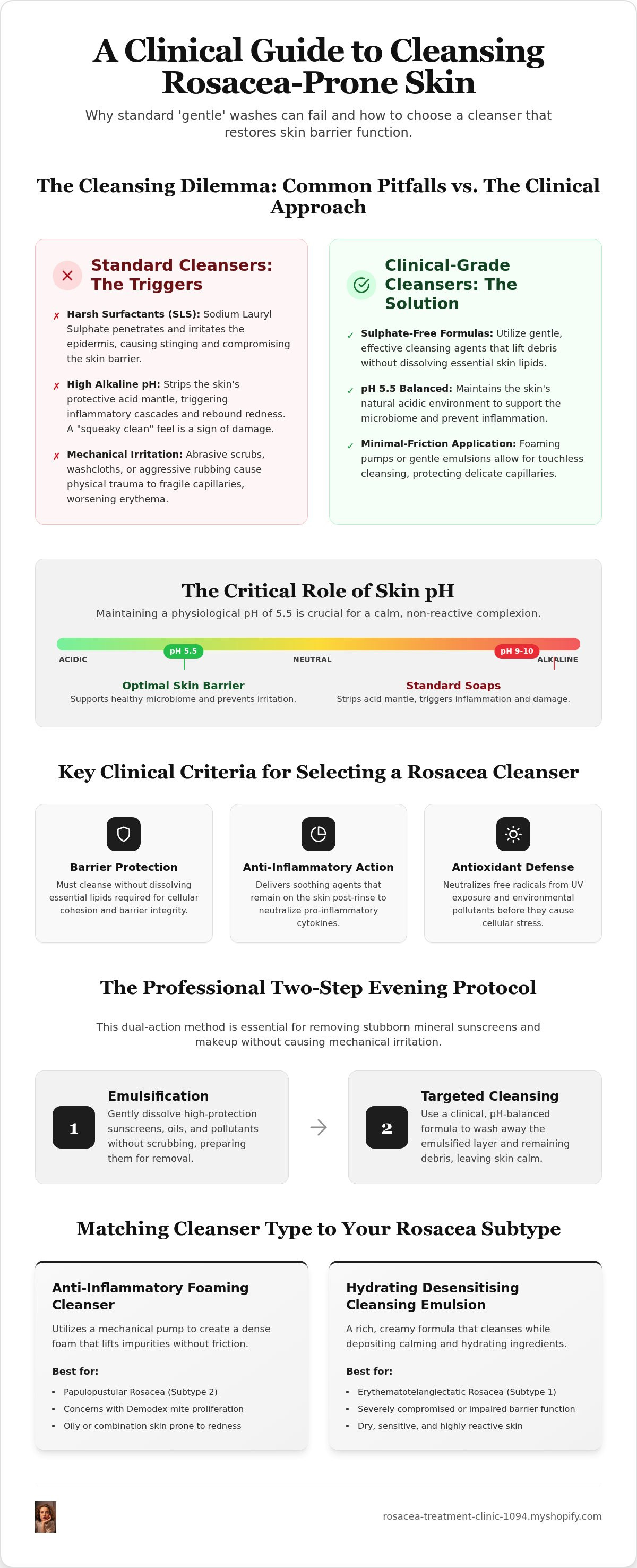
The "clean-feel" often sought in the beauty industry is a clinical fallacy. Squeaky skin indicates that the acid mantle has been stripped and the surface pH has been pushed into an alkaline state. Standard soaps typically possess a pH of 9.0 to 10.0, which triggers inflammatory cascades and activates proteases that further degrade skin structure. Selecting the best cleanser for rosacea involves finding a formula that maintains a physiological pH of 5.5 to ensure the skin remains calm and non-reactive post-wash.
The Surfactant Problem: Sulphates and Sensitivity
Sodium Lauryl Sulphate (SLS) is strictly contraindicated for rosacea patients due to its high irritancy potential. As a small-molecule surfactant, SLS penetrates deep into the epidermis, creating micro-breaches that allow environmental triggers to reach sensory nerve endings. This process induces a neurological stinging sensation which is a direct signal of barrier breach. To maintain integrity, the ideal pH range for rosacea-prone skin must remain at a constant 5.5. This acidic environment supports the natural microbiome and prevents the rebound redness associated with alkaline disruption.
Mechanical Irritation vs. Chemical Efficacy
Mechanical friction is a significant trigger for vascular-heavy skin. The use of washcloths, muslin cloths, or abrasive scrubs causes physical trauma to dilated capillaries, leading to localized heat retention and prolonged erythema. Cleansing should prioritize touchless or minimal-friction application methods. In professional formulations like the Anti-Inflammatory Foaming Cleanser the foaming action is achieved through mechanical pump aeration rather than chemical agents. This technical distinction allows the cleanser to lift debris and pollutants without the need for aggressive rubbing while preserving the delicate vascular structure of the face.
Key Clinical Criteria for Selecting a Rosacea Cleanser
Selecting the best cleanser for rosacea requires evaluating formula efficacy beyond basic soil removal. Clinical-grade cleansers must deliver anti-inflammatory agents that remain bioavailable on the skin surface even after rinsing. This involves utilizing molecules with a high affinity for the stratum corneum, which neutralize pro-inflammatory cytokines and reduce the baseline erythema often exacerbated by the cleansing process. When active ingredients are formulated to survive the wash-off phase, they provide a foundational layer of protection that persists throughout the day.
Beyond inflammation, the inclusion of stabilized antioxidants is a critical defensive measure. Cleansing often occurs after periods of UV exposure, which generates significant free radical damage within the dermal matrix. Integrating antioxidants into the wash step helps neutralize these reactive oxygen species before they can trigger deeper cellular stress. These clinical criteria for rosacea treatment ensure that every step of the hygiene protocol contributes to structural restoration rather than mere maintenance.
Addressing the Demodex Factor
A significant clinical oversight in the failure to address Demodex folliculorum. Research indicates that patients with papulopustular rosacea exhibit a significantly higher density of these mites compared to the general population. The best cleanser for rosacea in these cases must contain ingredients that inhibit mite proliferation and manage the microbial load without inducing irritation. Utilizing the Pre-Cleansing Emulsifier prior to Anti-Inflammatory Foaming Cleanser provides a dual-action benefit: they physically removes debris while creating an environment hostile to mite overgrowth through specialized, non-prescription anti-microbial agents.
Hydration and Barrier Support During Cleansing
Effective cleansing shouldn't compromise the skin’s moisture levels or lipid integrity. Incorporating humectants like glycerin is essential to prevent trans-epidermal water loss (TEWL) during the transition from wet to dry skin. For those with extremely dry or hypersensitive variants, a gel-to-emulsion texture is superior. The non-comedogenic emulsion provides a protective buffer, lowering the skin's reactivity threshold by delivering de-sensitising agents directly to the compromised barrier. This methodical approach ensures the skin remains supple and prepared for subsequent serum applications. You can explore our full range of professional-grade formulas in our clinical cleanser collection.
Comparing the Rosacea Treatment Clinic Cleanser Collection
Effective management of reactive skin requires a precise match between formula architecture and patient subtype. While generic options often prioritize basic hygiene, a clinical guide to rosacea cleansers highlights the necessity of non-stripping agents that preserve the skin's lipid layer. Our collection provides modular solutions designed to address the specific physiological needs of different rosacea presentations, from vascular oiliness to extreme barrier depletion.
The selection process is based on skin state and primary symptoms. Patients with oily or redness-prone skin primarily require active anti-inflammatory benefits, while those with dry, hypersensitive skin need intensive hydration and desensitization during the wash phase. Each professional-grade formula functions as an initial therapeutic step, preparing the dermal surface for subsequent interventions without triggering a reactive response.
The Anti-Inflammatory Foaming Cleanser: Our Gold Standard
This formula (AUD 95.0) is the best cleanser for rosacea patients presenting with oiliness, papules, or persistent erythema. It utilizes a sulphate-free, pump-aerated system to create a dense foam that lifts pollutants and debris without the need for mechanical friction. This technical approach protects fragile capillaries from physical trauma. For long-term management, the Anti-Inflammatory Foaming Cleanser Refill (AUD 75.0) provides a sustainable way to maintain your clinical protocol while reducing environmental impact. Anti-Inflammatory Foaming Cleanser focuses on lowering the skin's baseline heat and visible irritation through targeted isolates.
Hydrating De-Sensitizing Cleansing Emulsion: For the Reactive and Dry
Patients experiencing significant scaling, tightness, or a compromised barrier should utilize the Hydrating De-Sensitizing Cleansing Emulsion (AUD 95.0). This formula employs 'serum-in-gel' technology to provide immediate comfort upon contact. It acts as a protective buffer, delivering humectants that prevent trans-epidermal water loss during the transition from wet to dry skin. It's particularly effective for those who find traditional foaming agents too aggressive, ensuring the acid mantle remains intact while gently removing impurities.
Specialized Cleansing: Shower and Ocular Care
Environmental triggers extend beyond the facial area. The Anti-Inflammatory Shower Treatment (AUD 68.0) is designed to mitigate the vasodilatory effects of heat exposure during bathing. For those with ocular involvement Ocular Conditioning Cleanser provides specialized hygiene for the eye contour and lashes. Standard cleansers are often too alkaline for the delicate ocular mucosa; using a dedicated, pH-balanced cleanser helps manage the microbial load and reduces the risk of blepharitis associated with ocular rosacea.
The Two-Step Evening Protocol: Emulsification and Cleansing
Single-step cleansing is often technically insufficient for patients utilizing clinical-grade sunscreens. Mineral filters, such as zinc oxide or titanium dioxide, are designed for extreme adhesion to the skin surface. Attempting to remove these substances with a standard water-based wash requires excessive mechanical friction, which invariably triggers a vascular response. The best cleanser for rosacea must be part of a broader, two-phase protocol that prioritizes chemical emulsification over physical scrubbing.
This method ensures the complete removal of day-wear products, environmental pollutants, and metabolic waste. By breaking down the surface tension of lipid-soluble debris before introducing water, we preserve the integrity of the underlying skin barrier. This synergy between emulsification and the subsequent anti-inflammatory wash creates a sterile, calm environment for nocturnal repair.
Phase 1: The Pre-Cleansing Emulsifier
The initial phase utilizes the Pre-Cleansing Emulsifier 120 mL (AUD 135.0). This specialized formula is engineered to dissolve the complex binders found in Attend Sunscreen and waterproof makeup. Beyond product removal, it serves a critical role in managing inflammatory triggers by trapping Demodex mites and their associated bacteria within the emulsion. This ensures they're physically lifted from the follicular openings without the need for harsh anti-parasitic chemicals.
- Apply the emulsifier to dry skin only to maintain formula concentration.
- Massage gently using small, circular motions for sixty seconds to ensure full integration with surface debris.
- Focus on areas with high sunscreen application or visible scaling.
- Add a small amount of water to emulsify and massage further.
- Rinse thoroughly with water.
Phase 2: Targeted Cleansing
Once the surface debris is emulsified, the secondary wash completes the hygiene cycle. Identifying the best cleanser for rosacea for your specific skin type is only the first step; the method of application is equally critical to the outcome. Transition to your subtype-specific cleanser, either the Anti-Inflammatory Foaming Cleanser or the Hydrating De-Sensitising Cleansing Emulsion, to remove the residual emulsifier and provide therapeutic benefits.
This step should always involve lukewarm water. Extreme temperatures, whether hot or cold, induce immediate vasodilation and can cause a rebound flare-up. Pat the skin dry with a clean, soft towel; never rub or drag the fabric across the face. A successful evening cleanse leaves the skin feeling supple and calm. If the surface feels tight, "squeaky," or shows increased redness, the protocol was likely too aggressive. You can acquire the components for this professional routine through our clinical cleanser collection.
Optimizing Your Results: Beyond the Routine Cleansing Step
The efficacy of a therapeutic skincare routine is fundamentally limited by the quality of the surface preparation. Even the best cleanser for rosacea is only the first phase of a broader clinical protocol. When the skin is correctly cleared of sunscreen residues, metabolic lipids, and microbial load, the dermal surface becomes significantly more receptive to active interventions. This increased permeability ensures that high-potency repair fluids can penetrate the stratum corneum and reach the deeper layers where inflammatory signaling occurs.
A professional hygiene routine transitions seamlessly into treatment. Once the skin is sterile and calm, the application of the De-Sensitizing Clarifying Serum-In-Gel (AUD 95.0) can act as a specialized post-cleansing treatment intervention. This formula further stabilizes the newly cleansed surface, lowering the reactivity threshold and neutralizing any residual heat before the application of more intensive repair treatments. This methodical layering is what separates a standard beauty routine from a clinical rosacea management plan.
Immediate Post-Cleansing Care
Timing is a critical variable in barrier restoration. There is a "3-minute window" immediately following the wash where the skin is most capable of absorbing topical ingredients. Applying the Hydrating Serum and/or Reprieve Serum Pure soon after cleansing maximises thier effects. This prevents the rapid trans-epidermal water loss that often causes post-wash tightness and itching. By locking in hydration at this precise moment you reinforce the acid mantle and provide the structural support necessary for cellular repair.
Building Your Complete Rosacea Protocol
Cleansing doesn't exist in isolation; it's the foundation for barrier repair and environmental defense. By identifying the best cleanser for rosacea for your specific subtype, you enable the success of subsequent steps, such as applying the Night Repair Cream or finalizing your defense with High Extended UVA Protection Sunscreens. This modular approach ensures that every product in your regimen works in synergy to reduce erythema and prevent future flare-ups.
Long-term remission requires consistency and the use of formulas that respect the unique physiology of reactive skin. We invite you to consult our specialized cleansing protocols to find your match and begin the process of restoring your skin's natural resilience. Browse the full Cleansers collection to select the clinical-grade tools required for your specific dermatological needs.
Establishing a Professional Hygiene Protocol
Achieving long-term remission requires a shift from generic "gentle" products to research-based formulations that address the specific physiological triggers of your condition. Since 1996, the Rosacea Treatment Clinic has prioritized sulphate-free, non-prescription solutions that manage both inflammatory cytokines and microbial loads with surgical precision. Identifying the best cleanser for rosacea is the foundational step in restoring your skin's natural defensive barrier and reducing baseline erythema.
A successful protocol integrates specialized anti-inflammatory and anti-demodex properties to neutralize flare-ups at the source. Whether you require the mechanical aeration of a foaming system or the lipid-replenishing comfort of a desensitizing emulsion, your choice determines the efficacy of all subsequent therapeutic steps. This methodical approach ensures that your evening protocol effectively removes high-protection sunscreens without inducing mechanical trauma or rebound redness. By selecting tools engineered for reactive skin, you move beyond mere maintenance toward active restoration.
You can begin your transition to a professional-grade routine by exploring our curated, clinical-grade offerings. Shop the Rosacea Clinical Cleanser Collection and secure the clinical foundation your skin requires for lasting calm and structural resilience.
Frequently Asked Questions
Is foaming cleanser bad for rosacea?
Not all foaming agents are detrimental to reactive skin. While chemical foaming agents and sulphates can induce significant irritation, a pump-aerated formula like the Anti-Inflammatory Foaming Cleanser is highly effective. This technology lifts debris through air-infused bubbles rather than aggressive chemical surfactants. It's often considered the best cleanser for rosacea when presenting with oily or papulopustular symptoms, as it provides thorough hygiene without mechanical friction.
How many times a day should I wash my face if I have rosacea?
Clinical protocols generally recommend a twice-daily cleansing routine to manage microbial load and environmental pollutants. The evening wash is non-negotiable for removing high-protection sunscreens and accumulated debris. In the morning, a gentle cleanse removes metabolic waste and prepares the skin for daytime antioxidant application.
Can I use a washcloth to cleanse my rosacea-prone skin?
Using a washcloth or any abrasive material is strictly contraindicated for vascular-heavy skin. Mechanical friction triggers immediate vasodilation, leading to prolonged erythema and potential capillary damage. Professional hygiene focuses on gentle application. You should apply clinical formulas using only your fingertips and light, circular motions. Always pat the skin dry with a soft, clean towel rather than dragging the fabric across the face.
What ingredients should I avoid in a rosacea face wash?
Avoid Sodium Lauryl Sulphate (SLS), denatured alcohol and synthetic fragrances are among substances which can penetrate the compromised stratum corneum and trigger neurological stinging or inflammatory cascades. Avoid high-pH soaps that push the skin into an alkaline state. A clinical-grade wash should maintain a pH of 5.5 to support the acid mantle and prevent the proliferation of harmful microbes that exacerbate redness.
Why does my face feel tight after using a 'gentle' cleanser?
Post-wash tightness indicates that your cleanser has stripped essential lipids or disrupted the skin's surface pH. Even products marketed as "gentle" often contain hidden surfactants that cause rapid trans-epidermal water loss. When the barrier is breached, moisture evaporates during the drying process. This sensation is a technical failure of the product and suggests you need a formula with higher humectant concentrations or a specialized desensitizing emulsion.
Do I really need a pre-cleansing emulsifier for rosacea?
Yes, a pre-cleansing emulsifier is essential for the complete removal of lipid-soluble debris. Standard water-based washes cannot effectively dissolve the binders in waterproof mineral sunscreens or trap Demodex mites. By using an emulsifier first, you break down these inflammatory triggers without aggressive scrubbing. This two-step protocol ensures a sterile surface while maintaining the integrity of the delicate rosacea skin barrier during the evening hygiene routine.
How do I remove waterproof sunscreen without irritating my rosacea?
Removing waterproof mineral filters requires a systematic two-phase approach. Begin with a specialized emulsifier applied to dry skin to dissolve the zinc or titanium dioxide particles. Once the sunscreen is fully integrated into the emulsion add water to emulsify further, rinse and follow with the best cleanser for rosacea for your specific subtype. This method ensures total debris removal using chemical efficacy rather than physical force, preventing the vascular rebound associated with traditional scrubbing methods.
Is it okay to use hot water when cleansing my face?
Hot water is a significant trigger that you should strictly avoid. High temperatures induce rapid vasodilation and increase local blood flow, which exacerbates redness and heat sensation. Conversely, icy water can cause thermal shock to fragile capillaries. Use only lukewarm water for both cleansing and rinsing. This neutral temperature maintains a stable environment for the vascular structure and prevents the inflammatory response often seen after washing.